'Et Tu, Gold'? Cash Crunch Sparks Massive Correction In The Ultimate Safe Haven | The Reason Why
Concerns are real, but they do not mean gold has lost its long-term role. Many analysts still believe it remains an important asset for diversification, even if it is going through a difficult phase today.
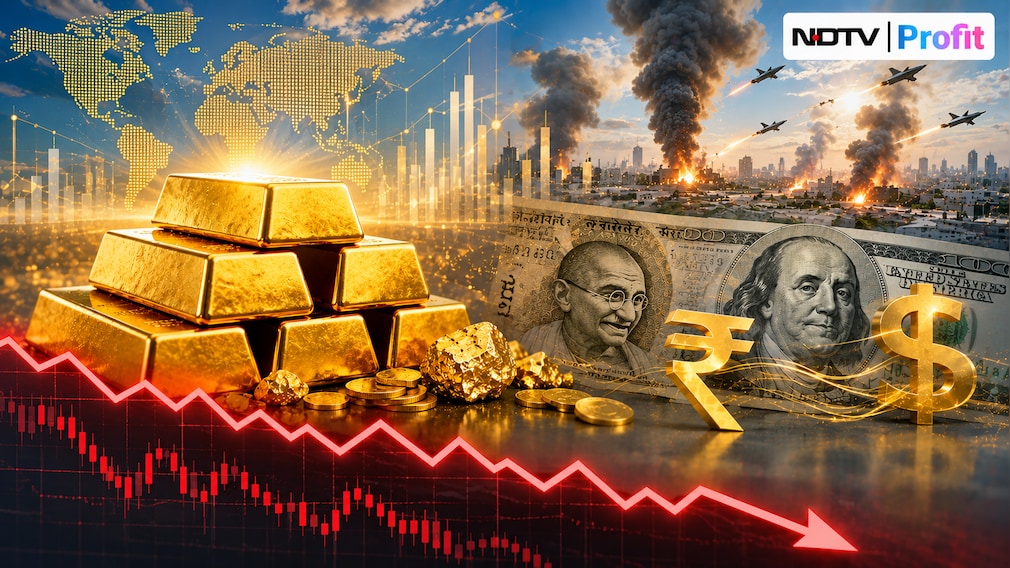
Gold has been falling this year after being one of the best-performing assets over the past few years. The precious metal's prices more than doubled between 2022 and 2025. Central bank buying, geopolitical tensions, and expectations of lower interest rates have helped gold reach its peak this year. But since January, they have corrected by nearly 25-30%.
The war in West Asia pushed oil prices and uncertainty up, while gold prices fell. Historically, in such situations, investors, central banks and traders have demanded more gold, raising questions about whether gold has lost its safe-haven sheen. We must understand the chronology that explains gold's unusual behaviour this time.
ALSO READ: Gold Price Today: MCX Gold Trades Flat At Rs 1.47 Lakh As Fed Rate Hike Concerns Ease
A Crowded Trade Before the War
By the end of last year, many commodity traders were reluctant to take fresh positions in gold, feeling that the gold market was getting crowded. Many began booking profits. Even central banks sold more gold during January this year than they bought. The sell-off gathered pace after US President Donald Trump nominated Kevin Warsh as the new Chairman of the Federal Reserve at the end of January. Known for his hawkish views, Warsh's nomination led markets to rethink their expectations. From interest rate cuts, investors started pricing in the possibility of rate hikes.
Higher interest rates make bonds more attractive than gold because gold pays no interest. Around the same time, the commodity exchange COMEX also raised margin requirements, the minimum collateral traders must maintain for leveraged positions, to curb excessive risk-taking. This meant traders needed more cash. They sold more gold to raise funds as it was already profitable, adding further pressure on prices.
The Global Liquidity Squeeze
When the war broke out, oil prices surged, and fears of higher import bills, capital outflows and currency depreciation emerged everywhere. Countries started selling their gold reserves to raise funds and bought dollars. In March, central banks again became the net sellers of gold. The US dollar strengthened while the US Treasury yields moved higher. Both these developments usually put pressure on gold prices, and this time was no different.
As Dan Coatsworth of AJ Bell explained, "Gold is often considered to be a haven in troubled times, but what many people don't realise is that its price can still drop in a falling market. Investors often sell what they can in the face of trouble, and gold is a liquid asset." That is exactly what happened. Instead of acting like a typical safe-haven asset, gold became a source of cash. Governments and investors sold gold because it was one of the easiest assets to convert into money.
The World Gold Council's (WGC) Gold Return Attribution Model (GRAM) shows that there wasn't just one reason behind the fall. Geopolitical tensions, market volatility, profit-taking, momentum, and trend-following all contributed to the decline. The WGC also said that if the US dollar remains strong, it could create "further marginal pressure on gold" as markets continue to change their expectations about future Federal Reserve policy.
ALSO READ: Buy The Dips? Gold Support Slips To Rs 1.37 Lakh After Worst Monthly Fall Since 2008
Softening Demand: Central Banks, ETFs, And India
Demand for gold also weakened from some of its biggest buyers, apart from central banks. ETF demand softened. In India, domestic demand fell more than 70% after the government raised customs duty and the Prime Minister appealed to citizens not to buy additional gold. Many families didn't just stop buying new gold, but even sold old jewellery. The April-June quarter saw an estimated 50 tonnes of old jewellery sales. That was more than 50% growth than last year.
Short-Term Pressure, Long-Term Relevance
The recent fall in gold prices has been sharp enough to remind many market watchers of the 2008 financial crisis. Although gold fell immediately after the crisis, it rebounded after some months.
Therefore, many analysts believe the current weakness may not last forever. George Heppel of BMO Capital Markets expects uncertainty to increase if the US introduces a roughly 25% "quasi-universal" tariff later this year. Such actions could reignite stagflation worries, pushing gold prices upwards. UBS expects gold demand will rise once again as central banks start buying more gold. At the same time, it expects the US fiscal situation to worsen, increasing gold's demand. According to WGC's survey, central bankers favour increasing gold holdings over the next year. It doesn't stop here.
According to an OMFIF survey, more central banks now plan to reduce their US dollar holdings over the next decade than increase them. They are worried about political uncertainty in the US and rising geopolitical tensions. If that trend continues, gold could remain an important diversification asset for central banks, traders and investors, even if it faces pressure in the short term.
Final Take
Gold is facing several challenges right now. Expectations of higher interest rates, a stronger US dollar, weaker demand from central banks and ETFs, and the global rush for cash during the war have all put pressure on prices. The recent fall has raised questions about whether gold is still the reliable inflation hedge and safe-haven asset that many investors believe it to be.
These concerns are real, but they do not mean gold has lost its long-term role. Many analysts still believe it remains an important asset for diversification, even if it is going through a difficult phase today.
Disclaimer: The views expressed in this article are solely those of the author and do not necessarily reflect the opinion of NDTV Profit or its affiliates. Readers are advised to conduct their own research or consult a qualified professional before making any investment or business decisions. NDTV Profit does not guarantee the accuracy, completeness, or reliability of the information presented in this article.
-
We May Need Another Tukaram Mundhe To Fight Air Pollution | The Reason Why

Developers may install basic measures such as sprinklers and green nets, resume work, and continue violating rules when this equipment stops working.
-
Extracting Value From Battery Scrap Could Be Challenging For India | The Reason Why
A discarded lithium-ion battery still contains valuable materials such as lithium, nickel and cobalt. These can be recovered and reused. When such batteries are crushed and shredded, they produce a dark powder called black mass.
-
One El Nino, India Can Handle. Two Could Break The Granary
India's grain stocks can absorb one bad year, but a second El Nino could drain the buffer in two to three years, economists say.
-
India's Troika Of Good Luck | Joining The Dots
As Jensen Huang's exit drags Nvidia down, a cooling AI trade and resilient earnings have revived investor interest in India. A likely RBI rate hike looms.
-
Talking Points This Week: Leadership Shock At Nvidia, Earnings Strength, And The Fog Over Hormuz
The Anthropic IPO pricing and first trading day, Nvidia's upcoming earnings, and any fresh signals from Iran will set the tone for the following week.
-
Signature Play: The Classic Cocktail Is Dead. Or Is It?
Classic cocktails are disappearing from India's cocktail menus. But they're still being ordered, taught to bartenders and borrowed from. So, who's really having the last drink?
-
A New Samvat Wishlist: Inclusive Prosperity And Human Development
India has strengthened its economic foundations through infrastructure, digital access and enterprise. Its next growth chapter must deepen productivity, create better livelihoods and widen participation in prosperity.
-
Love, Sex Aur Dhokha: The Audacious Plot To Spy On Jensen Huang
A Taipei dinner, a Singapore chip buyer and a suspected Chinese asset: inside the alleged spy operation that got close to NVIDIA's Jensen Huang.
-
Ten Things I Learnt This Samvat
Patience can be a trap. Cheap stocks can stay cheap. Leverage can wipe you out. What did Samvat 2082 teach us? Niraj Shah writes on 10 lessons from the year gone by.
-
Talking Points This Week: Tech Nerves, FII Buying, And A Faraway Banking Shock
The global markets are not shining this Diwali. The exception in the large markets is, India.









