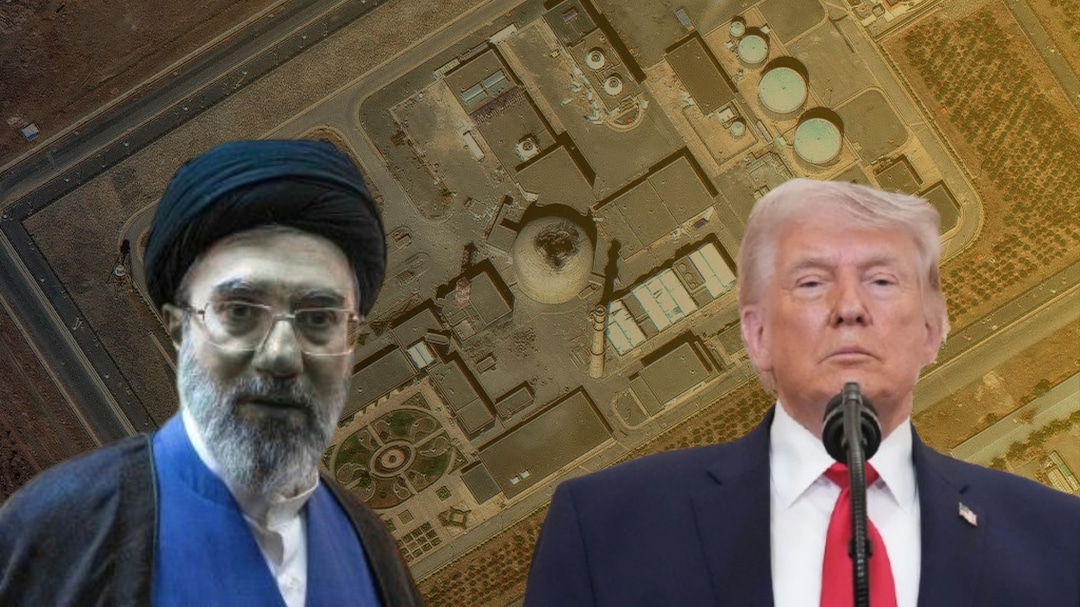
Ceasefire talks between the US and Iran ended in the early hours of Sunday without an agreement, raising questions about what happens when a current two-week truce expires on April 22.
However, talks may resume soon as Pakistan's Army Chief Field Marshal Asim Munir is on his way to Tehran to deliver America's messages.
Follow our live blog to know the latest on the middle east issue.
End Of Coverage
This live blog has ended.
Iran War Live: Trump’s Handling Of Operation Epic Fury, An 'Epic Failure' Says Chuck Schumer
US Senator Chuck Schumer has called US President Donald Trump's handling of Operation Epic Fury an 'epic failure' at a public address.
Iran War Live: US, Iran Weighing Extending Ceasefire By Two Weeks
The US and Iran are mulling the possibility of extending the ceasefire between them by two weeks according to a Bloomberg report.
Iran War Live: IMF Chief Expresses Hope For Ceasefire To Become Durable Peace
International Monetary Fund's Managing Director Kristalina Georgieva said that she hopes that the ceasefire turns into durable peace. She stated that uncertainty from Iran war has been profound. She also said that economic recovery is some way off even if the war ends tomorrow.
(Source: Bloomberg)
Iran War Live: China Foreign Minister Expresses Support For Ceasefire
China's Foreign Minister Wang Yi said that the country supports ceasefire and negotiation momentum with regards to the Israel-US-Iran war. Yi also said that Iran's rights over the Strait of Hormuz should be respected. The minister said that China will continue to push for de-escalation.
(Source: Bloomberg)
Iran War Live: Pakistan's Army Chief Heads To Tehran
Pakistan's Army Chief Asim Munir is on his way to Iran with a senior-level delegation to deliver a message from the United States and coordinate a possible second round of truce talks, NDTV reported on Wednesday.
The second round of discussions between US and Iran are expected to be held soon in Islamabad, as per the report.
Before this, the delegations of the warring groups had met in Pakistan on April 11 to negotiate a potential peace. However, talks failed after 21 hours of negoiations, with both sides unable to find common ground to end the ongoing conflict.
Diplomats struggled to bridge longstanding tensions, ranging from Iran's decades-old nuclear ambitions to its grip on the Strait of Hormuz. The strategic waterway's closure has sent ripples through the global market, triggering severe economic shocks worldwide.
Iran War Live: UK PM Keir Starmer ‘Not Going To Yield’ To Trump Demands To Join Iran War
British PM Starmer has insisted he is not going to yield to pressure from Trump, after the US president threatened to change the terms of a trade deal with the UK following its refusal to get involved in the war on Iran.
“My position on the Iran war has been clear from the start. We’re not going to get dragged into this war. It is not our war,” the UK leader told MPs.
“I’m not going to change my mind. I’m not going to yield. It is not in our national interest to join this war, and we will not do so.”
(Source: Al Jazeera)
Iran War Live Updates: 'Continued Engagement Between The US And Iran To Reach A Deal', Says Report
The US has not formally agreed to extend its ceasefire with Iran, according to an unnamed senior official quoted by the Reuters news agency.
“There is continued engagement between the US and Iran to reach a deal,” the official said.
Pakistan’s PM Sharif has been pushing to restart talks between the two sides as Trump said negotiations could resume in Pakistan in the next two days.
Iran War Live Updates: Iran Says Recent Talks With US Focused On End To War And ‘Realisation Of Iran’s Rights’
Iran’s Foreign Ministry spokesman Esmaeil Baghaei says recent negotiations with the US in Pakistan included discussions about a “complete cessation” of the war and “the realisation of Iran’s rights”.
Baghaei said lifting sanctions on Iran and retribution of damages caused by the war were also discussed, as reported by Iran’s IRNA.
Iran War Live Updates: Israel says Hezbollah Fired 40 Rockets
Israel says Hezbollah fired 40 rockets into Israel on Wednesday morning
Iran War Live Updates: Trump Says China Happy On Opening Of Hormuz
Trump claims that China and the US are working together and that Beijing is happy that he is opening the Strait of Hormuz.
“China is very happy that I am permanently opening the Strait of Hormuz. I am doing it for them, also – and the World. This situation will never happen again,” Trump said in a social media post.
Iran War Live Updates: Iran Army Threatens To Block Gulf And Red Sea Trade Routes If Hormuz Blockade Continues
Iran’s army has warned it will block trade through the Red Sea along with the Gulf and Sea of Oman if the US naval blockade on Iranian ports continues.
In a statement carried by Iranian state television, the head of the military’s central command centre said the “powerful armed forces of the Islamic Republic will not allow any exports or imports to continue in the Persian Gulf, the Sea of Oman and the Red Sea”.
Iran War Live Updates: Tehran To Host High-Level Pakistani Delegation Today
Iran will likely host a high-level Pakistani delegation today in Tehran for resolution talks.
(Source: NDTV)
Iran War Live Updates: Second Round Of Truce Talks In Two Days? Here's What Trump Said
President Trump said Tuesday that a second round of talks could happen "over the next two days," telling the New York Post the negotiations could be held again in Islamabad as diplomats worked through back channels to arrange them.
Regional officials said on Wednesday that the United States and Iran gave an “in principle agreement” to extend the two-week ceasefire, which is due to expire on April 22, to allow for more diplomacy.
Iran War Live Updates: US-Iran Give In Principle Agreement To Extend Truce, Says Report
Iran and the United States have given an in-principle agreement to extend truce, according to an AP report. The truce was supposed to expire by April 21.
Iran War Live Updates: Trump Hints At 'End Result' Of War Happening Soon
"Maybe End-Result Will Happen Soon," Donald Trump said. He added that there has been no pushback on the Hormuz blockade from either China or Saudi Arabia, and predicted that oil prices will fall to the levels they were at, and maybe even go lower.
(Source: Bloomberg)
Iran War Live Updates: WPI inflation Rises To 38-month High In March On Higher Fuel Prices
Wholesale price inflation rose sharply to an over 3-year high of 3.88% in March, driven by a sharp spike in rates of fuel, power and manufactured items amid the Middle East crisis. Government data released showed that the Wholesale Price Index (WPI)-based inflation rose for the fifth straight month in March as core inflation accelerated, amid softening of primary food items.
The high WPI inflation in March reflects elevated global commodity prices and the impact of the energy price shock since the beginning of the US-Israel-Iran conflict on February 28.
WPI inflation was 2.13% cent in February, and 2.25% in March last year.
Iran War Live Updates: India's Exports Drop In March Amid Disruptions
Briefing the media on the trade data, Commerce Secretary Rajesh Agrawal said that the country's exports are doing well despite challenges. He said the country's exports of goods and services rose 4.22% to $860 bn during the 2025-26 financial year. The country's merchandise exports during April-March 2025-26 went up 1% to $441.78 billion from $437.7 billion. Imports also increased to $774.98 billion during the period from $721.2 billion in 2024-25.
Services exports are estimated at USD 418.31 billion in 2025-26, the commerce secretary said.
- The country's merchandise exports dropped 7.44% to $38.92 billion in March, according to government data.
- Imports too dipped by 6.51% to $59.59 billion last year from $63.75 billion recorded in the year-ago month.
- The country's trade deficit stood at $20.67 billion during the month under review.
Iran War Live Updates: Malacca To Be Next Flashpoint After Hormuz?
Just days after the US struck a landmark defence deal with Indonesia, the strategic spotlight is shifting from the Strait of Hormuz to another critical maritime corridor, the Strait of Malacca. US Secretary of Defence Pete Hegseth hosted Indonesian Defence Minister Sjafrie Sjamsoeddin at the Pentagon on Monday, where the two countries signed a Major Defence Cooperation Partnership (MDCP) — a move widely seen as Washington seeking greater ability to monitor the Strait of Malacca.

Iran War Live Updates: Russia's Diplomat Says Iran Has 'Inalienable Right' To Enrich Uranium
Russia's Foreign Minister Sergey Lavrov said Wednesday that “the right to enrich uranium for civilian purposes is an inalienable right of the Islamic Republic of Iran." Whether Iran, in its negotiations with the United States, decides to 'pause' or 'insists on preserving this right,' Russia will accept "any approach based on this principle, the principle of the universality of the right to enrichment," Lavrov told reporters in Beijing, where he is on a two-day visit this week.
Lavrov emphasised that Russia and China “firmly support” the talks to end the Mideast war, “so that the parties can advance realistic and fair goals, fully respecting the legitimate rights of each party, in accordance with international law.”
Iran is a signatory to the 1970 Nuclear Non-Proliferation Treaty, which gives countries the right to peaceful nuclear energy programmes with safeguards, but does not explicitly mention enrichment.
(Source: AP)
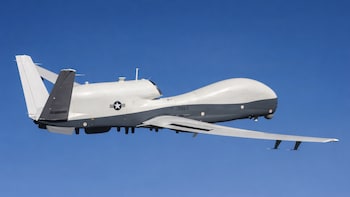
Iran War Live Updates: US Navy Confirms Loss Of A Drone Worth Rs 2,222 Crore In Strait Of Hormuz
The United States Navy has confirmed the loss of a surveillance drone, valued at a whopping $238 million or about Rs 2,222 crore, in the Strait of Hormuz on April 9 amid a fragile and temporary ceasefire with Iran.
Iran War Live Updates: Iran In Not Seeking War, Says Pezeshkian
President Masoud Pezeshkian says Iran is not seeking war and remains open to talks, but any attempt by its enemies to impose their will or force it to surrender “will fail", reports Al Jazeera.
BREAKING: President Masoud Pezeshkian says Iran is not seeking war and remains open to talks, but any attempt by its enemies to impose their will or force it to surrender “will fail". pic.twitter.com/6uyuxzCHSg
— Al Jazeera Breaking News (@AJENews) April 15, 2026
Iran War Live Updates: US-Iran Might Meet Next Week
Pakistan is engaged in high-level contacts to bring Iran and the US back to the negotiating table and the two sides may meet again in Islamabad for a second round of talks by next week.
The contacts are ongoing for the revival of stalled negotiations between the US and Iran, and talks may be held again before the end of the two-week ceasefire on April 21, The Express Tribune newspaper reported, citing highly placed sources.
(Source: AP)
Iran War Live Updates: Government Mulls Fuel Price Stabilisation Mechanism Amid Gulf Oil Shock
The government is considering the introduction of a fuel price stabilisation mechanism to shield consumers from sharp spikes in petrol, diesel and LPG prices amid heightened global energy volatility, according to government sources.

Iran War Live Updates: US Ends Iran Oil Waiver This Week: How Does It Impact India?
The United States has decided not to extend a temporary waiver that allowed limited Iranian oil shipments, marking a shift toward stricter enforcement of sanctions amid rising tensions. The waiver, which was set to expire this week, had enabled oil cargoes that were already loaded to reach global markets without triggering penalties.

Iran War Live Updates: No Iran Deal Without Nuclear Inspectors, Warns IAEA
The head of the UN's nuclear watchdog said any agreement on the Iranian nuclear program between the US and Iran without the International Atomic Energy Agency input would be an "illusion". IAEA Director General Rafael Grossi made the comments during a meeting with journalists in Seoul.
"Iran has a very ambitious, wide nuclear program. So all of that will require the presence of IAEA inspectors, otherwise you will not have an agreement, you will have an illusion of an agreement," he said.
"I am certain that we will be required and asked when the parties come to an agreement, hopefully, to provide the indispensable, safeguard, verification component of the agreement."
Grossi also explained the current state of the North Korean nuclear development, warning their had been a "rapid increase" in the operation at the country's Yongbyon reactor.
"The operation of the light water reactor and the activation of other facilities apart from Yongbyon, all of them point to a very serious increase in the capabilities of DPRK in the area of nuclear weapons production, which is estimated at a few dozen warheads," he added.
Iran War Live Updates: Sri Lanka Repatriates Over 230 Iranian Sailors
Over 230 sailors of two Iranian Naval vessels distressed in Sri Lanka after a US submarine attack and engine failure respectively have been repatriated, defence officials said here Wednesday. A total of 238 sailors were sent back on board a Turkish Airliner late on Tuesday night.
Iran War Live Updates: Iran War 'Close To Over,' Says Trump
US President Donald Trump has said that the war with Iran is “close to over,” asserting that if he pulled up stakes right now, it would take Tehran 20 years to rebuild the country. The president's comments come hours after the US Central Command said it has successfully blocked all traffic to and from Iranian ports and coastal areas in the first 24 hours of Trump's blockade, saying the US was supporting freedom of navigation for vessels transiting the Strait of Hormuz.
Iran War Live Updates: LPG Vessel Jag Vikram Crosses Strait Of Hormuz
Indian flagged LPG vessel 'Jag Vikram', which crossed the Strait of Hormuz on April 11, reached Kandla Port on April 14. The vessel is carrying 20,400 metric tonnes of LPG.
Gujarat | Indian flagged LPG vessel 'Jag Vikram', which crossed the Strait of Hormuz on April 11, reached Kandla Port on April 14. The vessel is carrying 20,400 metric tonnes of LPG. pic.twitter.com/PK4nRa1H1c
— ANI (@ANI) April 15, 2026
Iran War Live Updates: US Hosts Historic Talks Between Israel And Lebanon, Pushes For Direct Negotiations
US Secretary of State Marco Rubio on Tuesday led rare direct talks between Israel and Lebanon, marking the first such high-level engagement in decades.
Iran War Live Updates: NATO Won't Be There For Us, Says Trump
In another post on Truth Social, US President Donald Trump wrote, "NATO wasn’t there for us, and they won’t be there for us in the future! President DONALD J. TRUMP."
Iran War Live Updates: Trump's Tirade Against Pope Leo
In a post on Truth Social, US President Donald Trump fired salvos at Pope Leo and wrote, "Will someone please tell Pope Leo that Iran has killed at least 42,000 innocent, completely unarmed, protesters in the last two months, and that for Iran to have a Nuclear Bomb is absolutely unacceptable. Thank you for your attention to this matter. AMERICA IS BACK!!! President DONALD J. TRUMP."
Iran War Live Updates: Trump Says Iran War Is Very Close To Over
In clips showing excerpts of an interview he taped with Fox Business Network's “Mornings with Maria,” Trump says of the Iran war, “I think it's close to over, yeah. I mean, I view it as very close to over.”
He adds, “If I pulled up stakes right now, it would take them 20 years to rebuild that country. And we're not finished. We'll see what happens. I think they want to make a deal very badly.”
Trump has declared a US victory in Iran repeatedly since mere days after the war started — even as the reality on the ground has been far more complicated.
Iran War Live Updates: US Says Forces Have Completely Halted Iran's Economic Trade
Statement from Adm. Brad Cooper, CENTCOM commander: A blockade of Iranian ports has been fully implemented as US forces maintain maritime superiority in the Middle East. An estimated 90% of Iran's economy is fueled by international trade by sea. In less than 36 hours since the blockade was implemented, US forces have completely halted economic trade going into and out of Iran by sea.
Statement from Adm. Brad Cooper, CENTCOM commander: pic.twitter.com/dJxKJcEcmO
— U.S. Central Command (@CENTCOM) April 15, 2026
Iran War Live Updates: US Issues $10M Reward For Iraqi Militia Leader
The bounty was placed on Ahmad al-Hamidawi, secretary general of the Iran-backed militia Kataib Hezbollah. In a post on X, in which it published al-Hamidawi's photograph, the State Department's Rewards for Justice program wrote that the group was “responsible for attacks on US diplomatic facilities in Iraq, the kidnapping of US citizens, and the killing of innocent Iraqi civilians.”
Last month, Kataib Hezbollah kidnapped an American journalist, Shelly Kittleson, in Baghdad, but released her several days later on condition that she leave the country. Officials with the group at the time told The Associated Press that in exchange, the Iraqi government would release several members of the militia who had been previously detained.
Kataib Hezbollah is allied with Lebanon's Hezbollah but they are two entirely different groups with different leaders.
Iran War Live Updates: US Military Claims Blockade Success
The US military claims that it has successfully begun to enforce a blockade of Iranian ports, though at least one ship with apparent ties to Tehran has transited the Strait of Hormuz.
US Central Command, which oversees the Middle East, said that “during the first 24 hours, no ships made it past the US blockade and 6 merchant vessels complied with direction from US forces to turn around to re-enter an Iranian port on the Gulf of Oman.”
While some tankers approaching the strait on Monday did turn around shortly after the blockade took effect, the tanker Rich Starry reversed course again and transited the waterway early Tuesday.
Iran War Live Updates: UN Secretary General Says 'Highly Probable' US-Iran Talks Will Restart
Secretary-General of the United Nations António Guterres said this was the indication he had after a meeting with Pakistan's deputy prime minister, who is also the country's foreign minister.
The UN secretary-general expressed “enormous admiration” for Pakistan's initiative to bring peace to the Middle East. "I consider it essential that these negotiations go on," Guterres told UN reporters, explaining that it would be “unrealistic” for long-lasting and complex problems between the US and Iran to be resolved in a first negotiating session.
"We need negotiations to go on, and we need a ceasefire to persist as negotiations go on," he said.
(Source: AP)
Iran War Live Updates: Vance Discusses 20-Plus Hours Of Negotiations
US Vice President JD Vance discussed the 20-plus hours of negotiations with Iran where he lead the US delegation. He said that Trump “doesn’t want to make, like, a small deal. He wants to make the grand bargain."
Vance added, "That’s the trade that he’s offering," and that Trump is telling Iran, "If you guys commit to not having a nuclear weapon, we are going to make Iran thrive.”
"We're going to make it economically prosperous, and we’re going to invite the Iranian people into the world economy in a way they haven’t been in my entire life,” the vice president said.
Iran War Live Updates: Trump Wants Grand Bargain, Says Vance
US Vice President JD Vance says, "The President made a policy that Iran cannot have a nuclear weapon and we are making sure that very thing happens... The President doesn't want a small deal, he wants a grand bargain... This is why we made a ton of progress in Pakistan, but the deal was not done because the President wants a deal where Iran does not have a nuclear weapon and the people there can thrive and join the global economy... We are going to keep on negotiating and try to make it happen..." Video: ANI
#WATCH | US Vice President JD Vance says, "The President made a policy that Iran cannot have a nuclear weapon and we are making sure that very thing happens... The President doesn't want a small deal, he wants a grand bargain... This is why we made a ton of progress in Pakistan,… pic.twitter.com/BfdoWPXPio
— ANI (@ANI) April 14, 2026
Iran War Live Updates: US Treasury Department Moves Aggressively With Economic Fury
The US Treasury Department said it is moving aggressively with Economic Fury, maintaining maximum pressure on Iran.
In a post on X, the US Treasury Department said, "Financial institutions should be on notice that the department is leveraging the full range of available tools and authorities and is prepared to deploy secondary sanctions against foreign financial institutions that continue to support Iran’s activities. The short-term authorisation permitting the sale of Iranian oil already stranded at sea is set to expire in a few days and will not be renewed."
Treasury is moving aggressively with Economic Fury, maintaining maximum pressure on Iran. Financial institutions should be on notice that the department is leveraging the full range of available tools and authorities and is prepared to deploy secondary sanctions against foreign…
— Treasury Department (@USTreasury) April 14, 2026
Iran War Live Updates: Lebanon Reiterates Implementation Of Hostilities
The State of Lebanon reaffirmed the urgent need for the full implementation of the cessation of hostilities announcement of November 2024, underscoring the principles of territorial integrity and full state sovereignty, while calling for a ceasefire and concrete measures to address and alleviate the severe humanitarian crisis that the country continues to endure as a result of the ongoing conflict.
All sides agreed to launch direct negotiations at a mutually agreed time and venue.
Iran War Live Updates: Israel Expresses Commitment To Work With Lebanon
The State of Israel expressed its support for disarming all non-state terror groups and dismantle all terror infrastructure in Lebanon and expressed its commitment to working with the Government of Lebanon to achieve that goal to ensure security for the people of both countries. Israel expressed its commitment to engage in direct negotiations to resolve all outstanding issues and achieve a durable peace that will strengthen security, stability and prosperity in the region.
Iran War Live Updates: US Congratulates Lebanon, Israel
The United States congratulated the two countries on this historic milestone and expressed its support for further talks, and for the Government of Lebanon’s plans to restore the monopoly of force and to end Iran’s overbearing influence.
The United States expressed its hope that talks can exceed the scope of the 2024 agreement and bring about a comprehensive peace deal. The United States expressed its support for Israel’s right to defend itself from Hezballah’s continued attacks.
Iran War Live Updates: Meeting Between US, Lebanon, And Israel
The US Department of State convened a trilateral meeting on April 14, 2026, with the participation of Secretary of State Marco Rubio, Counselor Michael Needham, United States Ambassador to Lebanon Issa, Ambassador of Israel to the United States Yechiel Leiter, the Ambassador of Lebanon to the United States Nada Hamadeh Moawad.
This meeting marked the first major high-level engagement between the governments of Israel and Lebanon since 1993. The participants held productive discussions on steps toward launching direct negotiations between Israel and Lebanon.
Iran War Live Updates: Lebanon-Israel Hold Rare Talks
Lebanon and Israel were holding their first direct talks in decades as fighting between Israel and Hezbollah militants rocks southern Lebanon. US Secretary of State Marco Rubio joined the Israeli and Lebanese ambassadors for Tuesday's discussions in Washington. Hezbollah says it will not abide by any agreement, a high-ranking member of the group's political council told the AP.
Iran War Live Updates: Sergio Gor Says Trump-Modi Discussed US Naval Blockade Of Iran Ports
Sergio Gor said PM Modi and President Trump also discussed the US naval blockade of Iran's ports. He refused to answer questions on any fresh talks between Iran and the US after the collapse of the negotiations in Islamabad.
"It's not for me to announce any future talks. They did talk about the blockade and the importance of it reopening as soon as possible. Frankly, this whole region, the whole world is suffering because of this," he said.
"Why should one country be able to turn off the lights anywhere else in the world? It's unfair. It needs to stop, and the United States is determined to make that happen," he added.
(Source: AP)
Iran War Live Updates: We All Love You, Trump Tells PM Modi
The phone call between US President Donald Trump ended with Trump telling PM Modi that: "I just want you to know we all love you", according to US envoy Sergio Gor.
Iran War Live Updates: PM Modi Call With 'Friend Trump'
It was the third phone call between the two leaders this year and the first after the recent peace talks between Iran and the US. They spoke on February 2 to announce progress in a trade deal, and on March 24 to discuss the situation in the Middle East.
"Received a call from my friend President Donald Trump. We reviewed the substantial progress achieved in our bilateral cooperation in various sectors. We are committed to further strengthening our Comprehensive Global Strategic Partnership in all areas," Modi said on social media.
Received a call from my friend President Donald Trump. We reviewed the substantial progress achieved in our bilateral cooperation in various sectors. We are committed to further strengthening our Comprehensive Global Strategic Partnership in all areas. We also discussed the…
— Narendra Modi (@narendramodi) April 14, 2026
Iran War Live Updates: Trump Telephones PM Modi
US President Donald Trump dialled Prime Minister Narendra Modi to discuss the Middle East crisis and the need to keep the Strait of Hormuz "open and secure" even as US envoy Sergio Gor said India and the US are expected to seal certain "big-ticket" deals soon, including in the energy sector.
Shortly after their nearly 40-minute conversation, Modi said he and Trump reviewed the "substantial progress" in the bilateral ties and that both sides are committed to further strengthening the India-US comprehensive global strategic partnership in "all areas".
Essential Business Intelligence, Sharp Market Insights, Practical Personal Finance Advice, Daily Fuel, Gold and Silver Prices and Latest Stories — On NDTV Profit.