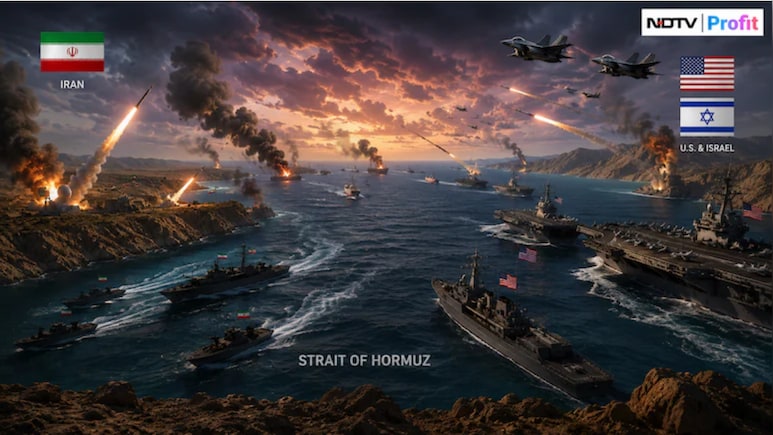
A fresh exchange of fire between the United States and Iran unfolded in the early hours of Thursday, May 28, threatening to unravel an already fragile ceasefire and drag the wider Gulf region into open conflict.
Iran's Islamic Revolutionary Guard Corps (IRGC) announced that its forces had struck a US airbase at 4:50 a.m. local time, in direct retaliation for what it called American aggression near Bandar Abbas Airport.
IRGC:
Following the US military's predawn attack today using aerial projectiles on a site near Bandar Abbas Airport, the American airbase from which the attack originated was targeted at 4:50 a.m. pic.twitter.com/k1U6RKsdrmAlso Read | Layoffs Are Rising In Tech, But These Skills Are Helping People Unlock Better Pay
— Iran in India (@Iran_in_India) May 28, 2026
The IRGC statement, relayed by Iran's semi-official Tasnim News Agency and amplified by Iranian diplomatic accounts on social media, described the retaliatory strike as a "serious warning" and vowed that any further American action would be met with a "more decisive" response.
Just In IRGC:
— Iran In Hyderabad (@IraninHyderabad) May 28, 2026
Following the US military's attack today using aerial projectiles on a site near Bandar Abbas Airport, the American airbase, from which the attack originated, was targeted.
It is a serious warning that we will keep respoding strongly and the aggressor is…
ALSO READ: Donald Trump's Cabinet Meeting: From Iran Deal To Ebola Measures, 10 Key Takeaways
The escalation was triggered after US forces shot down four Iranian one-way attack drones near the Strait of Hormuz and struck a drone control site in Bandar Abbas that was preparing to launch a fifth, Reuters reported.
“These actions were measured, purely defensive and intended to maintain the ceasefire,” an unnamed US official told Reuters.
Around the same time Iran launched its retaliatory strike on the unnamed US base, Kuwait's army reported that its air defences were actively intercepting hostile drones and missiles, though Kuwait did not identify the origin of the attacks, Reuters reported.
تتصدى حالياً الدفاعات الجوية الكويتية لهجمات صاروخية وطائرات مسيرة معادية.
— KUWAIT ARMY - الجيش الكويتي (@KuwaitArmyGHQ) May 28, 2026
تنوه رئاسة الأركان العامة للجيش أن أصوات الانفجارات إن سمعت فهي نتيجة اعتراض منظومات الدفاع الجوي للهجمات المعادية.
يرجى من الجميع التقيد بتعليمات الأمن والسلامة الصادرة عن الجهات المختصة.… pic.twitter.com/qvsBXZxokq
The development signals a worrying geographic spread of hostilities beyond Iranian and American positions, pulling Gulf neighbours into the line of fire.
ALSO READ: US-Iran War Live News Updates: Iran Responds To US Attack Near Bandar Abbas
The broader context is one of sustained, simmering conflict. The US has cast both sets of strikes as falling within the ceasefire agreement, but Iran condemned the earlier attacks as a violation, with the IRGC warning it would retaliate against any such breach.
Adding a political dimension, US President Donald Trump on Wednesday declared that Iran was "negotiating on fumes" and insisted he would not be pressured by upcoming midterm elections into accepting a deal.
The IRGC did not disclose which American base was targeted. With Kuwait now reporting incoming fire and the Strait of Hormuz — a chokepoint for roughly 20% of global oil supply — at the centre of the confrontation, the risk of a wider regional conflagration is growing by the hour.
Essential Business Intelligence, Sharp Market Insights, Practical Personal Finance Advice, Daily Fuel, Gold and Silver Prices and Latest Stories — On NDTV Profit.