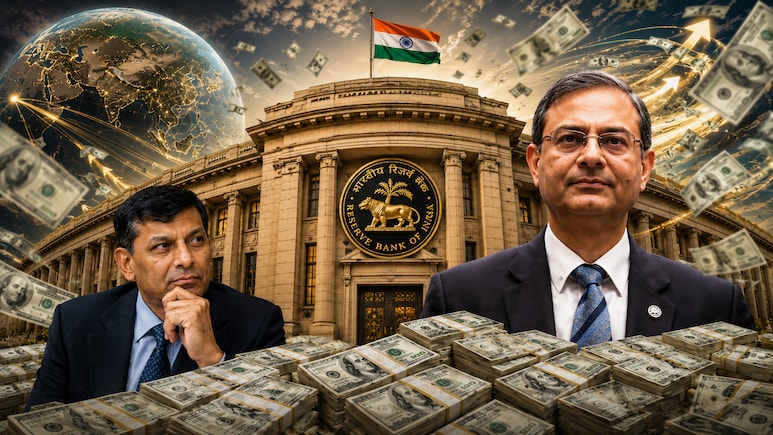
- RBI revives FCNR(B) scheme, bearing full hedging costs for 3-5 year deposits till 2026
- The move aims to attract stable foreign currency inflows amid ongoing global and domestic pressures
- FCNR(B) deposits enable NRIs to invest in India in foreign currencies, boosting forex reserves
The Reserve Bank of India is bringing back a page from former governor Raghuram Rajan's crisis playbook. In 2013, when the rupee was falling amid the Taper Tantrum, Rajan made Foreign Currency Non-Resident (B) deposit scheme attactive by offering banks a concessional swap window at 3.5% against a market rate of around 6–7%, he transferred the cost of hedging from banks to the central bank, making it commercially attractive to mobilise NRI dollars at scale. Banks responded aggressively, and nearly $26 billion flowed in through the FCNR(B) route alone.
On Friday, Governor Sanjay Malhotra did the same thing, thirteen years later. The RBI announced it would bear the full hedging cost for authorised dealer banks raising fresh FCNR(B) deposits of 3–5-year maturity, with the facility open until 30 September 2026. The instrument is the same. The logic is the same. The only difference is the backdrop — and the fact that this time, the RBI is not absorbing part of the cost. It is absorbing all of it.
The move echoes what Rajan did on the very day he took charge as RBI Governor in September 2013. India was then in the grip of the 'Taper Tantrum'. The rupee had crashed to a then lifetime low of nearly Rs 69 to the dollar, capital was fleeing emerging markets, and dollar liquidity was precious.
Also Read | Layoffs Are Rising In Tech, But These Skills Are Helping People Unlock Better Pay
Rajan's response was to offer banks a special concessional swap window on FCNR(B) deposits, lowering the cost of mobilising NRI dollars. Banks mobilised nearly $30 billion, shored up India's foreign exchange reserves, and helped stabilise the rupee in what became one of the most successful emergency dollar-raising operations in India's financial history.

RBI has announced five measures to attact foreign inflows
Photo Credit: NDTV Profit
READ IN DETAIL: RBI Unveils Five-Point Plan To Get Dollars Into The Country
What are FCNR(B) deposits?
FCNR(B) deposits allow Non-Resident Indians to park money in India in foreign currencies such as US dollars, British pounds, or euros. The depositor earns interest in the foreign currency. The bank gains access to foreign currency funding. India receives fresh dollar inflows. It is, in essence, a direct pipeline from the NRI diaspora into India's foreign exchange reserves.
Why does the hedge subsidy matter?
Banks raising dollar deposits must normally hedge their currency risk, and that hedging can be expensive when global interest rates are elevated. By absorbing the full hedging cost, the RBI is directly lowering the effective cost of bringing foreign currency into the country, making FCNR(B) mobilisation far more attractive for banks.
ALSO READ: RBI Monetary Policy Key Highlights: Rate Unchanged; Lower Growth, Higher Inflation On The Cards
How different is 2026 from 2013?
India is not facing a balance-of-payments crisis of the kind it faced in 2013. Foreign exchange reserves stand at a healthy US$ 682.3 billion, providing import cover of approximately 11 months.
However, net FPI outflows have touched US$ 13.7 billion so far in 2026-27, predominantly from equities, and the West Asia conflict continues to pressure energy prices and the current account. The RBI wants durable, long-term foreign currency inflows without relying solely on volatile portfolio flows.
Friday's FCNR(B) announcement was part of a broader five-point package that also included opening the long end of the sovereign yield curve to foreign investors and offering concessional forex swaps to public sector undertakings raising ECBs.
Can the 2013 success be replicated?
The benchmark is high. Rajan's scheme brought in nearly $30 billion and transformed market sentiment almost overnight. Global interest rates are higher today and hedging costs steeper, which is precisely why the RBI has chosen to bear the cost entirely rather than merely subsidise it.
When the RBI reaches for the FCNR(B) playbook, the message is clear. The central bank believes attracting stable, long-term dollar inflows is important enough to pay for. Thirteen years after Rajan first deployed it, the tool is back.
ALSO READ: Big Boost for Foreign Investors: Indian Government Bonds TAX-FREE For Foreign Investors
Essential Business Intelligence, Sharp Market Insights, Practical Personal Finance Advice, Daily Fuel, Gold and Silver Prices and Latest Stories — On NDTV Profit.