- RBI has unveiled measures to attract foreign capital amid $13.7 billion portfolio outflows
- New 15-, 30-, and 40-year government securities opened for unrestricted foreign investment
- Government exempts foreign investors from capital gains and interest tax on G-Sec investments
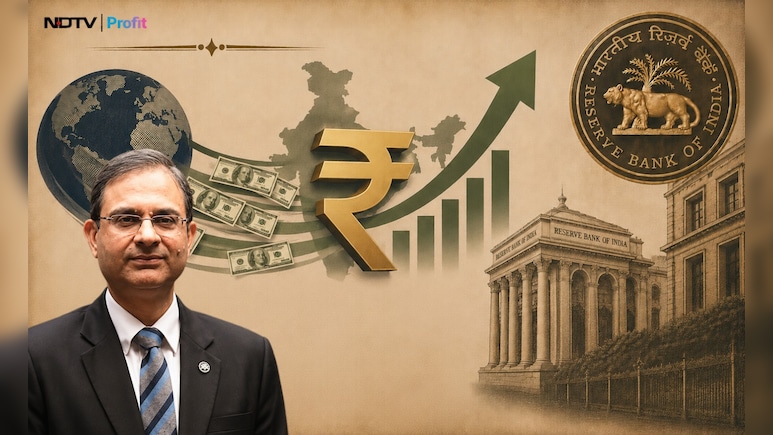
The Reserve Bank of India on Friday announced a sweeping set of measures to attract foreign capital into the country, as net outflows from overseas portfolio investors touched US$ 13.7 billion in the current financial year and the rupee continues to face pressure from a risk-off global environment fuelled by the prolonged West Asia conflict.
Governor Sanjay Malhotra, announcing the measures alongside the Monetary Policy Committee's decision to hold the policy repo rate unchanged at 5.25%, said the steps were aimed at strengthening India's balance of payments at a time of heightened external uncertainty. India's foreign exchange reserves stood at US$ 682.3 billion as of 29 May 2026, providing import cover of approximately 11 months.
The RBI's announcements were accompanied by a tax reform from the government. Through the Income-tax (Amendment) Ordinance, 2026, promulgated on June 5 and made effective retrospectively from April 1, 2026, the government has granted eligible foreign investors a complete exemption on both interest income and capital gains earned from investments in government securities. Foreign Institutional Investors and Foreign Portfolio Investors will no longer pay the 12.5 per cent long-term capital gains tax on listed G-Secs held for more than one year, nor the 20 per cent withholding tax on interest income that applied until now. The benefit has also been extended to the Bank for International Settlements. The ordinance was issued as Parliament is not currently in session and will require parliamentary approval to remain in force.
Also Read | Layoffs Are Rising In Tech, But These Skills Are Helping People Unlock Better Pay
ALSO READ: Nifty, Sensex Fall Sharply From Day's High — Key Reasons Why Market Is Falling
Governor Malhotra acknowledged the twin thrust of the package, noting that the RBI's measures, alongside the tax benefits announced by the government on Friday morning, should together help channel foreign capital into India's sovereign borrowing programme.
Here is what the RBI has announced:
G-Secs opened up for foreign investors: All new issuances of 15-, 30-, and 40-year tenor government securities will now be included as specified securities under the Fully Accessible Route, opening the long end of India's sovereign yield curve to unrestricted foreign participation. Simultaneously, limits on short-term investment, concentration, and individual securities for FPI investment under the General Route are being removed. Together with Friday's tax exemptions, these steps are designed to make India's sovereign debt market significantly more competitive against other emerging market destinations.
Concessional forex swap for PSU ECBs: To encourage external commercial borrowings by public sector undertakings, the RBI will offer a concessional forex swap facility until 30 September 2026. The move effectively reduces the hedging cost on overseas borrowings, making the ECB route more attractive for PSUs raising medium-term foreign currency funds.
RBI to bear full hedging cost on FCNR(B) deposits: Authorised dealer banks raising fresh FCNR(B) deposits of 3–5-year maturity will have their full hedging costs borne by the RBI. This facility is also available until 30 September 2026. By absorbing hedging costs entirely, the central bank is seeking to restore the commercial attractiveness of FCNR(B) fundraising for banks operating in an elevated global rate environment.
Wider equity access for overseas individuals: Investment limits for Non-Resident Indians, Overseas Citizens of India, and all individual Persons Resident Outside India in equity instruments traded on domestic exchanges without SEBI registration are being raised and standardised, bringing all overseas individual investors on a par with NRIs and OCIs.
Export proceeds window restored: The time available for realisation of export proceeds is being restored to nine months, easing pressure on exporters navigating elevated freight and insurance costs.
The combined thrust of the RBI and government measures addresses what has long been a sore point for global investors who have complained that India's tax treatment of sovereign debt made G-Secs less competitive compared with bonds in peer emerging markets.
The West Asia conflict, which has pushed crude oil to an average of around US$ 110 per barrel during April-May 2026, has sharpened the urgency of attracting stable foreign flows. The RBI's multi-pronged approach, spanning sovereign debt, bank deposits, corporate borrowings, and equity markets, signals that the central bank is pulling every available lever to keep dollar inflows robust through a period of acute global uncertainty.
ALSO READ: RBI Monetary Policy Key Highlights: Rate Unchanged; Lower Growth, Higher Inflation On The Cards
Essential Business Intelligence, Sharp Market Insights, Practical Personal Finance Advice, Daily Fuel, Gold and Silver Prices and Latest Stories — On NDTV Profit.