"Listen up, you come for our home... you're gonna meet the whole family. Locked, loaded and standing tall. Bring it on."
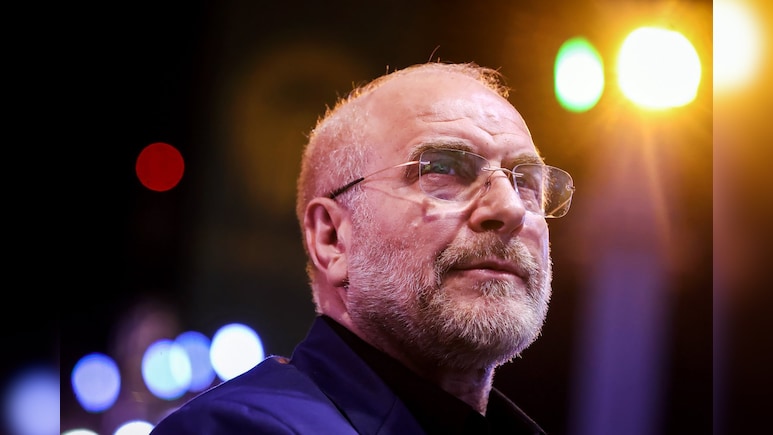
When Mohammad Bagher Ghalibaf posted those words on X in April, with US-Israeli strikes still raining down on Iran and much of Tehran's senior leadership already dead, they landed like a thunderclap.
Listen up...
— محمدباقر قالیباف | MB Ghalibaf (@mb_ghalibaf) April 2, 2026
You Come for Our Home…
You Meet the Whole Family. pic.twitter.com/5raQK72IvH
The Iranian parliament speaker, survivor, negotiator, soldier-turned-politician, was not just issuing a threat. He was announcing himself as the man still standing when nearly everyone else had fallen.
Now, with a peace deal struck and a formal signing set for Switzerland on Friday, Ghalibaf has gone from defiant wartime voice to the architect of Iran's most consequential diplomatic agreement in decades.
Small Town, Revolutionary Fervour
Mohammad Bagher Ghalibaf was born on August 23, 1961, in Torqabeh, a small town near Mashhad in northeastern Iran.
His political consciousness took shape early by the atmosphere of the 1979 Islamic Revolution. As a teenager, he regularly attended religious lectures in mosques, an experience that drew him into public life.
When the Iran-Iraq war broke out in 1980, he was nineteen years old. He joined the Islamic Revolutionary Guard Corps, rising through battlefield command to lead the Imam Reza Brigade and the Nasr Khorasan Division. His brother Hassan was killed in the same war.
IRGC Commander, Police Chief, Mayor
After the war, Ghalibaf's ascent through Iran's power structure was rapid and varied. By 1997, he had been appointed commander of the IRGC Aerospace Force, overseeing missile development and defence strategy, a role he held until 2000.
He then served as chief of Iran's Law Enforcement Command until 2005, during which period human rights groups accused him of overseeing crackdowns on the 1999 student protests and the 2003 demonstrations, according to Foreign Policy.
As police chief, he later claimed he had ordered the use of live gunfire during the 2003 unrest while managing to end it without fatalities — a distinction he offered as evidence of restraint, Foreign Policy reported.
In 2005, he pivoted to civilian politics, becoming Mayor of Tehran, a post he held for twelve years.
He simultaneously pursued academic credentials, earning a PhD in political geography from Tarbiat Modares University and completing Airbus pilot training in France, per the NCRI. He is an assistant professor at the University of Tehran, according to AFP.
ALSO READ: Trump Calls Netanyahu 'Very Difficult Guy', Says Israel Won't Be Around For Two Hours, If...
Parliament Speaker And Wartime Survivor
Elected parliament speaker in 2020, Ghalibaf had built a prominent social media presence long before the war began — posting regularly in Persian and, unusually for a senior Iranian official, in idiomatic American English that raised questions over authorship.
The posts reportedly have been written by a former adviser based in the United States, though this has not been confirmed. When US-Israeli strikes began in late February, his posts shifted in register — sharper, more combative, more personal.
When the strikes killed supreme leader Ali Khamenei, Ali Larijani and a host of other senior figures, Ghalibaf survived.
He emerged as the face of the war effort, leading Tehran's delegation to Islamabad in April for direct talks with US Vice President JD Vance, the highest-level contact between the two countries since before the 1979 revolution.
The Washington Post reported he left a striking impression on the American team as "a refined and professional bargainer — and potential leader of a new Iran."
Powerful, But Not Unchecked
His authority, however, has limits.
Farzan Sabet of the Geneva Graduate Institute told AFP that while Ghalibaf has become "the new public face of the Islamic republic's war effort and diplomacy," he "still answers to higher powers in Tehran" — including Mojtaba Khamenei, named as supreme leader but yet to appear publicly after reportedly being wounded in an airstrike, and the Revolutionary Guards leadership.
In May, Ghalibaf was appointed to oversee Iran's relationship with China, the biggest buyer of Iranian oil, signalling expanding but still circumscribed influence.
"As a politician he's shown himself to be ambitious and opportunistic, but also cautious," Sabet told AFP, a trait that has allowed him to rise without being purged. Whether it is enough to survive the peace may be the defining question of his career.
Essential Business Intelligence, Continuous LIVE TV, Sharp Market Insights, Practical Personal Finance Advice and Latest Stories — On NDTV Profit.