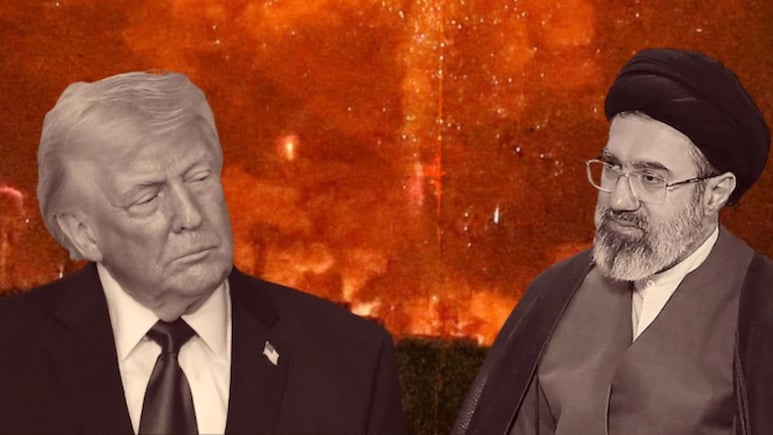
Oil prices rallied sharply on Monday after reports emerged that Iran plans to halt indirect communications with the United States in protest over Israel, casting fresh doubt over diplomatic engagement between Washington and Tehran.
Brent crude futures climbed as much as 6.9% to $97.38 per barrel, reflecting growing concerns that escalating geopolitical tensions could disrupt efforts to stabilize the region and potentially threaten energy supplies.
According to Iran's semi-official Tasnim News Agency, Tehran has decided to stop the exchange of messages with the United States over developments involving Israel.
Also Read | Layoffs Are Rising In Tech, But These Skills Are Helping People Unlock Better Pay
"Iran will stop exchanging messages with the US over Israel," Tasnim reported.
In a separate dispatch, the news agency said Iran would "halt exchanges with the US in protest over Israel."
Tasnim also reported that the "Axis of Resistance", a term used to describe Iran-aligned groups across the Middle East, would activate all fronts, signalling the possibility of broader regional involvement.
ALSO READ: US Bid For Lebanon Ceasefire Falters As Israel Ramps Up Offensive: What It Means For Iran Truce?
The United States and Iran have continued to exchange attacks despite a ceasefire announced in April, raising fresh concerns over the durability of the truce and broader regional stability.
Over the weekend, US forces reportedly struck Iranian radar and drone facilities, as well as targets on Qeshm Island. In response, Iran's Islamic Revolutionary Guard Corps (IRGC) said it launched a retaliatory strike on a US military base in Kuwait.
According to Al-Jazeera, Iranian officials have accused Washington of failing to uphold the terms of the ceasefire.
Mohammad Bagher Ghalibaf, Iran's parliament speaker and lead negotiator, alleged that the US has continued its blockade of Iranian ports and failed to curb Israeli military actions in Lebanon.
"The naval blockade and escalation of war crimes in Lebanon by the genocidal Zionist regime are clear evidence of US noncompliance with the ceasefire," Ghalibaf said in a post on X.
He added: "Every choice has a price, and the bill comes due. It will all fall into place."
Iran's Foreign Minister Abbas Araghchi also reiterated Tehran's position that the ceasefire extends across the region and is not limited to direct US-Iran hostilities.
"It is unequivocally a ceasefire on all fronts, including in Lebanon," Araghchi wrote on X.
"Its violation on one front is a violation of the ceasefire on all fronts. The US and Israel are responsible for the consequences of any violation," he added.
The comments come after Israeli Prime Minister Benjamin Netanyahu said he had instructed the military to carry out strikes on Beirut's southern suburbs, a development that has further heightened tensions and raised questions over the future of the ceasefire arrangement.
Essential Business Intelligence, Sharp Market Insights, Practical Personal Finance Advice, Daily Fuel, Gold and Silver Prices and Latest Stories — On NDTV Profit.