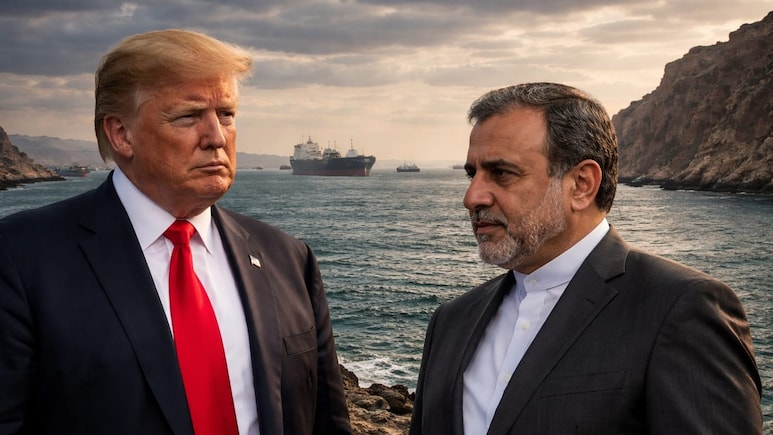
Iranian Foreign Minister Seyed Abbas Araghchi on Wednesday issued a blunt warning to the United States following a new wave of American military strikes on Iranian territory, vowing that Tehran's armed forces will leave 'no attack or threat unanswered'.
"Despite its defeats on the battlefield, the US opted to test our determination," Araghchi wrote on X in the early hours of Wednesday.
"Our Powerful Armed Forces will leave no attack or threat unanswered. Leave our region if you want to be safe." He added that "history of the Persian Gulf has many chapters on dire fates of intruding outsiders," accompanying his post with a satellite image of the waterway.
Also Read | Layoffs Are Rising In Tech, But These Skills Are Helping People Unlock Better Pay
Despite its defeats on the battlefield, the U.S. opted to test our determination.
— Seyed Abbas Araghchi (@araghchi) June 9, 2026
Our Powerful Armed Forces will leave no attack or threat unanswered.
Leave our region if you want to be safe.
History of the Persian Gulf has many chapters on dire fates of intruding outsiders. pic.twitter.com/O17GGtklxA
The warning came hours after US Central Command confirmed that American forces had begun launching self-defence strikes against Iran at 5 pm. ET on Tuesday, at President Trump's direction, in response to the downing of a US Army Apache helicopter the previous day.
'Proportional Response To Unjustified Iranian Aggression': CENTCOM
In a post on X, US Central Command (CENTCOM) said that forces completed self-defense strikes against Iran, June 9, at the Commander in Chief's direction in response to yesterday's downing of a US Army Apache helicopter.
"CENTCOM forces struck Iranian air defense, ground control stations, and surveillance radar sites near the Strait of Hormuz with precision munitions from US Air Force and Navy fighter jets. The operation was a proportional response to recent attacks on US forces and international commercial ships transiting regional waters. US forces remain vigilant and postured to defend against unjustified Iranian aggression."
Apache Crash
The AH-64 Apache went down near the coast of Oman on Monday evening. An unmanned boat rescued two crew members after the aircraft went down, and both soldiers were reported in stable condition.
Senators briefed by CENTCOM commander Admiral Brad Cooper came away with the impression that an Iranian drone had struck the helicopter.
ALSO READ: US Launches Strikes On Iran In Response To Apache Helicopter Downing Near Hormuz
House Speaker Mike Johnson confirmed he had been notified ahead of the strikes, which he described as "proportional and limited," targeting Iranian radar, missile, and command-and-control sites.
A second wave of strikes followed. Iranian media reported explosions and air defence activations in Bandar Abbas, Qeshm Island, Sirik County, and Jask County in southern Iran. Iranian state television IRIB separately reported that two water reservoirs in the Bemani district near the Strait of Hormuz were struck, disrupting drinking water supplies.
The latest clashes undermine a nominally active US-Iran ceasefire that has seen numerous outbreaks of fighting, and could push even a temporary peace deal further out of reach.
The conflict has been ongoing since late February 2026, when the US and Israel launched coordinated strikes on Iran in what was designated Operation Epic Fury. Iran has since carried out repeated retaliatory attacks on American and Israeli targets across the region.
ALSO READ: 'US Must Respond': Trump Vows Retaliation After Iran Shoots Down Apache Helicopter
Essential Business Intelligence, Sharp Market Insights, Practical Personal Finance Advice, Daily Fuel, Gold and Silver Prices and Latest Stories — On NDTV Profit.