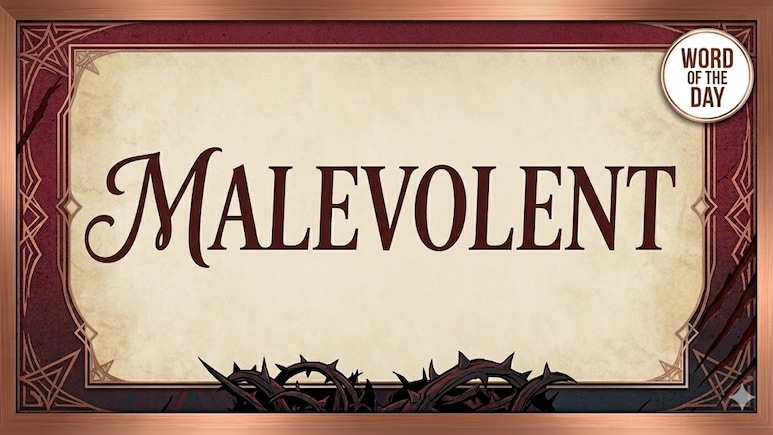
The English language is rich with words that describe human intentions and character with remarkable precision. Among the more powerful and expressive of these is malevolent, a word that captures the idea of deliberate ill will and the desire to cause harm. Though often used in literature and serious discourse, the term continues to appear in journalism, legal writing and everyday conversation when describing individuals, forces or intentions that are genuinely harmful.
As a word of the day, 'malevolent' stands out not only for its strong, evocative sound but also for its ability to describe a particularly dark aspect of human nature, one that goes beyond simple meanness to deliberate, calculated cruelty.
Word Of The Day: Meaning
Also Read | Layoffs Are Rising In Tech, But These Skills Are Helping People Unlock Better Pay
'Malevolent' is an adjective that means having, showing, or coming from intense ill will, spite, or hatred toward others.
A malevolent person doesn't just act badly; they actively desire to cause damage, suffering, or misfortune to others. The word describes someone who harbors genuine hostility and takes satisfaction in the pain or failure of others.
The word can also describe forces, influences, or behaviours that are productive of harm or evil, extending beyond individual character to describe anything with a harmful or malicious nature.
ALSO READ: Quote Of The Day By Sachin Tendulkar: 'Stop Chasing Your Dreams, Because...'
Word Of The Day: Pronunciation
muh-LEV-uh-lent (US pronunciation)
mə-LEV-əl-ənt (UK pronunciation)
The stress falls on the second syllable: "LEV". Say it as "muh-LEV-uh-lent".
Word Of The Day: Origin And Etymology
"Malevolent" entered English around 1500, borrowed from Old French "malivolent" and directly from Latin "malevolentem" (nominative "malevolens"), meaning "ill-disposed, spiteful, envious".
The Latin word is a combination of two parts:
male: meaning "badly" or "ill"
volentem: present participle of velle, meaning "to wish" or "to want"
Together, "malevolence" literally translates to "wishing ill". The term entered English during the late 16th century when Latin heavily influenced English vocabulary, especially in literature and formal discourse.
ALSO READ: Quote Of The Day By Anand Mahindra: 'You Have To Treat Every Day As A New Challenge...'
Word Of The Day: Synonyms
Malicious
Wicked
Spiteful
Sinister
Evil
Harmful
Malignant
Baleful
Venomous
Vicious
Word Of The Day: Antonyms
Benevolent
Kind
Compassionate
Well-meaning
Amiable
Warmhearted
Good-natured
Caring
ALSO READ: Quote Of The Day By Ratan Tata: 'Never Compromise On Your Values And Principles Even If...'
Word Of The Day: Usage In Different Genres
Literature: Malevolent frequently appears in fiction to describe villains, dark forces, or evil intentions. "The malevolent sorcerer plotted his revenge."
Journalism: Used in news reporting to describe individuals or groups with harmful intentions. "The investigation revealed malevolent actors behind the cyber attack."
Psychology: Describes personality traits or behaviours characterised by intentional cruelty. "The study examined malevolent narcissism."
Legal Writing: Applied in court documents to describe deliberate harmful intent. "The defendant acted with malevolent purpose."
Everyday Conversation: While formal, it's used to describe genuinely harmful people or situations. "She gave him a malevolent look."
Use In Modern Society
In modern society, 'malevolent' appears in discussions about:
Cybersecurity threats and malicious actors online.
Psychological assessments of harmful personality traits.
Legal cases involving intentional harm.
Political discourse describing hostile forces.
Entertainment media portraying villains and antagonists.
The digital age has given new relevance to the word, as malevolent intentions can now be executed through technology, from cyberbullying to organised disinformation campaigns.
Takeaway From Word Of The Day
'Malevolent' is a powerful word that precisely describes the deliberate desire to cause harm to others. Understanding this word helps us identify and discuss genuinely harmful intentions with clarity.
The key takeaway: 'Malevolent' goes beyond accidental harm or simple rudeness; it describes calculated, intentional cruelty. When you encounter malevolent people, forces, or influences, recognise them for what they are and protect yourself accordingly.
In a world where we often soften language to avoid confrontation, having words like 'malevolent' allows us to call out genuine evil when we see it. The word reminds us that while most people mean well, some actively wish harm, and recognising that distinction is essential for safety and wisdom.
Essential Business Intelligence, Sharp Market Insights, Practical Personal Finance Advice, Daily Fuel, Gold and Silver Prices and Latest Stories — On NDTV Profit.