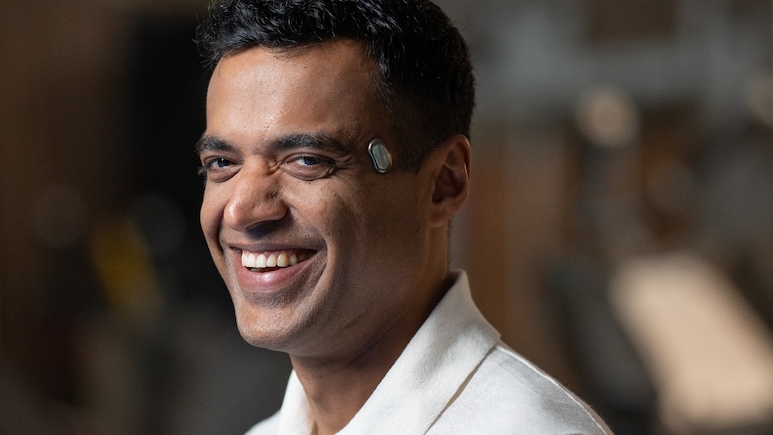
A year after Deepinder Goyal put forward what he called a "provocative idea" linking gravity to ageing, the theory has been published in a peer-reviewed journal.
The paper, "Gravitational Stress, Cerebral Blood Flow, and Aging: A Hypothesis", appears in Ageing Research Reviews. Goyal said in a post on X that Journal Citation Reports places the journal in the top three in its field.
The Idea Behind It
Also Read | Layoffs Are Rising In Tech, But These Skills Are Helping People Unlock Better Pay
For most of the day, people are either standing or sitting, which keeps the brain higher than the heart. The paper argues that, across a lifetime, this posture could play a part in the fall in brain blood flow that is already known to happen with age.
ALSO READ | The Liver Doc vs Deepinder Goyal: Temple Row Escalates As Doctor Calls For Government Regulatory Scrutiny
According to Goyal, two deep brain regions, the brainstem and the hypothalamus, could be particularly at risk. Since these areas help run much of the body, any effect on them could spread to ageing across the whole body, he said.
Laura van Rosmalen, one of the authors, said that in an upright position, the heart is effectively working to send blood up a slope. Young bodies handle this easily, but older bodies cope less well. The authors suggest that minor drops in blood supply, repeated over many years, could take a toll on brain centres that manage circulation, metabolism, sleep, hormones and body temperature.
She pointed out that exercise and sleep, two habits tied to ageing well, both help the brain's blood supply. Physical activity boosts it during waking hours, and lying flat at night removes the uphill effort.
READ | The Liver Doc Doubles Down On Deepinder Goyal Over Temple Device: 'No More Scientific Updates'
'Only Experiments Can Prove It'
Goyal stressed the limits of the work. The paper makes no claim that gravity is the only reason people age, he said. It also puts no number on the effect and recommends no treatment.
"Peer review checked that the argument is strong enough to publish; only experiments can prove whether it is true or false," he wrote. Tests have already begun, he added, and researchers are welcome to join in, even if their aim is to prove the theory wrong.
Last year, I raised a provocative idea: gravity might be an overlooked contributor to aging. Today, the full paper on "Gravitational Stress, Cerebral Blood Flow, and Aging: A Hypothesis" is published in Ageing Research Reviews, a top-three journal in its field by Journal Citation Reports. https://t.co/m0KCYeXD9S What it proposes: we spend most of our waking lives upright, with the brain above the heart. Over decades, this could contribute to the known decline in brain blood flow with age. The brainstem and hypothalamus may be especially vulnerable, and those regions regulate much of the rest of the body, and might contribute to whole body aging. What it does not say: that gravity is the sole cause of aging, how big the effect is, or that anyone should try an intervention. Please note that this is a hypothesis paper. Peer review checked that the argument is strong enough to publish; only experiments can prove whether it is true or false. Experiments to test it are now underway, and if you work in any of these areas, we would welcome your collaboration, including work aimed at disproving it. Big thanks @RosmalenLaura and @SatchinPanda for the incredible effort on putting this together.
— Deepinder Goyal (@deepigoyal) November 21, 2026
Van Rosmalen said the team has suggested several ways to test the idea, including long-term population studies, brain blood vessel imaging, wearable devices and animal research.
Over A Year In The Works
Satchin Panda, a co-author, said Goyal first raised the idea during a brainstorming session more than a year ago. Goyal and Nitish Kumar, both IIT-trained, brought in knowledge of fluid dynamics and brain-monitoring technology.
A first draft of roughly 3,000 words was reworked several times based on comments from physicians, neurosurgeons, biophysicists and bioengineers, and then went through three rounds of anonymous peer review. The published version is about 17,500 words long and cites around 240 studies. The whole process took more than 12 months.
Essential Business Intelligence, Sharp Market Insights, Practical Personal Finance Advice, Daily Fuel, Gold and Silver Prices, Watch Business News Live and Latest Stories — On NDTV Profit.