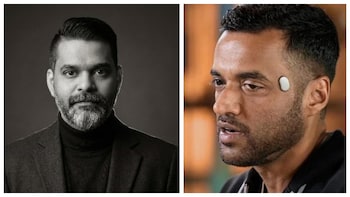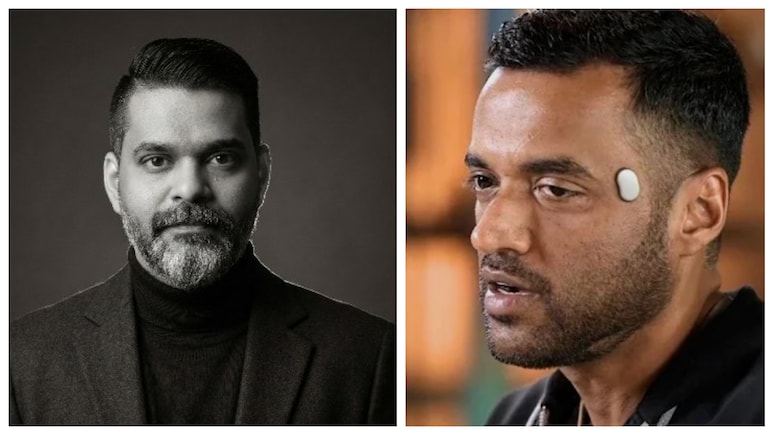
The controversy surrounding Deepinder Goyal's Temple wearable continues as The Liver Doc questions the science behind its claims. After criticising the device on Monday, hepatologist Cyriac Abby Philips shared a detailed review of its research on Tuesday, warning that “science fraud” can be hidden in seemingly credible scientific papers.
What The Liver Doc Found in Temple's Studies?
In a post on X, Philips reviewed Temple's research, which includes four studies, three reportedly awaiting peer review and one internal report. He questioned whether the findings support the company's claims.
One study compared Temple's heart-rate readings with five popular wearables. Philips said Temple funded and conducted the research, analysed the data and used AI to help with the analysis and writing. The test involved 43 young adults running indoors.
Also Read | Layoffs Are Rising In Tech, But These Skills Are Helping People Unlock Better Pay
He questioned differences in data recording, the removal of inaccurate readings and the lack of outdoor tests, varied skin tones and activities beyond running. He said the findings only showed that a sensor near a scalp artery could detect a pulse, not that Temple could measure brain blood flow, vascular ageing or its “Entropy” score.
Another study tested Brain Flow Index on 44 young men, excluding women because their hair affected the reference headset. Philips said neither device directly measured brain blood flow and raised concerns about the study's methods, data adjustments and failure to account for factors such as blood pressure, carbon dioxide and breathing.
Hello friends, now that there are no more scientific updates from Deepinder Goyal on his scammy Temple device, I am moving on to completing my research papers this week. But I will keep a look out for any new "science" they bring so that I can simplify it for you. Long, but worth your time because you should know how science fraud blends beautifully into seemingly good science papers also. That said, Deepinder has uploaded various research papers on the Temple website. https://t.co/xGJN0H7vcG They have performed 4 studies on Temple. Three are in 'so-called' peer review (the trials are not even registered) and one is an internal white paper document from the company. The rest are "foundational research" - other published papers which Deepinder has used (exaggeratingly) to legitimize his device (deceitfully). Because the Temple "minions" are always citing from this webpage, I would like to clear the air on what the studies were done for and what was truly shown. This is for posterity. [1] Temple vs. Five Flagship Werables - Heart Rate Accuracy Study - This paper is an unreviewed, in-house white paper funded, run, and analyzed entirely by Temple Private Limited (with generative AI assisting in the analysis and drafting) rather than an independent clinical trial. The methodology was tilted in Temple's favor: the company compared its own 1-second internal app data stream against Apple Watch Series 12 and Oura Ring 5 data pulled from Apple Health exports that only logged once every 5 seconds, and it forced participants to wear four wrist devices at the same time - pushing half of them onto the lower wrist bone where motion errors are much worse (for example, WHOOP MG's error more than doubled from 2.00 bpm on the upper forearm to 4.58 bpm at the bottom wrist position) and then pooling those worse readings into the headline numbers. Deepinder also applied custom "in-house thresholds" to strip out "failure episodes" before calculating accuracy, tested only 43 young adults during a single indoor treadmill run while excluding darker skin tones and outdoor or non-running activities, and ultimately only showed that an optical sensor taped over a scalp artery can read pulse rate - which proves nothing about Temple's flagship claims of tracking brain blood flow, vascular aging, or metabolic "Entropy" - or even heart rate accurately. This was the study that Deepinder (in)famously told his team to promote as "success" in the Company Slack group. [2] Evaluating Brain Flow Index from a Temple-Worn Wearable (Deepinder had mentioned he would explain the technology behind it - but I dont think he understands his own paper, so I'll do it for him). This non-peer-reviewed preprint was designed, funded, and conducted by Temple (authored by company employees, founder Deepinder Goyal, and paid company consultants/advisers) on 44 young men completely excluding women because hair interfered with the reference headset. Neither device in the study actually measured brain blood flow: near-infrared spectroscopy (NIRS) only estimates hemoglobin concentration changes, and the "brain layer" reference was a mathematical guesswork from Temple Science Team, assuming every participant had an identical 8 mm flat slab of scalp and skull and a fixed 1.5-to-1 brain-to-scalp absorption ratio. The authors threw out the third optical time-of-flight moment (variance) measure - the exact measurement that truly provides the deepest tissue selectivity, because it produced "implausibly inflated" numbers, and they placed the NIRS reference on the opposite side of the forehead rather than under the Temple sensor, making it impossible to rule out local temple skin blood flow. To get their correlations (manipulated) right, they shifted the data by up to ±30 seconds per session to cherry-pick the best alignment, then used one-sided statistical tests without correcting for multiple comparisons, failed to find a statistically significant difference between brain and scalp correlations when lying down and never measured blood pressure, carbon dioxide, or breathing - meaning whole-body blood pressure rushes during inversion-table tilts and deep squats simply pushed blood into the head and moved both sensors together. Nothing about brain flow or its measurement is proven here. [3] Concordance Between a Temple-Worn Optical Wearable and Transcranial Doppler During Exercise and Postural Transitions. This non-peer-reviewed preprint funded by Temple Pvt. Ltd. and co-authored by a paid company consultant, tested only 20 analyzable young adults per protocol after dropping participants for movement-degraded recordings, and its own limitations section admits that the Temple Brain Flow index is "an extracranial optical signal whose cerebral component... the present protocols cannot isolate." Because vigorous cycling and lying flat drive blood into both the inner brain and the outer scalp skin at the same time, a surface skin sensor naturally rises and falls alongside Transcranial Doppler (TCD) ultrasound without ever penetrating to the brain. Furthermore, because Temple's closed-source algorithm outputs a unitless number rather than actual flow velocity (cm/s) or volume, the authors mathematically manipulated the scores. Even then, the timing between the two devices was erratic. Temple led the ultrasound by a median of 19 seconds during cycling but lagged behind by 9 seconds during posture shifts - while the devices were worn on opposite sides of the head, room temperature (25–30°C) and time of day were left uncontrolled despite skin blood flow reacting strongly to heat, beat-to-beat blood pressure were unrecorded, and Temple hid its LED-to-detector spacing so independent scientists cannot verify how deep its light actually reaches. [4] Temple PPG Morphology Demonstrates a Stronger Cardiovascular Age Signal Than Wrist Sites. Written entirely by three Temple employees and posted on pre-print without peer review, this study claims the temple is a better site than the wrist for detecting "cardiovascular age", but it never actually measured the temple and wrist on the same people. Instead, it committed a classic apples-to-oranges error by comparing an internal group of 126 mostly young men wearing a Temple sensor against a separate public dataset (Microsoft Aurora-BP) of 240 much older, gender-balanced people wearing a different wrist sensor, alongside an exploratory public fNIRS dataset of just 13 people where 88 of 89 features failed multiple-comparison correction. Worse still, the Temple sensor recorded pulse waves at a coarse 32 Hz while the wrist sensor recorded at 500 Hz, and both were artificially resampled to 75 Hz - even though resampling cannot recover high-frequency pulse details lost at 32 Hz, which heavily distorts the second- and third-derivative waveform ratios the paper relies on (and the raw Temple signal even came out upside-down, requiring manual sign inversion - again manipulation). Finally, the study excluded everyone over age 60, failed to show a statistically significant difference in overall feature "richness" between the temple and wrist (the confidence interval crossed zero), and never measured actual arterial stiffness or vascular health, merely correlating scalp pulse shapes with chronological birth age - andn othing more. [5] Assessing the Accuracy of Photoplethysmography for Wearable Heart Rate Monitoring Based on Body Location and Body Motion in Uncontrolled Outdoor Environments. This short 2024 conference abstract (no even a proper study) by Zurich researchers had nothing to do with the Temple wearable, brain blood flow, or vascular aging - and it did not even test the temple region. Rather than proving that a head-mounted sensor is ultra-accurate, the study found that even the forehead sensor suffered a 7.1% median error in real-world outdoor conditions (which equals roughly 10 to 13 bpm of error during exercise heart rates of 140–180 bpm, nearly ten times worse than the 1.18 bpm error Temple claims from its indoor treadmill test). Most importantly, the authors concluded that irregular real-world body motion degraded signal quality across all body locations far more than sensor placement helped, directly undermining Temple's marketing claim that putting an optical sensor on the head solves real-world motion artifacts. [6] Temporal Skin Temperature as an Indicator of Cardiorespiratory Fitness Assessed with Selected Methods. This 2022 Polish sports-science study in Biology did not use the Temple device or any wearable sensor at all; it used a stationary, non-contact infrared thermal camera from a distance in a 21°C lab to photograph the bare temple skin of 23 young men before and after a 3-minute cycling sprint. Using a remote thermal camera to justify a skin-taped wearable is physically flawed because sticking an adhesive plastic sensor onto the temple traps heat, blocks sweat evaporation, and ruins the natural radiative skin cooling and rewarming that the camera measured. Even more damaging to Temple's core premise, this paper explicitly explains that temple skin temperature rises after intense exercise because heat-dumping blood is shunted into the external carotid artery on the scalp while actual brain blood flow decreases to protect the brain from overheating - MEANING, this cited paper actually proves that blood flow and temperature at the surface of the temple move in the exact opposite direction of true brain blood flow during intense exercise. Everything opposite of what Deepinder claims. Now that you know there is nothing more than these fraudulent, manipulated, methodologically weak, AI written papers and falsified scientific data on Temple device, do not let them cite these papers again as proof. These are garbage worthy. The only way I see Temple device selling and succeeding is to remodel the device into the form of a leech and state that Ayurvedic principles of good and bad blood (ancient Jalauka Therapy - leech application) were applied as per Ayurveda texts and that the device measures primal energy imabalance as described in Ayurveda and Entropy is actually your Ayurvedic Doshas (without chutney). An example is shown below. Ayush Ministry will legalize, approve this and promote this (because those useless people are allergic to data and science) and 1% of the world and 99% of India will buy this scam-toy! I dont want royalties for this idea. Until the next fraud paper drops, goodbye and goodluck. Image courtesy: (at)drvarunacharya (Instagram)
— TheLiverDoc™ (@theliverdoc) November 10, 2026
A third study compared Temple with transcranial Doppler ultrasound during exercise and posture changes. Philips said only 20 participants were included in each test after movement-affected recordings were removed. Since the device could not separate signals from the brain and scalp—and both areas are affected by exercise and posture—he argued that similar readings did not prove it measured brain circulation. He also questioned sensor placement, testing conditions, missing blood-pressure readings and differences in timing between devices.
A fourth study claimed temple pulse patterns could estimate cardiovascular age better than wrist readings. Philips said it compared separate datasets rather than testing both devices on the same people. He also questioned an fNIRS study involving 13 participants and said the research did not directly measure heart health or artery stiffness.
Philips further challenged two studies cited by Temple: a 2024 outdoor heart-rate study that did not test Temple, and a 2022 thermal-camera study that used no wearable device. He said temperature changes at the temple may reflect blood flow in scalp vessels rather than inside the brain.
READ | Deepinder Goyal Vs Doctors: What Is The Row Over 'Temple' - An Explainer
Call For Government Review
Philips called for government regulators to examine Temple's claims before the device becomes more widely available and sarcastically suggested the company could use Ayurvedic ideas to market the device, arguing that its claims lack strong scientific evidence.
Goyal's Response
Meanwhile, Goyal has defended Temple, saying it is a fitness and AI device, not a medical product, and is not meant to diagnose or prevent diseases. He said BrainFlow is not its main feature, with Entropy being the key metric. However, research on Entropy has not yet been published. Goyal said the research is still ongoing and buyers can wait for more evidence.
Temple is worn on the side of the forehead. The company says BrainFlow tracks changes in brain circulation, while its Entropy score, ranging from 1 to 250, shows how hard the body is working. Priced at around Rs 85,000, the device opened for pre-orders on November 1, with deliveries expected in about three months.
Essential Business Intelligence, Sharp Market Insights, Practical Personal Finance Advice, Daily Fuel, Gold and Silver Prices and Latest Stories — On NDTV Profit.