Stock Market Crash Today: Nifty, Sensex Shed Over 1% As Middle East Crisis Triggers Global Rout; IndiGo, L&T Top Losers
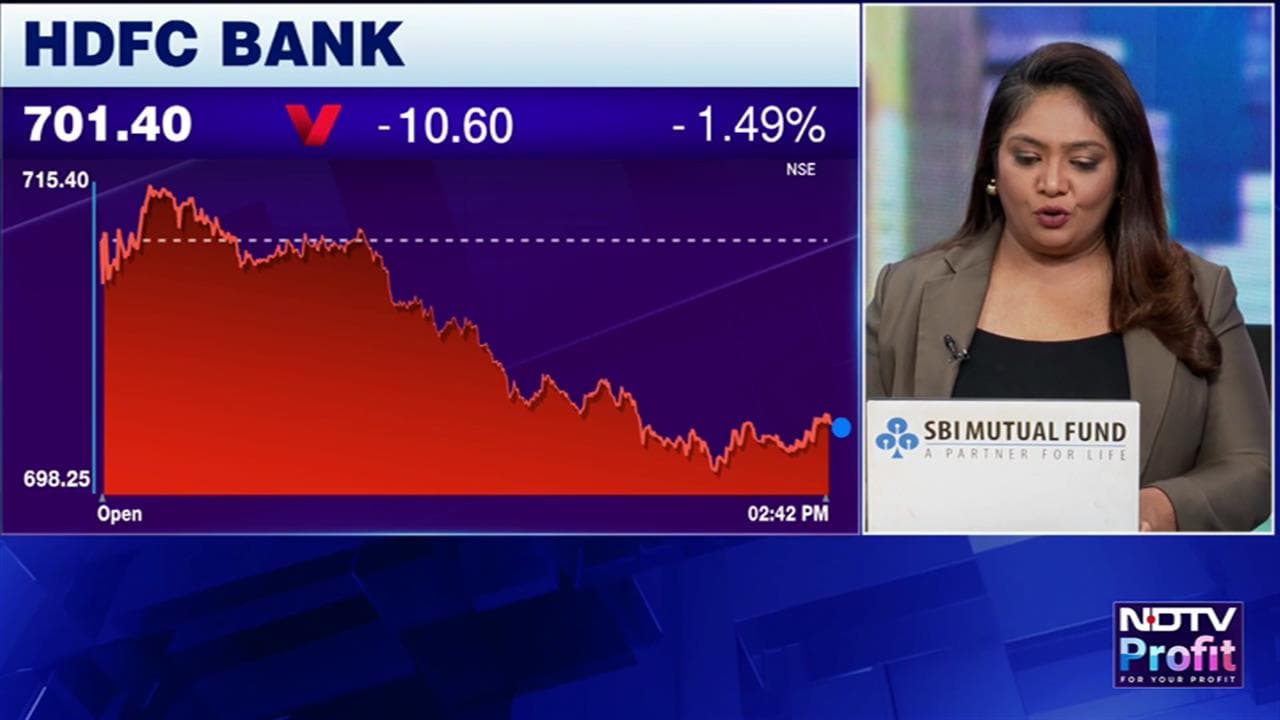
Stock Market Today: Nifty 50 ended 312 points or 1.24% lower at 24,865 and the BSE Sensex settled 1,048 points down at 80,238.

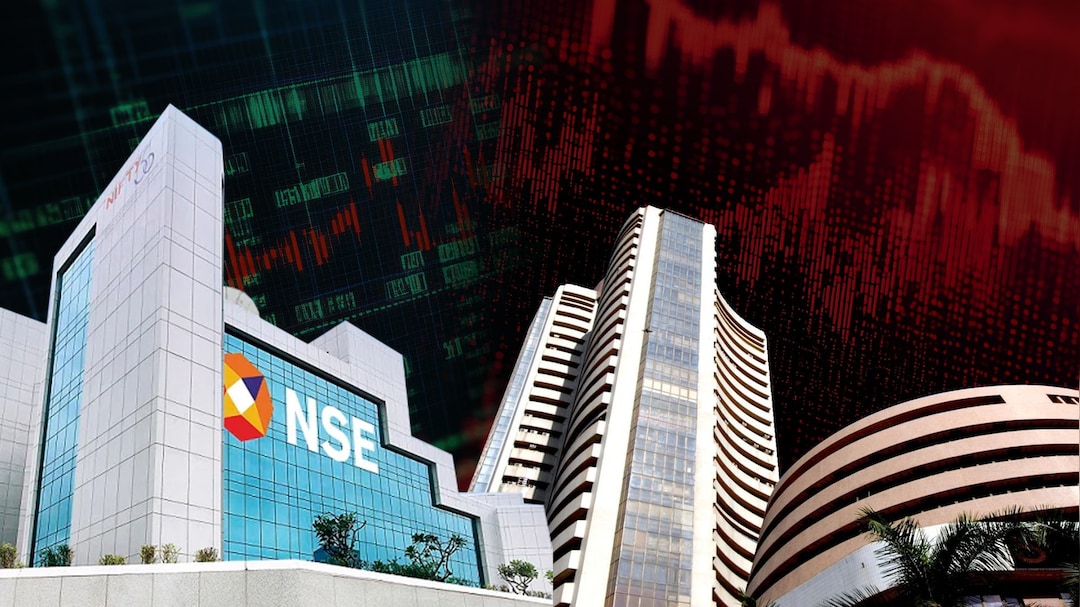
Hello and welcome to NDTV Profit's live coverage of equity markets today!
India's benchmark equity indices plunged on Monday amid a global selloff triggered by the crisis in the Middle East now in its third day with no signs of de-escalation. The Nifty 50 ended 312 points or 1.24% lower at 24,865 and the BSE Sensex settled 1,048 points down at 80,238. Intraday, both indices fell over 2%.
Broader markets also fell, with the Nifty Midcap 150 and Nifty Smallcap 250 shedding 1.7% and 1.9%, respectively.
Larsen & Toubro and Reliance Industries were the top draggers on the blue-chip Nifty index. InterGlobe Aviation and L&T were the top percentage losers.
Twelve out of 15 sectoral indices on the NSE fell, led be auto and energy stocks. Defence, metal and pharma counters ended higher.
The rupee sunk under pressure from higher oil prices and likely hit to Indian exports to the Gulf that weighed on macro sentiment.
European indices fell after open while key Asian benchmarks Nikkei, Hang Seng and Kospi closed sharply lower.
Brent prices surged 10% to $80 per barrel as the conflict plunged the global crude market into turmoil, with the effective closure of the Strait of Hormuz. Gold rose 2% to trade around $5,390 an ounce.
That's all from NDTV Profit on markets today. Thank you for joining and Happy Holi!
For continued coverage of business news, continue following our website. This live blog has ended.
Stock Market News Live Updates: NSE, BSE Closed Tomorrow
The NSE and BSE will be closed on Tuesday on the occasion of Holi. Market watchers can expect global equities to remain volatile in the coming days amid no sign of de-escalation in the Middle East conflict.
Stock Market Crash News Live Updates: S&P 500, Nasdaq Futures Down
US equity futures traded lower as of 3:50 p.m. India time amid a global rout from the Middle East crisis.
- S&P 500 futures down 1%
- Dow Jones futures down 1%
- Nasdaq 100 futures down 1.4%
Rupee Vs Dollar: INR Ends Weaker
The rupee ended 50 paise lower at 91.475 against the dollar, tracking weakness among other emerging market peers.
Stock Market Crash News Live Updates: Nifty, Sensex Shed Over 1%
India's benchmark equity indices plunged on Monday amid a global selloff triggered by the crisis in the Middle East now in its third day with no signs of de-escalation. The Nifty 50 ended 312 points or 1.24% lower at 24,865 and the BSE Sensex settled 1,048 points down at 80,238. Intraday, both indices fell over 2%.
Broader markets also fell, with the Nifty Midcap 150 and Nifty Smallcap 250 shedding 1.7% and 1.9%, respectively.
_02_March_26.png)
_02_March_26.png)
_02_March_26.png)
_02_March_26.png)
_02_March_26.png)
_02_March_26.png)

Stock Market Crash News Live: Jefferies, Morgan Stanley Back 30 Overweight Stocks
Jefferies' latest India strategy report has highlighted 22 stocks that the firm is 'overweight' on. These companies are usually long-term growth stories, and their prospects won't be impacted by global jitters.
The three top picks include banking giants HDFC Bank, Axis Bank and SBI, while AU Small Finance Bank also makes the cut, having received approval for becoming a universal bank last year. Jefferies' final picks in the BFSI sector are Bajaj Finance and Chola Finance.
Morgan Stanley has recently made a few key changes to its focus list, with Adani Ports, Lenskart and Prestige Estates joining the list at the expense of Reliance Industries, Titan and Interglobe Aviation.

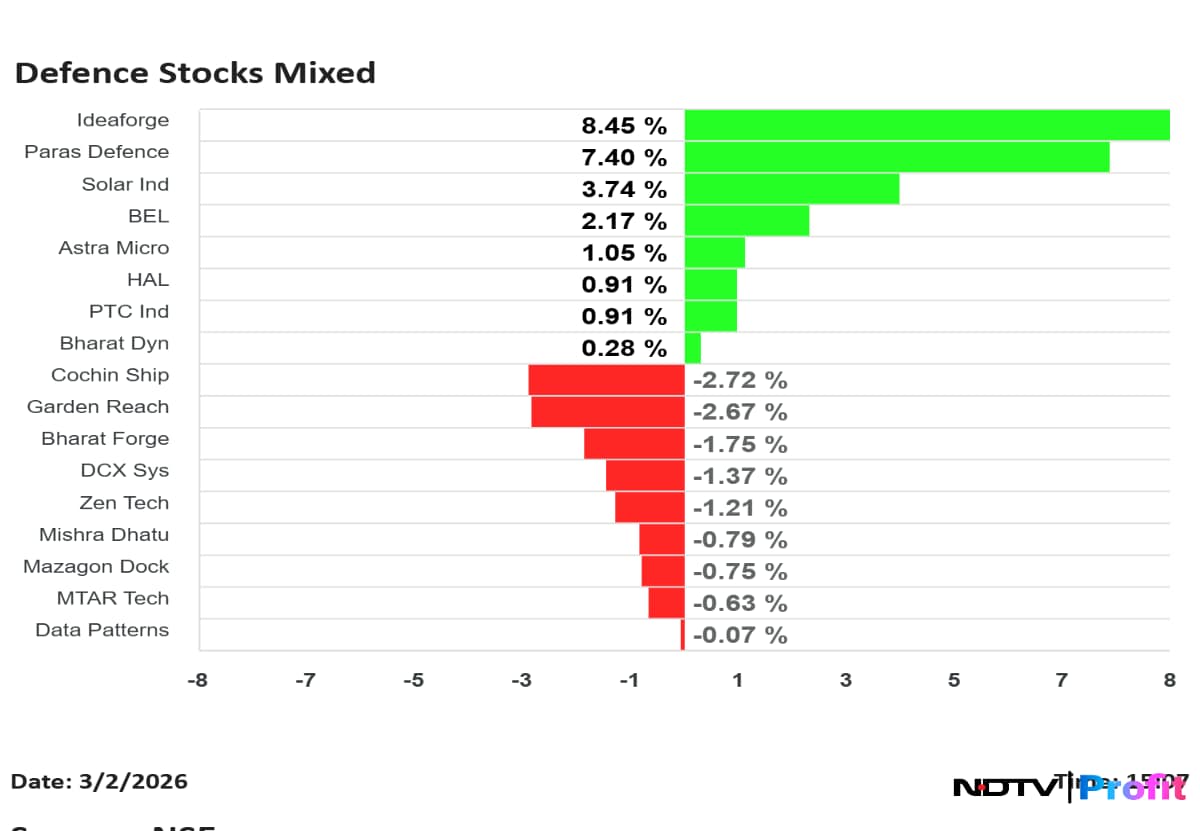
Stock Market News Today Live: Defence Stocks Pare Gains
A bunch of defence stocks, that managed to buck a broader market rout, pared some initial gains. Still, the Nifty Defence index is set to end higher.
Stock Market News Today Live: Stocks Gaining Most From Day's Low
- MRF
- Hitachi
- 3M
- Shree Cements
- Lumaz Industries
- Solar Industries
Stock Market News Today Live: Oil Jumps on Hormuz Fears; Gold Gains
Oil prices surged the most in four years as traders weighed disruption risks around the Strait of Hormuz. Brent jumped as much as 13% to the highest since Jan 2025 and was still up over 9%, despite OPEC agreeing to raise output by 260,000 bpd next month.
Shipping risks intensified, with about 40 VLCCs idling in the Gulf and major maritime insurers withdrawing war-risk cover for vessels entering the region.
Gold rose for a fourth straight day on safe-haven demand, extending gains to over 25% this year. The 14-day RSI near 65 suggests momentum is strong but not yet overbought.
Force Motors Share Price Today: February Sales Update
Force Motors February Sales Update (Change, YoY)
- Total Sales up 8% At 3,890 Units
- Domestic Sales up 8.6% At 3,825 Units
- Exports down 17.7% At 65 Units
Stock Market News Today Live: Israel Benchmark Pops
Amid the global rout in equities, there is but one standout. Israel's benchmark TA-35 index jumped more than 3%, the highest in the world today, powered by a clutch of defence stocks.
BEL Share Price Today: Bharat Electronics Changed Dividend Record Date
Bharat Electronics board revised the record date for interim dividend to March 6.
Exchange Filing
Stock Market Crash Live Updates: European Indices Tick Lower
European stocks began March on a negative note, retreating from record levels touched last week, as escalating tensions with Iran sparked a broad risk-off move across global markets. The STOXX 50 fell nearly 2%, while the STOXX Europe 600 dropped 1.7%, reflecting a widespread equity sell-off.
- London's FTSE down 0.7%
- France's CAC 40 down 1.8%
- Germany's DAX down 2.3%
Stock Market Crash News Live Updates: Nifty Erodes Rs 4 Lakh Crore In M-Cap
The blue-chip Nifty 50 index has shed over Rs 4 lakh crore in market cap so far today, rattled by the Iran war which entered its third day. The index is down 2% or 500 points.
_02_March_26.png)
_02_March_26.png)
_02_March_26.png)
_02_March_26.png)
Stock Market Crash Live Updates: D-Street Quick Wrap
- Over One-Fourth Nifty Stocks Fall Between 2-7%
- Nifty Sees Worst YTD Start Since 2020
- Nifty Defence Losses Strength, Slips In Red
- All Sectoral Indices Fall, Nifty Auto Worst Hit
- 8 Sectoral Indices Fall Over 2% Each
- Consumer Durables, Auto Stocks Fall The Most
- 95% Nifty Midcap 150 Stocks Decline In Trade
- 90% Nifty Smallcap 250 Stocks Decline In Trade
Share Market News Updates: India-Canada Deals Open New Front
Canadian Foreign Affairs Minister Anita Anand and External Affairs Minister S Jaishankar exchanged documents of three MoUs on critical minieral cooperation, promoting the use of renewable energy, and cultural cooperation, in the presence of PM Narendra Modi and Carney.
Canadian firm Cameco Corp. will supply uranium under a $1.9 billion deal as India expands its nuclear power generation to meet renewable energy targets.

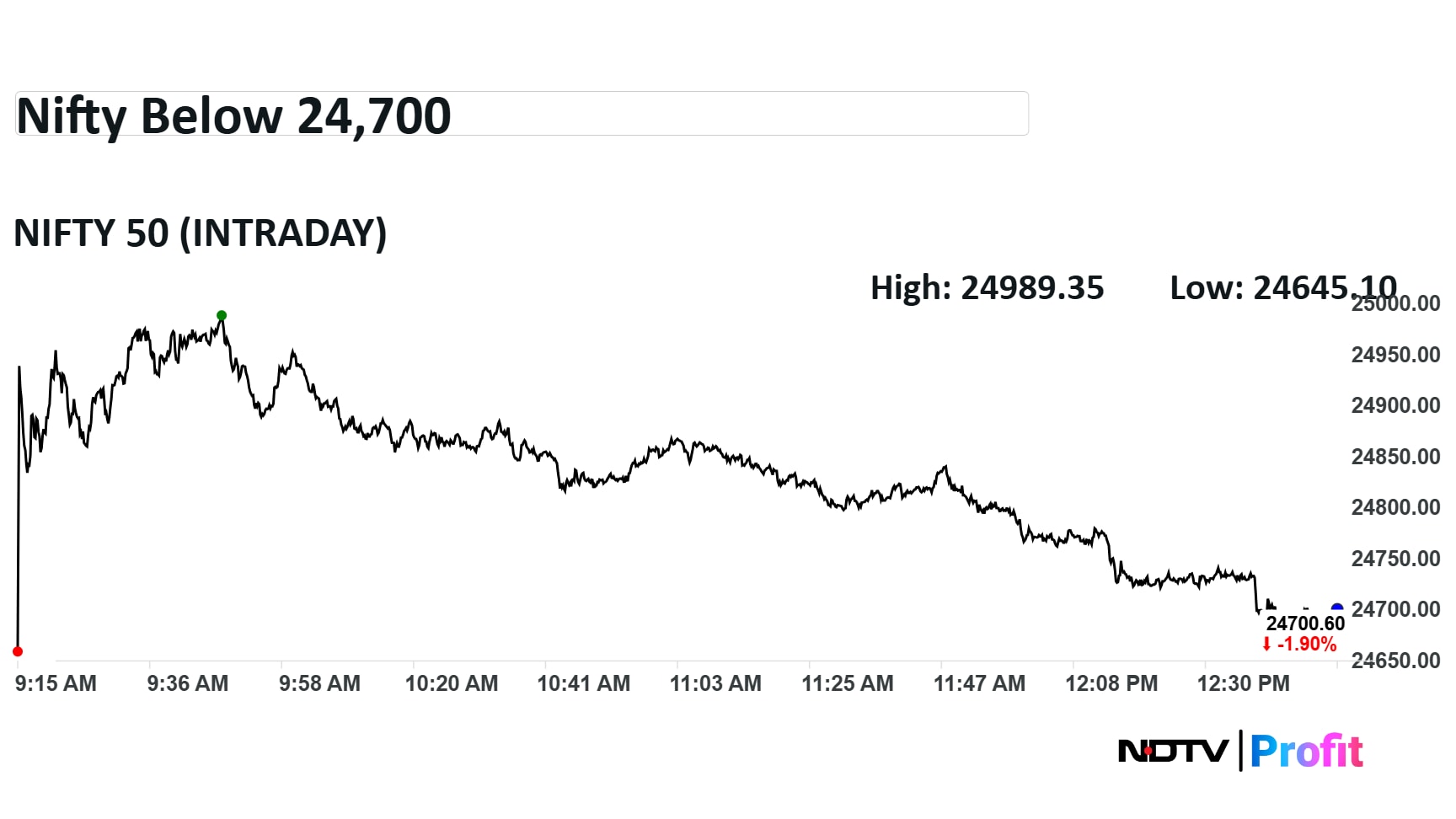
Share Market News Updates: Nifty Below 24,700!
Nifty dipped below the key support zone of 24,700. The benchmark fell 2.1% intraday, sharpest decline since Budget day.
Share Market News Updates: Mahindra Rationalisation
Share Market News Updates: Mahindra Rationalisation
- Mahindra rationalises global portfolio
- Mahindra exits non-viable Japan agri-machinery business
- Mahindra exits from Mitsubishi Mahindra Agricultural Machinery Co
- Exit is part of disciplined, prudent capital allocation and long-term value focus
- Mahindra to cease Japan agri-machinery operations by FY27 H1
- The company has planned orderly transition planned
- Mahindra to continue parts and warranty support for Japan customers during transition
Share Market News Updates: Samir Arora To NDTV Profit

Share Market News Updates: ABB India To Transfer Robotics Business To Arm
ABB India will transfer its robotics business to arm ABB Robotics for Rs 1,568 crore under a business transfer agreement.
Source: Exchange filing
Share Market News Updates: Suraksha Diagnostic CFO Resigns
KS Ravindra has resigned from the position of Group Chief Financial Officer (CFO) of Suraksha Diagnostic due to his personal reasons. He has confirmed that there is no other material reason for his resignation other than the above.
Source: Exchange filing
Stock Market Crash News Live Updates: BSE F&O Positions
A quick breakdown of futures & options (F&O) positioning in the BSE market across four categories:
- Long Build-Up: Solar Industries, Hindustan Zinc
- Short Covering: Bharat Electronics, Muthoot Finance
- Long Unwinding: Petronet LNG, Motherson Sumi Wiring India
- Short Build-Up: IndiGo, Larsen & Toubro
Share Market Live News Updates: Atul Auto Sales
Atul Auto February Sales (Change, YoY)
- Total Sales up 18% At 3,429 Units
- Total Domestic Sales up 24.6% At 2,940 Units
Dixon Tech Share Price Today: JPMorgan Maintains Bullish Outlook
Dixon Technologies has been one of the key victims of the broad-based correction within the Electronics Manufacturing Services (EMS) space over the course of the last six months. Even at a time when the stock has corrected over 40% in the last six months, JPMorgan has come out with a note on the EMS major, maintaining a bullish call on the counter while keeping the target price of Rs 13,700 unchanged.
Stock Market News Today Live: Ridham Desai's Focus List — Adani Power, Lenskart
Amid heightened global tension, Morgan Stanley's Ridham Desai has updated his focus list, with Adani Power, Lenskart and Prestige Estates being the key additions while Reliance Industries, Titan and Interglobe Aviation make their way out.
In his latest note, Desai has highlighted Adani Power as a key counter to watch due to the company's strong market positioning as India's largest independent power producer and second-largest thermal developer after NTPC, with a market share of 8% in both coal capacity and generation.

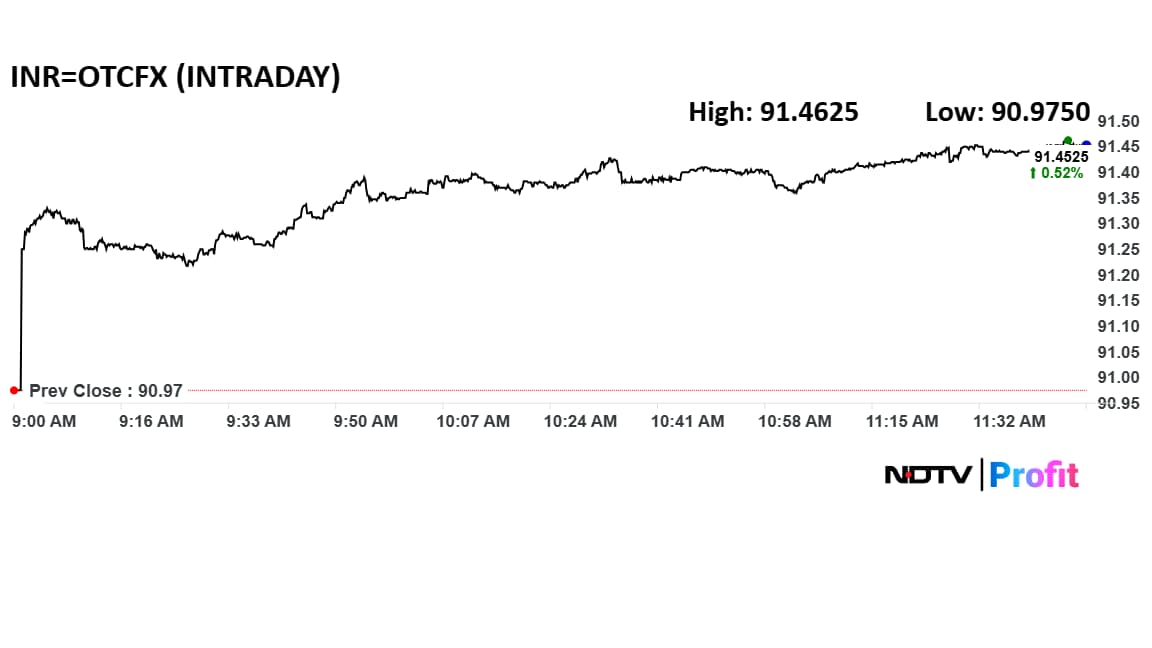
Rupee Vs Dollar Today Live Updates: INR Depreciates Most Since Feb 6
The Indian rupee fell as much as 49 paise or 0.53% to 91.46 against the US dollar. This is the sharpest intraday fall since Feb. 6. All major Asian currencies barring the Honk Kong dollar fell.
The Dollar Index (DXY) has edged higher toward the 98 mark, signaling renewed demand for the greenback dollar as global uncertainty rises. Whenever geopolitical tensions escalate or global growth visibility weakens, capital gravitates toward the dollar due to its reserve currency status and liquidity depth. The uptick in US 10-year yields toward the 4% zone is also supporting the dollar, as higher yields attract defensive flows. This combination of firmer yields and geopolitical uncertainty is strengthening the greenback across emerging market currencies.
"USD/INR has moved above the 91 level, indicating pressure on the rupee. A rising dollar, elevated crude prices, and persistent foreign outflows are creating headwinds for the domestic currency. The rupee’s depreciation is not disorderly yet, but it reflects global positioning rather than local panic," said Harshal Dasani, business head at INVAsset PMS.
"If DXY sustains above current levels and oil remains firm, the pair could stay bid in the near term. However, any easing in geopolitical tensions or stabilisation in global yields may cap further upside. For now, currency markets are signaling caution, with capital preservation taking precedence over risk appetite," he said.
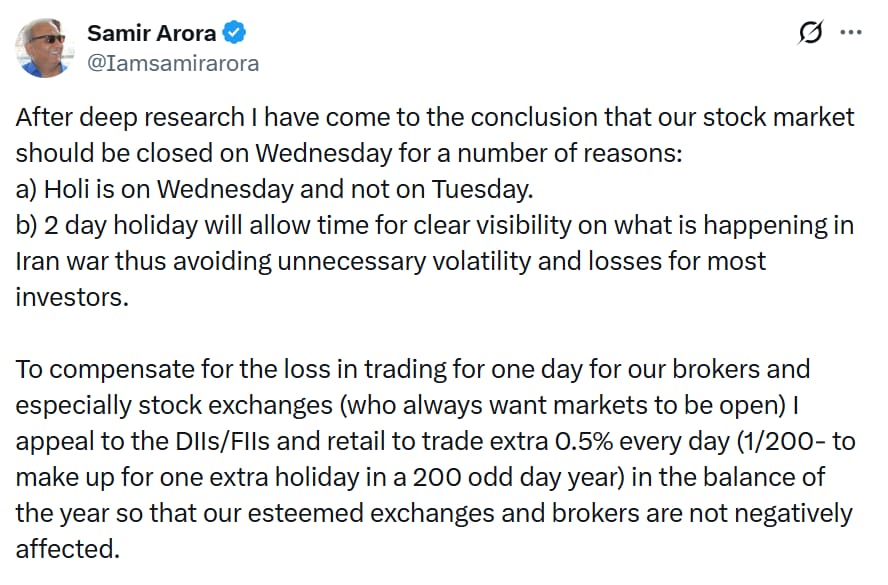
Stock Market News Today Live: Samir Arora Wants Another Holiday
Market veteran Samir Arora somewhat jokingly has suggested that the stock market should be closed on Wednesday as well. He said two days of holidays will allow markets time to process the Iran war situation and avoid "unnecessary volatility".
And what about the loss for brokers? Read below:
Stock Market News Today Live: More Trouble For Global Shipping, Exporters
Global shipping giant Moller-Maersk has suspended all vessel crossings through the Strait of Hormuz, citing escalating tensions in the Middle East. "We are suspending all vessel crossings in the Strait of Hormuz until further notice. As a result, services calling ports in the Arabian Gulf may experience delays, rerouting, or schedule adjustments, " the Danish shipping company said.
Key points
- Suspending all vessel crossings Strait of Hormuz until further notice
- Paused future Trans Suez sailings through the Bab el-Mandeb Strait
- ME11 (Middle East-India to Mediterranean) rerouted around Cape of Good Hope
- MECL (Middle East-India to East Coast US) rerouted around Cape of Good Hope
- Will prioritise efficient Trans-Suez route for ME11 and MECL as situation permits
- Cargo acceptance for the Middle East area remains open
- Services in ports of Arabian Gulf may see delays, rerouting, schedule adjustments
- Safety of our crews, vessels and customers’ cargo remains our key priority
- To continue to monitor the situation closely and take all needed actions
- Remain committed to minimising the impact on our customers’ supply chains
- To resume normal ops once the situation stabilises & security situation permits
Gold, Silver Prices Today Live Updates: Sharp Jump In MCX Futures
Gold and silver prices spiked sharply on Monday as investors sought refuge in safe-haven assets amid escalating geopolitical tensions in the Middle East. On the Multi Commodity Exchange (MCX), gold April futures rose 2.8% and touched highs near Rs 1.67 lakh per 10 grams, while silver May futures rose 2.6% to above Rs 2.9 lakh per kg. The rally in bullion coincided with heightened volatility across global markets following military escalation between the US, Israel and Iran over the weekend.

Stock Market News Today Live: Where Does Oil, Indian Equities Go From Here
Mark Matthews of Julius Baer told NDTV Profit that current oil prices indicate the situation is not a long‑term issue. He noted that Asia currently has high inventories of oil, which should help cushion any near‑term disruptions.
Matthews added that he does not foresee any long‑term impact on India from the ongoing war, emphasizing that Indian equities have no direct relationship with oil prices. The Indian economy has become much stronger over time, while the Indian market has traded sideways and consequently become less expensive. Overall, he believes India has emerged as a strong long‑term investment story.
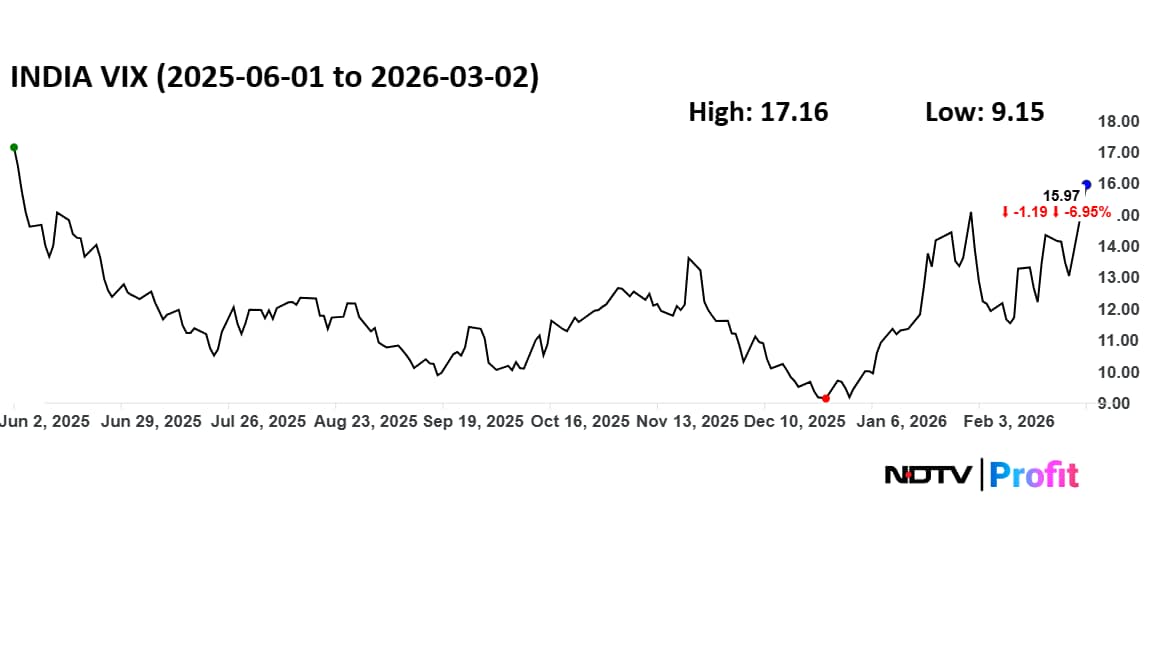
Stock Market News Today Live: Volatility At Nine Month High
The India Volatility Index, known as the fear gauge, soared to a nine-month high today. The India VIX jumped nearly 20% to 16.38, a level last seen during June's 12-day Israel-Iran war.
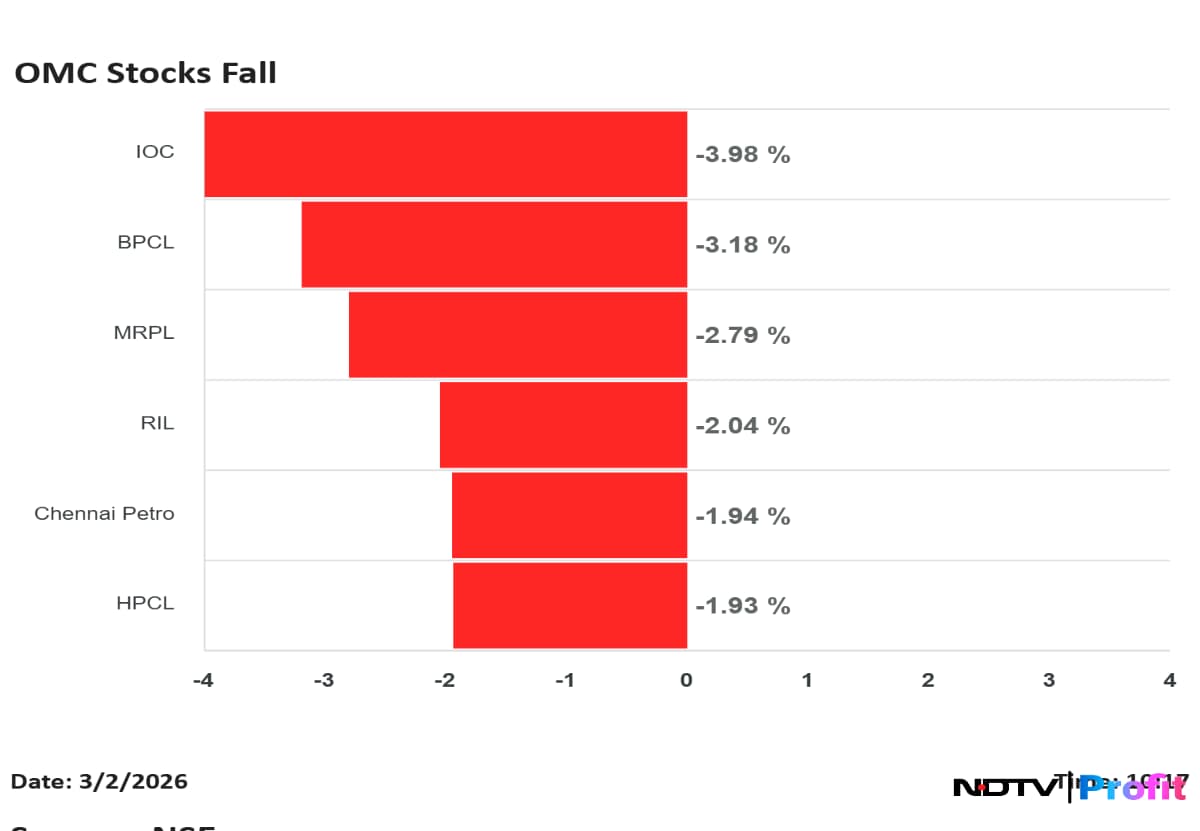
Stock Market Live Updates: Indian Oil, BPCL, HPCL Shares Down
Indian Oil, BPCL, Mangalore Refinery, Chennai Petroleum and HPCL all fell during early trade.
Higher oil prices due to the Iran war will impact shipments to refineries operated by these companies and eat into their fuel margins.
Stock Market News Live Updates: Shree Ram IPO Lists At Sharp Discount
Sharses of Shree Ram Twistex listed at a sharp 33% discount to the IPO price on Monday.
The scrip opened at Rs 68, compared to the issue price of Rs 104.
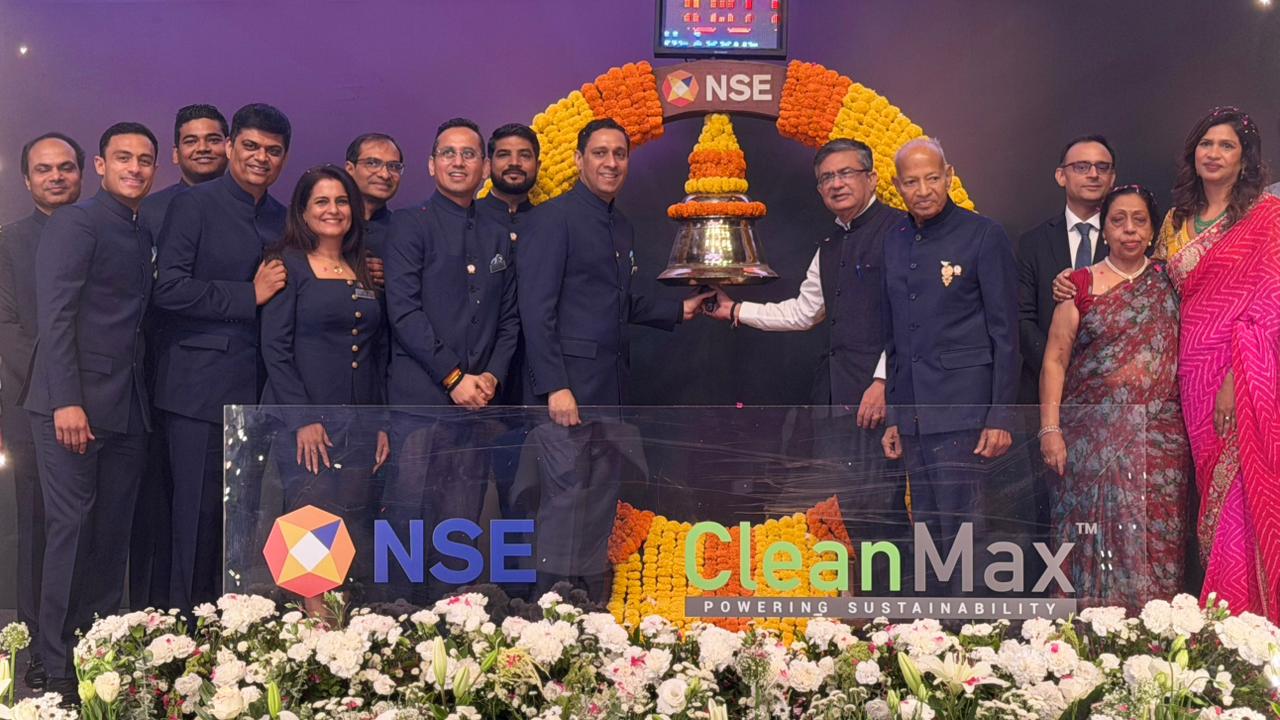
Stock Market News Live Updates: Clean Max Enviro IPO Lists At Discount
Clean Max Enviro Energy Solutions listed at a discount of nearly 9% to the IPO price. The scrip opened at Rs 960 versus issue price of Rs 1,053 on NSE.
Stock Market News Live Updates: Infosys, TCS, Coforge Among 10 Stocks Seeing Target Cuts By Citi
Citi Research has lowered target prices across its India IT coverage by 14-29%, citing changes in valuation multiples and terminal growth assumptions, while maintaining a cautious stance on the sector. The brokerage cut its target price on Infosys to Rs 1,440 from Rs 1,700. TCS saw its target reduced to Rs 2,500 from Rs 3,020, while HCL Technologies was lowered to Rs 1,460 from Rs 1,700.

Stock Market News Live Updates: Reasons Behind Monday Mayhem

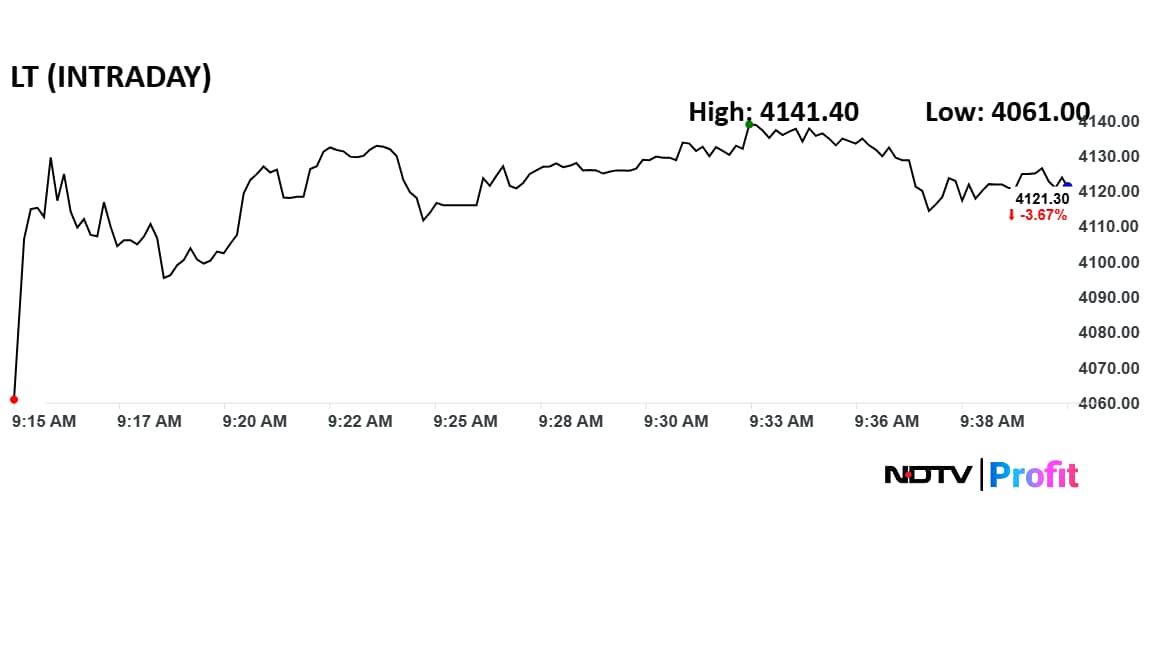
L&T Share Price Today: Why Is Larsen Stock Down
Shares of Larsen & Toubro fell as much as 3% during early trade, becoming the top drag on the benchmark Nifty 50. The stock is under pressure due to the Middle East conflict. Iran has attacked Gulf neighbours Qatar, UAE and Kuwait after US and Israeli strikes. The Gulf is a major source of deal wins and existing project pipeline for L&T. The company has been securing large orders for construction and engineering projects in the GCC countries. Instability in such a key market can dampen income.
_02_March_26.png)
IndiGo Share Price Today: Stock Down 6.8%
Shares of InterGlobe Aviation, parent of IndiGo airlines, tanked nearly 7% during early trade as the Middle East conflict trigerred flight cancellations and airspace closure.
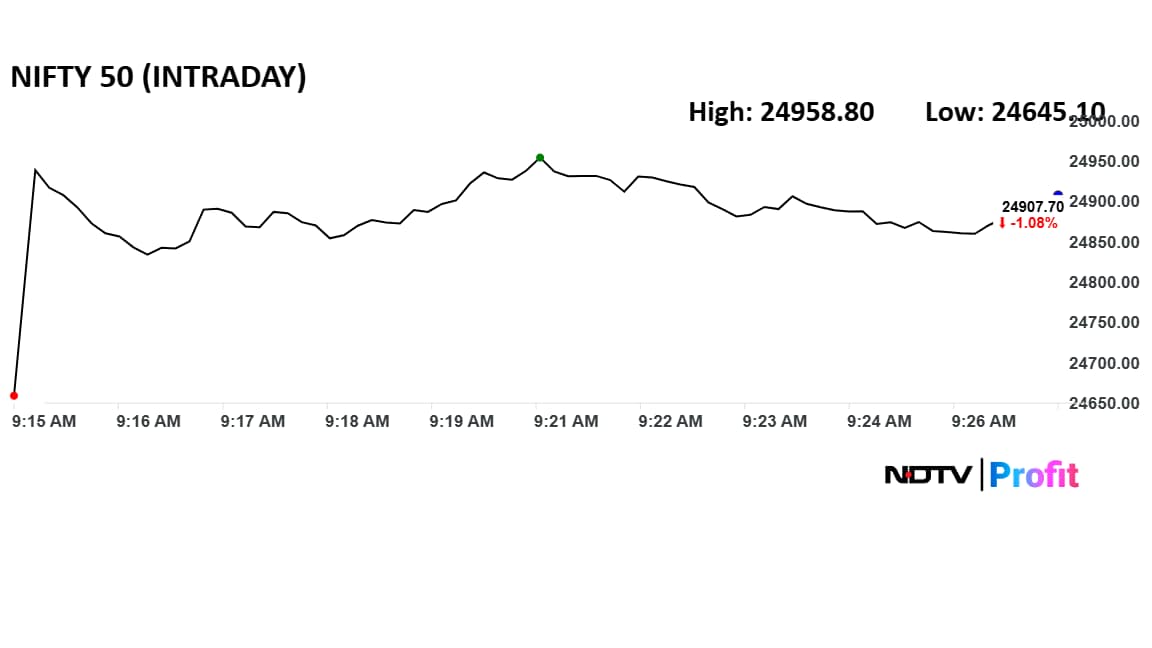
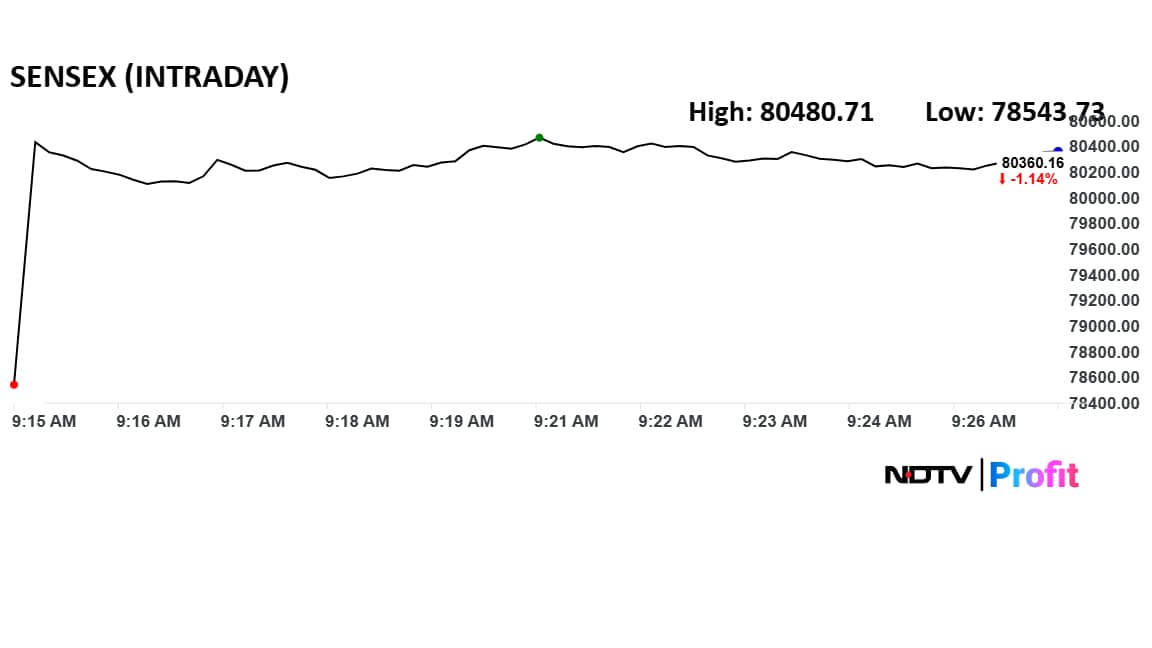
Stock Market Live Updates: Nifty Below 25,000, Sensex Tumbles 1,000 Points;
India's benchmark equity indices tumbled at open as the Middle East crisis pushed investors out of risk assets and seek shelter in gold.
The Nifty opened 520 points or 2% lower at 24,659 and Sensex dropped 2,740 points or 3.4% to 78,543.
_02_March_26.png)
_02_March_26.png)
_02_March_26.png)
_02_March_26.png)
Stock Market News Live Updates: Bajaj Auto Monthly Sales Data
Bajaj Auto February Sales (Change In % YoY)
- Total Sales up 27% At 4.48 Lk Units YoY
- Exports up 28% At 2.16 Lk Units YoY
- Domestic Sales up 27% At 2.33 Lk Units YoY
- CV Sales up 30% At 68,338 Units YoY
- 2-Wheeler Sales up 27% At 3.8 Lk Units YoY
Bond Market Live: Yield Rises
The yield on the 10-year government bond opened 3 basis points higher at 6.69%
Rupee Vs Dollar: INR Opens Weaker
The rupee opened 27 paise lower at 91.25 to the dollar. The dollar index, which tracks the index against a basket of major currencies, surged 0.3% amid Middle East crisis.
Oil prices jumped over 13% to above $80 per barrel. Higher oil prices is a negative factor that weighs on the INR.
Nifty Today Live: Index Plunges 1,000 Points At Pre-Open
The Nifty 50 plunged 1,000 points to at pre-open session. The immediate support for the index is pegged at 24,900.
Stock Market News Live Updates: Ashok Leyland Monthly Auto Sales
Ashok Leyland February Sales Date (Change in % YoY)
- Total Sales up 24% At 22,157 Units
- Total M&HCV Sales up 28 % At 14,755 Units
- Domestic Sales up 28 % At 20,314 Units
Stock Market News Live: Risk Aversion Setting In
David Roche, strategist at Quantum Strategy, told NDTV Profit that the risk premium for equities has increased amid the Middle East conflict. He said oil prices may spike before eventually settling at a more rational level.
According to him, structural damage in Iran could persist for 8 to 24 months. Roche added that the impact of these developments on market fundamentals has not yet been fully seen. He also expects oil prices to rise by 10–20% due to supply constraints.
Stock Market Today Live: Time To Rebalance Portfolio? Here's Quantum's Strategy
At a time when geopolitical tensions have escalated thanks to the US-Iran conflict, investment research firm Quantum Strategy is adjusting its portfolio and has given a detailed note on how the firm is recalibrating its portfolio in the wake of recent global events.
In its latest note, Quantum Strategy has forecasted substantial disruptions to global supplies and a prolonged war. As such, the firm is reinstating its position on Brent Crude while increasing its allocation to gold and other hard assets by 10%. Quantum is particularly avoiding the US dollar as a safe haven, instead opting for the Australian and Singaporean dollars.

Nifty Today Live Updates: 24,900 Level To Watch
According to market expert Kush Bohra, the Nifty 50's immediate support lies at 24,900 and positional support at 24,600.
GIFT Nifty Live Updates: Check Support Levels
Gift Nifty is indicating a negative start, with Nifty likely to open near 25,100, down close to 100 points. The index continues to trade within a downward-sloping channel, reflecting persistent selling pressure in recent sessions.
The 25,100 level is now a critical lower boundary. A sustained move below this zone could trigger a technical sell-off toward the 24,700 levels. On the upside, resistance is placed at 25,350–25,400, while immediate support lies in the 25,100–24,950 band.
Read the full trade setup for today:

Oil Prices Today Live: Brent, WTI Crude Jumps Most In Many Years
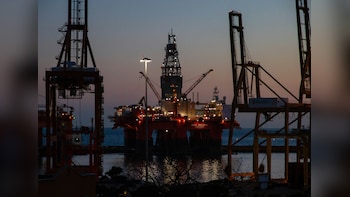
Oil prices surged the most in four years after escalating conflict involving Iran disrupted tanker traffic through the Strait of Hormuz, a critical chokepoint for global energy supplies. Brent crude jumped as much as 13% to trade above $82 a barrel — its highest level since January 2025 — while West Texas Intermediate hovered near $72. The sharp move followed an effective halt in tanker flows through the strait, as shipowners and traders imposed a self-directed pause amid widening hostilities.
Stock Market News Live Updates: Nikkei, Hang Seng, Kospi Down
Asian shares tumbled on Monday, with Hong Kong and Japanese benchmarks dropping the most amid the conflict in the Middle East, prompting investors to trim risk exposure and seek haven assets.
- Nikkei down 1.4%
- Hang Seng down 1.9%
- Kospi down 1%
- ASX 200 down 0.5%
- CSI 300 down 0.3%
Essential Business Intelligence, Sharp Market Insights, Practical Personal Finance Advice, Daily Fuel, Gold and Silver Prices and Latest Stories — On NDTV Profit.