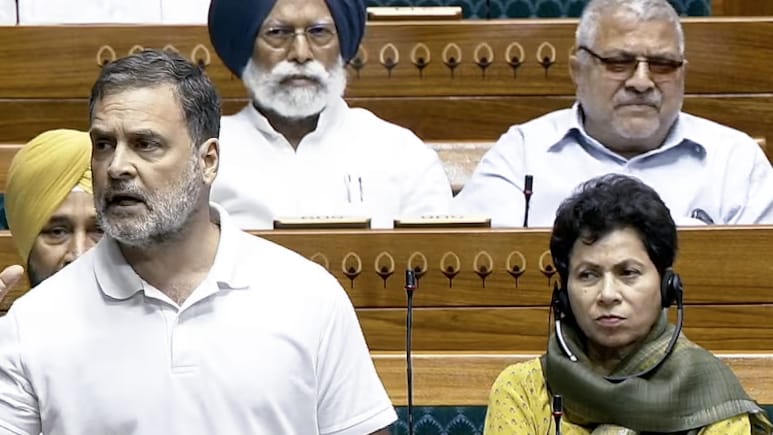
On April 15, 2026, the day before a special session of Parliament was convened to debate a sweeping electoral restructuring package, Leader of the Opposition in the Lok Sabha, Rahul Gandhi, took to X with a pointed accusation. He stated: "One of the BJP's dangerous plans is to 'gerrymander' all Lok Sabha seats to its advantage for the 2029 elections."
The following day, as Parliament debated the bills, Gandhi doubled down in a formal statement, saying: "The proposal that the government is now bringing has no connection to women's reservation. It is merely an attempt to seize power through delimitation and gerrymandering." This was a deliberate rhetorical choice — importing an American political concept into an Indian constitutional crisis — and it instantly dominated headlines.
ALSO READ: 270+ Seats Push: United Or Divided? Who Said What On Women's Quota, Delimitation Bills
Also Read | Layoffs Are Rising In Tech, But These Skills Are Helping People Unlock Better Pay
Here's what the word means and why it matters amid the delimitation debate in the country:
The Word and Its Origins
Gerrymandering — coined in 19th-century America after Massachusetts Governor Elbridge Gerry redrew a state senate district into a salamander-like shape to benefit his own party — refers to the deliberate manipulation of electoral constituency boundaries to give one political group an unfair advantage. The twisted shape resembled a mythological salamander, a lizard-like amphibious animal.
Gerrymandering works through two mechanisms that the Opposition has specifically invoked in the Indian context.
The first would mean concentrating Opposition-leaning voters into as few seats as possible, so they can win those seats by large margins but can have very little influence beyond those. The second feared method is a dispersing of Opposition voters thinly across multiple seats, so they cannot form a majority in any of them.
In India's delimitation context, it describes the manipulation of boundaries for partisan gain, undermining democratic representation. The term stuck because it captures something specific: not just unfairness, but engineered unfairness hidden inside a procedural process.
What the Bills Actually Propose
The Union government's three-bill legislative package — comprising the Constitution (131st Amendment) Bill, 2026, the Delimitation Bill, 2026, and the Union Territories Laws (Amendment) Bill, 2026 — was introduced during a Special Session of Parliament starting April 16. The bills seek to enable delimitation based on the 2011 census and operationalise 33% reservation for women in legislatures. The Lok Sabha would expand from the current 543 seats to around 816.
Why the South Is Alarmed
The fear of gerrymandering in India is less about sinister boundary-drawing and more about structural demographic arithmetic. Southern states — Tamil Nadu, Kerala, Karnataka, Telangana, and Andhra Pradesh — successfully controlled population growth over the past five decades, as per the data. Under a population-proportional system, they now, as they called, stand to be penalised for that very success.
If population becomes the sole basis, southern states will lose out proportionally, analysts warn. Critics argue that politicians are focusing on the increase in absolute seats rather than the long-term proportional loss — a crucial distinction.BJP draws much of its support from the densely populated north, and critics say expanding seats in Parliament would therefore benefit it the most.
The Government's Reassurance
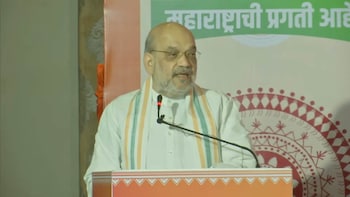
Meanwhile, Home Minister Amit Shah clarified that southern states' seat count would rise from 129 to 195, with their overall proportional share remaining largely unchanged at around 24 percent. Moreover, PM Modi assured the House that the process would not alter the federal balance and that any increase in seats would follow the existing proportional framework.
Essential Business Intelligence, Sharp Market Insights, Practical Personal Finance Advice, Daily Fuel, Gold and Silver Prices and Latest Stories — On NDTV Profit.