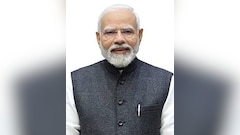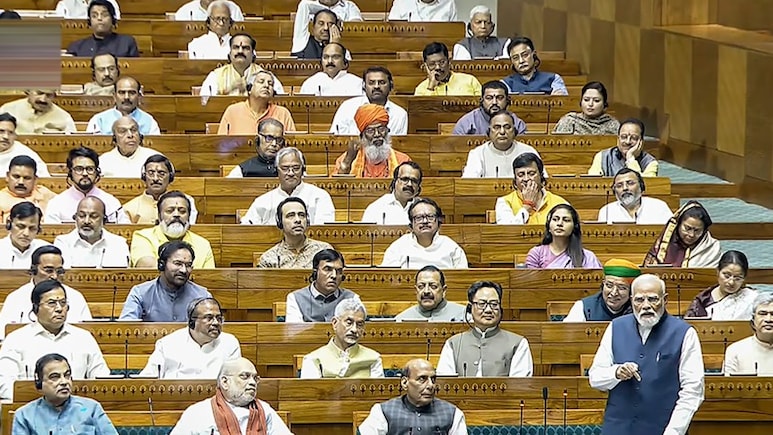
A politically charged reactions gripped the Lok Sabha on Thursday, with Prime Minister Narendra Modi stepping in to defend the government's roadmap for implementing women's reservation bill amid sharp opposition criticism over its linkage with delimitation.
Intervening in the discussion, the Prime Minister urged parties not to politicise what he described as a transformative reform, assuring the House that the delimitation exercise would not disadvantage any state.
He stressed that the government's intent is to fast-track 33% reservation for women in Parliament and State Assemblies, even offering the Opposition a “blank cheque” to take credit for the move in a conciliatory gesture.
Also Read | Layoffs Are Rising In Tech, But These Skills Are Helping People Unlock Better Pay
ALSO READ : 'PM Modi Great Friend': US Embassy Quotes Trump's Praise For India Amid Prolonged Trade Deal Talks
Backing the government's position, BJP MP Tejasvi Surya termed the development “historic,” asserting that the long-pending promise of women's reservation is finally being operationalised.
He maintained that delimitation is a constitutional requirement under Articles 81 and 82, not a political manoeuvre, and argued that the framework would ensure balanced and meaningful representation for women from 2029.
Union Law Minister Arjun Ram Meghwal, who introduced the bills, said the proposed expansion of Lok Sabha seats —potentially beyond 800 — is aimed at accommodating women's reservation without reducing any state's share. He reiterated that “no state will lose out” under the new arrangement.
ALSO READ : Rajya Sabha Approves Rs 41,455 Crore Supplementary Grants For FY26
However, the Opposition mounted a strong pushback. The Samajwadi Party chief Akhilesh Yadav supported women's reservation in principle but launched a scathing attack on the government's approach, calling the rollout “hasty” and alleging a “hidden agenda” behind tying it to delimitation.
He argued that relying on 2011 Census data without conducting a fresh caste-based enumeration would disadvantage OBC and minority women, describing the move as a “conspiracy” to sideline backward communities and a political diversion ahead of the 2029 elections.
Congress leader K.C Venugopal also criticised the framework, questioning why key provisions were not included when the law was originally passed.
Accusing the government of attempting to “hijack” constitutional processes, he formally recorded the party's objections while reiterating Congress's support for women's reservation in principle.
The INDIA bloc continued to oppose the delimitation-linked provisions even as it backed the broader idea of reservation for women. With proposals such as expansion of Lok Sabha seats and post-delimitation rotation of reserved constituencies on the table, the issue is set to remain a major political flashpoint in the run-up to 2029.
Essential Business Intelligence, Sharp Market Insights, Practical Personal Finance Advice, Daily Fuel, Gold and Silver Prices and Latest Stories — On NDTV Profit.