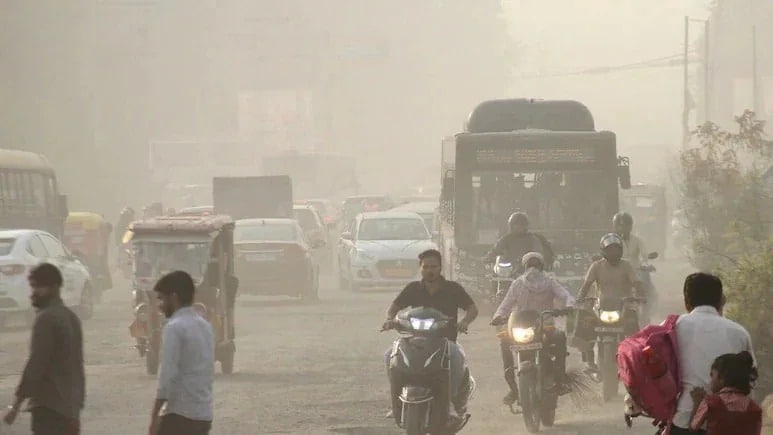
Air pollution levels remain a major concern across several parts of northern India, with cities in Haryana, Uttar Pradesh and Punjab featuring prominently among the country's most polluted urban centres.
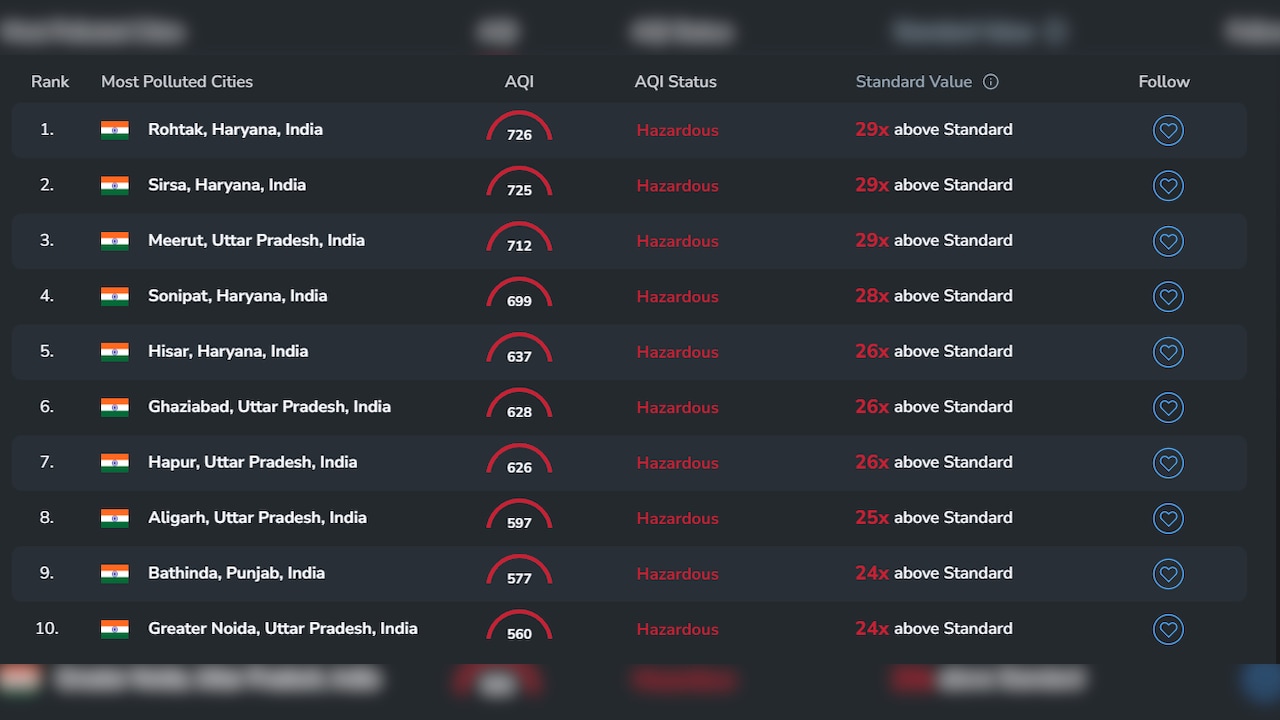
Rohtak in Haryana recorded the highest Air Quality Index (AQI) at 726, making it the most polluted city on the list. Sirsa, also in Haryana, followed closely with an AQI of 725, while Meerut in Uttar Pradesh ranked third at 712.
Sonipat recorded an AQI of 699, while Hisar recorded an AQI of 637, highlighting the extreme pollution levels in Uttar Pradesh and Haryana. The next two Uttar Pradesh cities with readings of 628 and 626 were Ghaziabad and Hapur.
Also Read | Layoffs Are Rising In Tech, But These Skills Are Helping People Unlock Better Pay
Bathinda in Punjab scored 577, while Aligarh came in eighth place with an AQI of 597. Uttar Pradesh's Greater Noida finished in the top 10 with an AQI of 560.
In the shared rating, all ten cities were placed in the "Hazardous" category. Greater Noida and Bathinda reported AQI values that were 24 times higher than the standard, while Rohtak, Sirsa, and Meerut reported levels that were 29 times higher.
Top 10 Most Polluted Cities In India
What Does AQI Mean?
The Air Quality Index (AQI) is a measure used to communicate the level of air pollution and its possible impact on health. It combines information about different air pollutants into a single figure, making it easier for people to understand the quality of the air around them.
Pollutants used to calculate AQI include particulate matter (PM2.5 and PM10), nitrogen dioxide, sulphur dioxide, ozone, carbon monoxide and ammonia, among others.
Higher AQI readings indicate greater levels of air pollution and a higher potential risk to health.
What Are PM2.5 And PM10?
Particulate matter is one of the key pollutants used to assess air quality. PM2.5 refers to fine particles with a diameter of 2.5 micrometres or less, while PM10 refers to particles with a diameter of 10 micrometres or less.
These particles can enter the respiratory system when inhaled. PM2.5 is particularly concerning because its small size allows it to travel deeper into the lungs.
Prolonged exposure to high concentrations of particulate matter can worsen existing heart and lung conditions and cause breathing difficulties.
Who Should Be Careful?
ALSO READ: Cyclone Akvan: IMD Forecasts New Cyclonic Storm Over Bay Of Bengal By Monday
Air pollution can pose a greater risk to children, older adults and people with existing heart or respiratory conditions, including asthma.
When air quality reaches hazardous levels, prolonged outdoor exposure and strenuous physical activity can increase the risk of health complications.
People living in affected areas should keep track of local air quality updates and limit extended outdoor activities, particularly when pollution levels remain high.
Essential Business Intelligence, Sharp Market Insights, Practical Personal Finance Advice, Daily Fuel, Gold and Silver Prices and Latest Stories — On NDTV Profit.