Power is strange.
Given to leaders, it can make them feel like kings and queens. It fills them with pride, confidence, and a sense of control. It can make or break nations. History is full of examples of leaders who slipped once accountability disappeared.
Given to people, it can be liberating. Citizens feel free, vocal, and able to hold governments accountable. But mass power has its own risks. It can turn into arrogance, mob behaviour, or majoritarian chauvinism that spills into hatred toward communities, foreigners, or even neighbours.
Given to businesses, it can spark innovation. Companies build, experiment, and push industries forward. But concentrated corporate power can also create cronies and monopolies that abuse their position.
And then there's another kind of power altogether — the one that fuels industries. Electricity. It doesn't make headlines like politics or business, but it quietly runs homes, factories, hospitals, and entire economies. Without it, very little else works. It's the kind of power that doesn't dominate people. It enables them.
This week was about powers of all kinds.
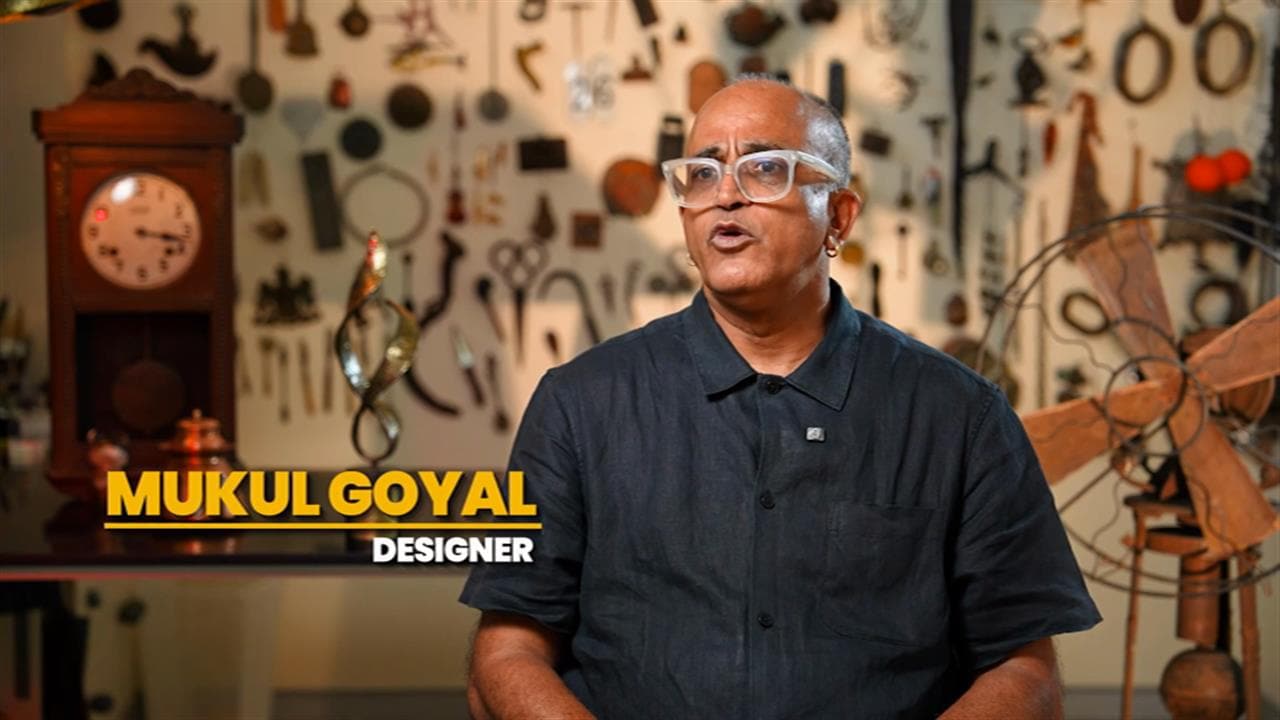
Take Titan, the Indian watchmaker. A recent web series has documented its journey through well-known actors and given it a nice cinematic touch. It's an emotional ride that makes you feel proud of both the company and the nation. I felt it's one of the few Indian productions that has shown the lifecycle of a business — the ups and downs, the emotional turmoil, decision-making, strategy, and much more.
For Titan, people, process and perseverance were the real source of power. I believe this web series, based on a book, deserves far more attention. So, before you tune in — or even after you've watched it — please check out this piece. It'll hardly take three minutes: ‘Titan Story' Deserves More Attention.
India and Japan's relationship is another example of power in motion. Two powerful Asian countries that began trading iron ore and electronics in the 1960s are engaging with each other today more than ever before. Manufacturing, finance, semiconductors, skills — there are deals around almost everything that matters.
Economic partnerships become powerful only when each country helps solve the other's problems. And the India-Japan partnership has many such complementarities. Japan is ageing; India is young. Japan is capital-intensive; India is labour-intensive. Japan is process-oriented and excels in high-tech manufacturing, while India is agile and strong in technology services. These complementarities can strengthen this partnership for decades to come. There's another agenda too - ensuring that China doesn't become too powerful. Read more here: India And Japan: A Partnership That's Ready To Grow.
Then, there are a couple of stories about electricity. One from Odisha and another from Uruguay.
Let's head to Odisha first. If I had to pick one Indian state that has impressed me with its industrial development recently, it would be Odisha. We keep seeing news and announcements about new industrial investments. While business-friendly policies have certainly helped, there's a quiet catalyst behind this growth: power sector reforms. Its power sector was a mess, and privatisation had failed in the 1990s. But instead of giving up, the state tried again. Tata Power took over electricity distribution in 2020. By FY24, Odisha's electricity consumption was 57% above the national average and growing at 9% annually, more than double the all-India rate.
Reliable electricity doesn't just keep the lights on. It attracts factories, lowers costs, creates jobs, and changes the trajectory of an economy. In a way, power has quietly powered Odisha's recent industrial rise. That is the story behind Odisha's Industries Are Quietly Sparking.
Now, let's enter South America's small country named Uruguay. Here's something wild — Uruguay's political parties all agreed on one thing in 2008 and didn't change course for a quarter century. President Mujica believed "governments pass, people remain," so he built cross-party consensus before locking in contracts. The plan was simple: shift to renewables by 2020. And guess what? Today, it generates 98% of its electricity through renewables.
For me, the real trick wasn't technology or resources. It was political patience. They locked consensus before locking contracts so that no future government could undo it. This shows the real power of politicians. When they come together for a common purpose, they can change the fate of a nation. Uruguay is a testament to that, and I hope other countries learn something from it. That makes this a great read: This Small South American Country Has Cracked The Code On Clean Energy.
Now, let's come back to India.
There are ongoing protests across the country demanding better education and the resignation of the education minister. Whether these demands are accepted or not, they send a powerful signal. They tell governments that education matters to people and that poor outcomes have political costs. Politics, after all, runs as much on signals as it does on policies.
Digging deeper into India's education system, I realised something interesting. The state exercises enormous power over education. It decides what schools can teach, who can open schools, how they should operate, how big their toilets and classrooms can be, or how to maintain documents and everything that can be easily seen and checked. Yet, where its power matters the most - ensuring children actually learn, papers don't leak, and criminals get punished - it is often missing.
In other words, the state is highly intrusive where it doesn't need to be, and surprisingly absent where it matters the most. The system looks large and impressive on paper, but if children are not learning, then the machinery of schooling is not producing the real output that matters. After all, education is perhaps the greatest form of power a nation can possess. If India truly dreams of becoming a developed country, it cannot afford to get this wrong. That's why I write: India's Education Is Failing On Learning, Accountability.
That's the week.
If you made it this far, I'd love to hear from you.
Which of these stories stayed with you? What stories can you share around these topics?
And more importantly, what should I dig into next?
An everyday object, a policy, a price that suddenly changed, a trend that's growing around... send it my way. Just hit reply. I read everything.
Cheers, Swapnil
Disclaimer: The views expressed in this article are solely those of the author and do not necessarily reflect the opinion of NDTV Profit or its affiliates. Readers are advised to conduct their own research or consult a qualified professional before making any investment or business decisions. NDTV Profit does not guarantee the accuracy, completeness, or reliability of the information presented in this article.
Essential Business Intelligence, Sharp Market Insights, Practical Personal Finance Advice, Daily Fuel, Gold and Silver Prices and Latest Stories — On NDTV Profit.