- India supplied iron ore to Japan post-WWII, establishing early economic ties
- Bilateral trade reached $27.5 billion in FY26, with diverse sectors involved
- Challenges include supply constraints, regulatory issues, and China-linked dependencies
India and Japan's modern relationship started with something simple: iron. India had plenty of it; Japan didn't. After World War II, Japan needed iron ore to rebuild its steel industry. India needed technology and machinery to industrialise post-independence. By the 1960s, India had become the largest iron ore supplier to Japan, quietly powering its economic growth.
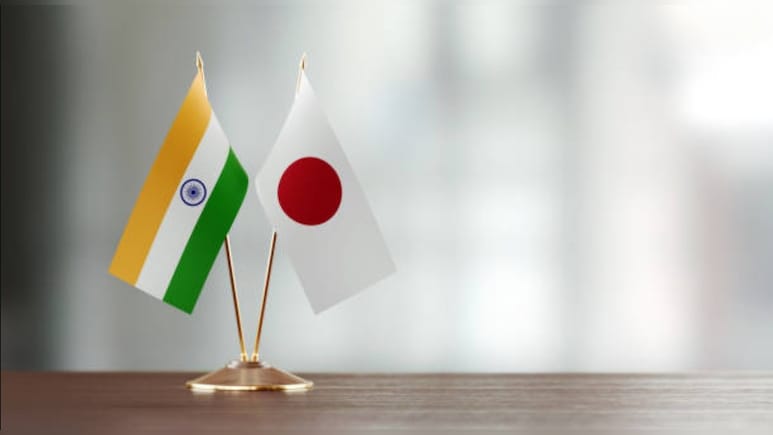
Today, the partnership is broader. The two countries trade everything from cars and machinery to chemicals and IT services. Bilateral trade touched $27.5 billion in FY26. Japan is now India's 10th-largest trading partner, and India is Japan's 14th. With the recent Modi-Takaichi meeting, the relationship appears to deepen even further.
ALSO READ: Japanese Companies Are Going Bankrupt Again | The Reason Why
Also Read | Layoffs Are Rising In Tech, But These Skills Are Helping People Unlock Better Pay
Why India & Japan Fit Together
India and Japan can work well together because they fill each other's gaps.
Japan has plenty of capital and world-class manufacturing technology. India needs capital, has tech talent, and wants to build a stronger manufacturing base. Japan is great at deep research but struggles with entrepreneurial risk-taking. On the other hand, India has dynamic entrepreneurial energy but relatively lower R&D.
Infrastructure became a sweet spot for catalysing their differences. Japan earns long-term returns from developing Indian infrastructure, while India gains the capacity it needs for economic development. That's a win-win for both.
Demographics tell the same story. Japan is ageing fast and facing labour shortages. India has a young, expanding workforce that needs more jobs. In recent years, both governments have tried to turn this contrast into an advantage. Training centres in India now teach Japanese language, workplace culture and business practices, helping Indians get jobs in Japan.
Put together, both countries have what the other needs. Takashi Ishikawa from Toshiba Software adds that India's agility and adaptability, paired with Japan's precision and quality, create results neither country can achieve alone. Letting this partnership bloom is, therefore, important for both countries.
ALSO READ: 'India's Q1 Exports To Grow 15%': Piyush Goyal Says US Trade Deal Nears Finish Line
It Didn't Work As Expected
Even with all the complementarities, India-Japan trade hasn't taken off as expected. As the world started to think about China+1, many assumed Japan would shift its investments to India. Instead, most of the money went to ASEAN countries.
In the last decade, the India-China relationship turned bitter, leading to more import and investment restrictions. Many Japanese companies in India rely on Chinese suppliers, and some even have Chinese subsidiaries and joint ventures. India's tighter rules also hurt Japanese manufacturers in India, indirectly.
According to a 2025 JETRO survey, more than three-fourths of Japanese firms in India find the lack of high-quality local suppliers a major constraint. Apart from this, there are raw-material shortages, skill gaps, low-quality inputs, regulatory uncertainty, and cultural and language differences. Japanese firms find operating in Southeast Asian countries easier than in India because of these limitations.
But things may be shifting. India-China ties are stabilising, and Japanese companies are slowly expanding their presence in India.
The China Factor
Speaking of China, for decades, Japan kept economics separate from politics while dealing with China. But China never decoupled politics and economics. It became a major problem in 2010, when China restricted rare earth exports during the Senkaku (Diaoyu) Islands dispute. Since then, Japan has diversified supply chains, but China remains its biggest trading partner and a key source of raw materials.
This experience shaped Japan's Free and Open Indo Pacific (FOIP) strategy, which seeks a balanced regional order with partners like India, ASEAN, Australia and the EU, not confrontation with China. This makes India-Japan central to Japan's geoeconomic strategy.
A Partnership Gathering Momentum
However, economist Toshiro Nishizawa of the University of Tokyo cautions against viewing recent developments solely through a geopolitical lens. He argues that business fundamentals, not geopolitics, are driving Japanese investment decisions.
Here's what businesses say. JBIC ranked India the most promising long-term market for Japanese companies for the 15th consecutive year in its 2024 survey. JETRO found that more than 80% of Japanese companies in India plan to expand their operations over the next two years.
This optimism has channelled Japanese capital into newer sectors. For instance, Sumitomo Mitsui Banking Corporation's investment in YES Bank, Mizuho's stake in Avendus Capital, and MUFG's investment in Shriram Finance show growing interest in India's financial sector.
ALSO READ: Japan-India Eye Collaboration To Explore Rare Earth Deposits In Rajasthan
At the same time, Renesas Electronics, Tokyo Electron and NTT Data are partnering with Indian companies on semiconductors, AI and data centres. Manufacturers such as Suzuki and Daikin Industries prefer India as a production base to serve African markets.
The results are becoming visible. Grant Thornton Bharat reports that the number of Japanese companies operating in India increased from 1,201 in 2024 to 1,374 in 2025, while their combined turnover rose from Rs 5.7 trillion to Rs 7.2 trillion. Together, these developments suggest that although geopolitics has created favourable conditions, India's growth prospects are driving the partnership.
Final Take
Commercial realities, geopolitical urgency and deep economic complementarities have turned India and Japan into an important strategic partnership. Both countries want a rules-based system and a regional order that isn't dominated by any single power.
Over seven decades, this partnership has matured from iron ore to automobiles, manufacturing and infrastructure, and now stretches to finance, semiconductors, AI, and skills development. It hasn't always lived up to its economic potential, but its scope today is wider than ever, making it one of the world's most important relationships to watch.
Disclaimer: The views expressed in this article are solely those of the author and do not necessarily reflect the opinion of NDTV Profit or its affiliates. Readers are advised to conduct their own research or consult a qualified professional before making any investment or business decisions. NDTV Profit does not guarantee the accuracy, completeness, or reliability of the information presented in this article.
Essential Business Intelligence, Sharp Market Insights, Practical Personal Finance Advice, Daily Fuel, Gold and Silver Prices and Latest Stories — On NDTV Profit.