US-Iran War News Updates: US 'Failed' To Make Any Concrete Concessions, Iranian Media Says
The United States has failed to offer any concrete concessions, in response to Iran's proposed agenda for ending the war, Tehran's semi-official Mehr news agency reported.

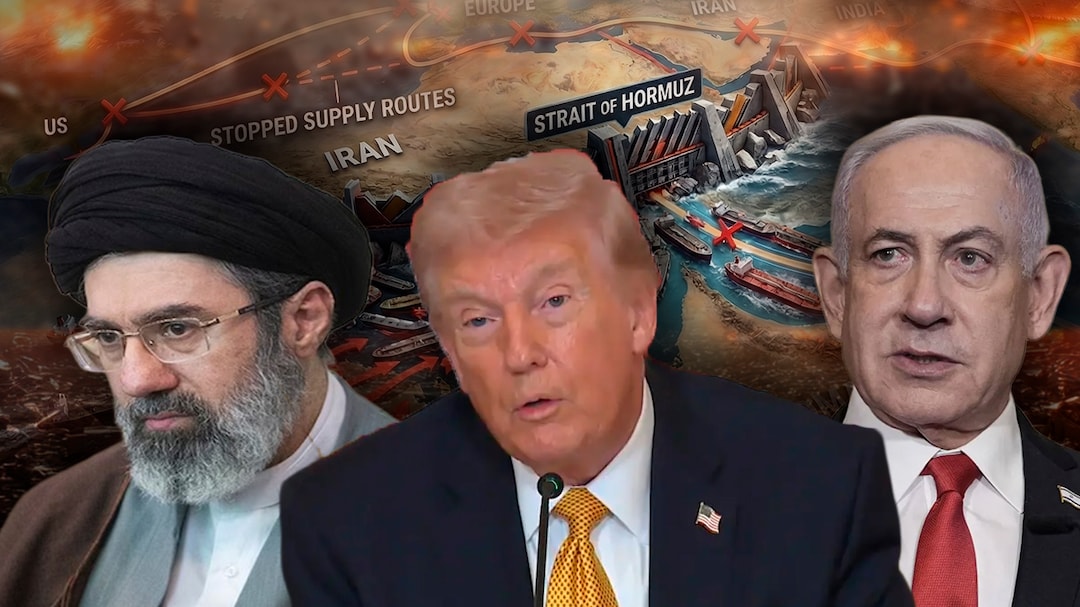
Today marked Day 79 of the US-Iran War, a conflict that has fundamentally reshaped global security and energy corridors since it erupted via massive joint US-Israeli surprise airstrikes on February 28, 2026. What began as an explosive opening campaign has ground into a tense, highly volatile "dual blockade" across the Persian Gulf, with both sides now hovering on the precipice of a renewed, large-scale military confrontation.
There are no signs of breakthrough yet, with Iranian news agency Mehr reporting that the United States has failed to offer any concrete concessions, in response to Iran's proposed agenda for ending the war.
Here's a look at the key updates of the day.
US 'Failed' To Make Any Concrete Concessions, Iranian Media Says
The United States has failed to offer any concrete concessions, in response to Iran's proposed agenda for ending the war, Tehran's semi-official Mehr news agency reported.
Iran President Lauds Youth For Keeping Communication Sector Active Amid War
"During the days of war, our children in communications and information technology stood day and night to keep the country's communications and vital services sustainable. The people's high-quality and stable access to digital services is part of the peace, progress, and right to a dignified life for the dear people of Iran. I congratulate you on World Communication Day," Iranian President Masoud Pezeshkian said.
Ali al-Nuaimi, Chairman of the UAE’s National Defense Committee, accused Iran of targeting the Barakah Nuclear Power Plant with drones, after an initial statement by Abu Dhabi authorities did not specify who launched the attack.
The Iranian regime’s attack targeting the Barakah Nuclear Power Plant represents a dangerous escalation and a grave violation of international law and the principles protecting civilian nuclear facilities. Such acts threaten regional stability, endanger civilian lives, and…
— د. علي النعيمي Dr. Ali Alnuaimi (@Dralnoaimi) May 17, 2026
IDF Controls 60% Of Gaza Strip, Says Netanyahu
During a cabinet meeting on Sunday, Israeli Prime Minister Benjamin Netanyahu announced that the Israel Defense Forces (IDF) now control 60% of the Gaza Strip. Netanyahu also shared that he is scheduled to speak with U.S. President Donald Trump later in the day, noting that he expects to hear updates regarding Trump's recent visit to China.
US Iran War Live Updates: Drone Strike Causes Fire At Nuclear Power Plant In Abu Dhabi
A drone strike triggered a fire at an electrical generator at the Barakah Nuclear Power Plant in the UAE’s Al Dhafra region, according to local authorities.
In a statement posted on X, Abu Dhabi’s media office said no injuries were reported and confirmed that the incident occurred outside the plant’s inner perimeter. Officials added that there was no impact on radiation levels and that the facility’s safety systems remained fully intact.
Authorities in Abu Dhabi responded to a fire incident that broke out in an electrical generator outside the inner perimeter of the Barakah Nuclear Power Plant in the Al Dhafra Region, caused by a drone strike. No injuries were reported, and there was no impact on radiological…
— مكتب أبوظبي الإعلامي (@ADMediaOffice) May 17, 2026
US Iran War Live Updates: US Revokes Russia Oil Waiver, Sparks Fears Of Tighter Supplies
The United States has allowed a temporary exemption from sanctions on Russian oil to lapse, ending a one-month window that had enabled global buyers to take delivery of Russian crude shipments stuck at sea. The waiver, introduced by the Trump administration as an emergency measure, had been aimed at easing pressure on energy markets following sharp supply disruptions.
Those disruptions were triggered by US and Israeli strikes on Iran, which led to the closure of the Strait of Hormuz—a critical transit point for global oil flows—and pushed fuel prices higher worldwide. During the waiver period, countries such as India ramped up purchases of discounted Russian crude, helping absorb excess supply and stabilise markets.
With the exemption no longer in effect, concerns are building over a potential tightening in global oil availability. Analysts warn that reduced access to Russian barrels could push prices upward, particularly if alternative supply sources remain constrained. For large importers like India, which had increased Russian imports to around 2.3 million barrels per day under the waiver, the shift may necessitate a recalibration of sourcing strategies amid an already volatile energy landscape.
US Iran War Live Updates: India Slams Attacks On Ships In Strait Of Hormuz At United Nations
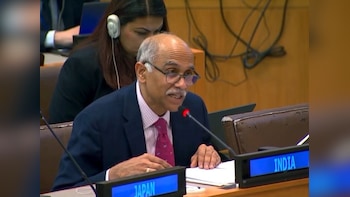
India has flagged rising concerns over maritime security in the Strait of Hormuz at the United Nations, warning that repeated attacks on commercial vessels could disrupt global energy and supply chains.
Speaking at a special session of the UN Economic and Social Council focused on safeguarding energy flows, India's Permanent Representative to the UN, Parvathaneni Harish, said targeting civilian shipping and crews was “unacceptable” and stressed the need to uphold international law governing freedom of navigation.
US Iran War Live Updates: Kazakhstan Sends 30 Wagons Of Aid To Iran
Kazakhstan has dispatched 30 wagons of humanitarian assistance to Iran, according to Tasnim news agency, as the country navigates a deepening economic strain following months of conflict with the United States and Israel. The aid shipment, sent under the direction of Kazakhstan’s president, includes essential supplies such as canned food, sugar, flour, medicines and medical equipment.
The consignment was formally handed over to the Iranian Red Crescent Society at Sarakhs railway station. Speaking at the event, Kazakhstan’s ambassador to Iran, Ontalap Onalbayev, described Iran as a key partner for Kazakhstan across political, economic and humanitarian fronts in the region, adding that periods of crisis often underscore the strength of such ties.
US Iran War Live Updates: Qatari, Saudi FMs Discuss US-Iran Ceasefire In Phone Call
Qatar’s Prime Minister and Foreign Minister Sheikh Mohammed bin Abdulrahman bin Jassim Al Thani held a phone conversation with Saudi Foreign Minister Prince Faisal bin Farhan Al Saud, according to an official statement from Doha. The discussion covered bilateral relations as well as key regional developments, including the ongoing ceasefire between the United States and Iran and broader de-escalation efforts.
Sheikh Mohammed also stressed the need for all stakeholders to engage constructively with mediation initiatives, underscoring the importance of dialogue to address the underlying causes of the crisis and move towards a more durable resolution that prevents renewed tensions.
US Iran War Live Updates: Fresh Israeli Attacks Hit Multiple Gaza Areas
Israeli forces have carried out fresh strikes across multiple locations in the Gaza Strip, according to a report by the Wafa news agency. Citing local sources, the report said artillery shelling targeted eastern and southern parts of Khan Younis, accompanied by sustained gunfire from military vehicles positioned on the outskirts of the city.
Heavy bombardment was also reported in the eastern sections of the Al-Bureij refugee camp, triggering panic among residents. Separately, along the Gaza City coastline, warships opened fire towards shore areas. No casualties had been confirmed at the time of reporting.
Source: Al Jazeera
US Iran War Live Updates: Trump To Launch Big Iran Strikes? His "Calm Before Storm" AI Post Sparks Buzz
US President Donald Trump issued a veiled threat, calling the lack of military action in the Middle East "calm before the storm", amid reports of discussions with his top aides on resuming air strikes on Iran.
In an AI-generated image shared on his social media, Trump can be seen wearing a Make America Great Again hat, with a US Navy Admiral standing by his side. The image shows the two in the middle of choppy waters and lightning, while on board a US Navy ship with Iranian ships in the background.
"It was the calm before the storm" - the message shared with the image can be seen as a warning to Iran as the New York Times claimed Trump is about to take a critical decision on Iran, with his top aides making plans to resume air strikes if he chooses to break the diplomatic deadlock through military force.
US Iran War Live Updates: One Killed In Comoros Amid Protests Over High Fuel Prices
Protests triggered by rising fuel prices in Comoros have turned violent, leaving one person dead, AFP reported. The fatality occurred early Saturday after clashes between residents and security forces overnight. According to a judge cited by AFP, a young man was shot after a group attempted to seize weapons from police personnel clearing the streets in Mpage on the island of Anjouan. Authorities later confirmed the incident, with prosecutors stating that one person was killed and five others were injured.
The unrest has disrupted daily life on the island, prompting strikes by truck drivers, shop owners and fishermen. The protests were sparked by a sharp increase in fuel prices announced last week, including a 46% hike in diesel rates, which the government has linked to the economic fallout of the ongoing US-Israel conflict with Iran.
US Iran War Live Updates: India Receives LNG Boost As SYMI Reaches Kandla, NV SUNSHINE Heads To Mangalore
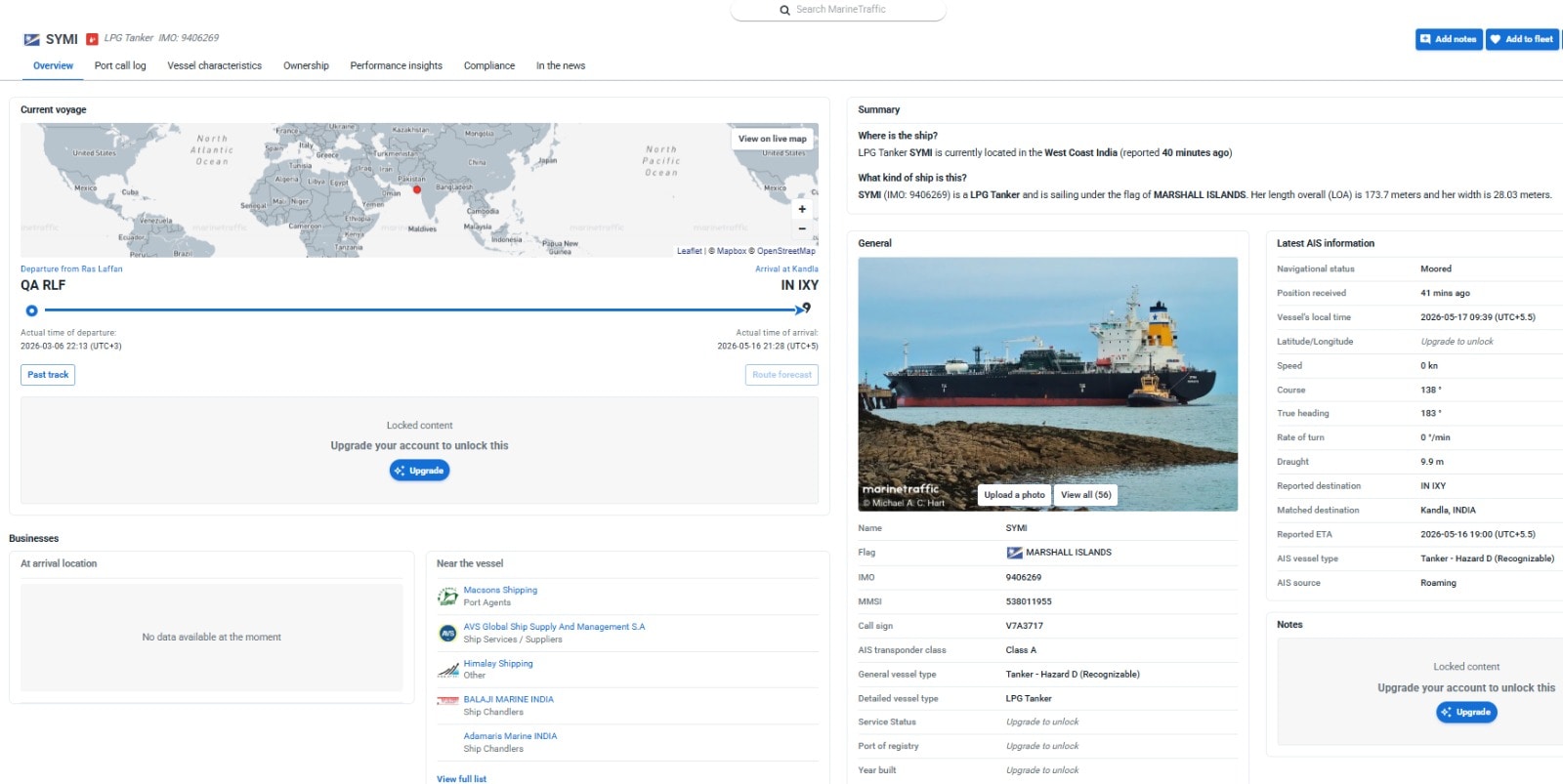
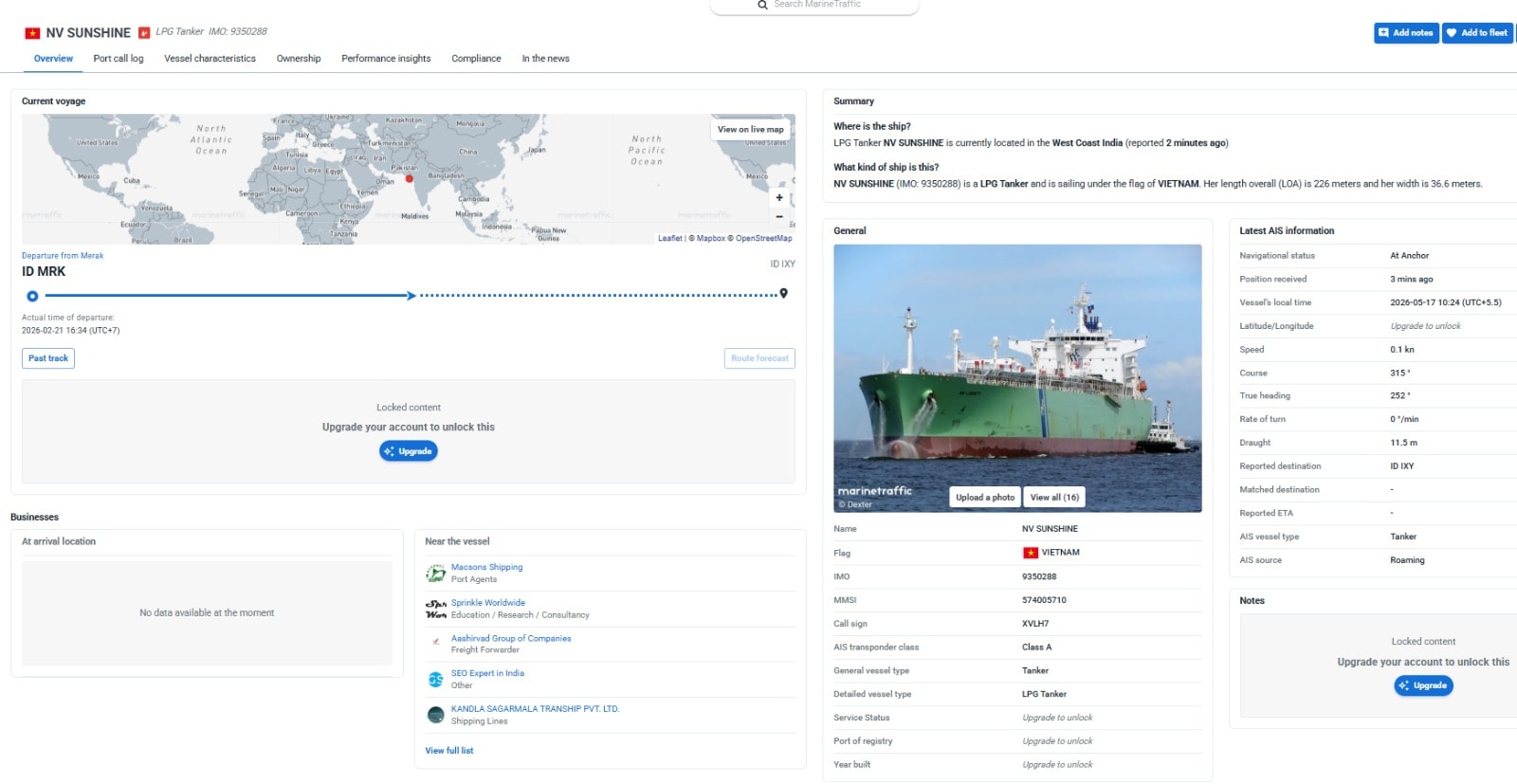
LPG tanker SYMI has reached Kandla Port, carrying 19,965 metric tonnes of LPG for India. The Marshall Islands-flagged vessel, with 21 foreign crew members on board, had safely navigated the Strait of Hormuz on May 13, 2026. Meanwhile, another LPG tanker, NV SUNSHINE, is currently moving along India’s west coast and is scheduled to arrive at Mangalore Port on May 18. The vessel, identified by IMO number 9350288 and sailing under the Vietnamese flag, is part of ongoing LPG supply movements to the country.
US Iran War Live Updates: Russia shares China’s position on Strait of Hormuz
Mikhail Ulyanov, the permanent representative of Russia to international organisations in Vienna, has backed China’s call for a permanent ceasefire to reopen the Strait of Hormuz.
“Russia fully shares such an approach,” Ulyanov said in a post on X, referencing Chinese Foreign Minister Wang Yi’s comments.
Wang had said China believes a solution to issues in the Strait of Hormuz “lies in achieving a permanent and comprehensive ceasefire” between Washington and Tehran, and that President Xi Jinping had emphasised in his talks with Trump last week “that force cannot solve problems and dialogue is the only right path”.
US Iran War Live Updates: Iran Sets Up New Mechanism To Manage Hormuz Traffic
Iran has introduced a new system to regulate vessel movement through the Strait of Hormuz, according to a report by Press TV. As part of the move, Tehran has cautioned the US Navy against entering the strategic waterway and stated that all commercial shipping will now be required to coordinate transit with Iranian military authorities.
The country has also released an updated map of the strait, indicating a broader zone under its asserted control.
US Iran War Live Updates: Iran Warns Of Readiness For War
Iran’s Foreign Minister Abbas Araghchi said Tehran is prepared to return to direct confrontation with the United States if ongoing talks fail to yield acceptable outcomes. In parallel, a coordinated stream of messaging aimed at domestic and global audiences has sought to underline the broader fallout of the conflict, with Araghchi warning that the US-Israel war on Iran is also feeding back into the American economy.
He pointed to a sharp rise in US energy and inflation costs since the conflict began on February 28, alongside disruptions in global supply flows following the effective closure of the Strait of Hormuz, a key artery that typically handles nearly a fifth of the world’s oil and gas shipments.
US Iran War Live Updates: Israel Strikes South Lebanon Say After Ceasefire Extension
Israel launched a massive series of airstrikes on southern Lebanon, despite an extension of the truce between the two countries.
Israel says it is targeting Hezbollah but the strikes were preceded by an evacuation warning covering nine villages.
And the continuing bombardment has only increased scepticism about the truce among the many thousands of Lebanese driven from their homes in the south.
Essential Business Intelligence, Sharp Market Insights, Practical Personal Finance Advice, Daily Fuel, Gold and Silver Prices and Latest Stories — On NDTV Profit.