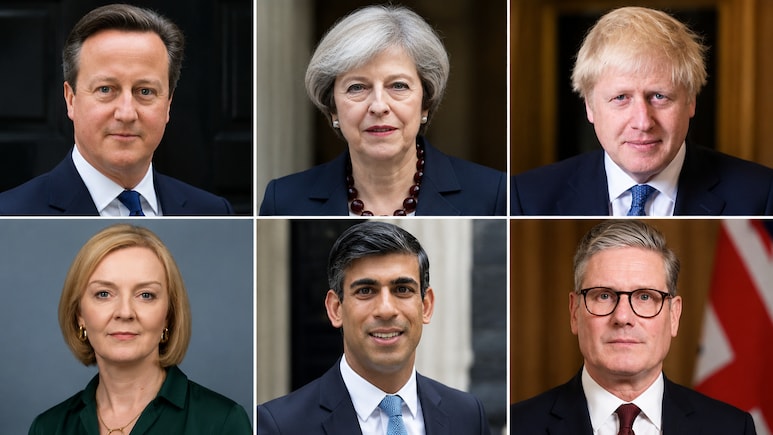
Britain is preparing for yet another leadership transition after Prime Minister Keir Starmer announced his resignation on June 22, 2026, making him the sixth occupant of 10 Downing Street to leave office in just over a decade.
Starmer, who took office after Labour's landslide victory in July 2024, spent 717 days as prime minister before stepping down following a rebellion within his own party. His departure extends one of the most turbulent periods in modern British political history, during which no leader has completed a full term and Downing Street has effectively become a revolving door.
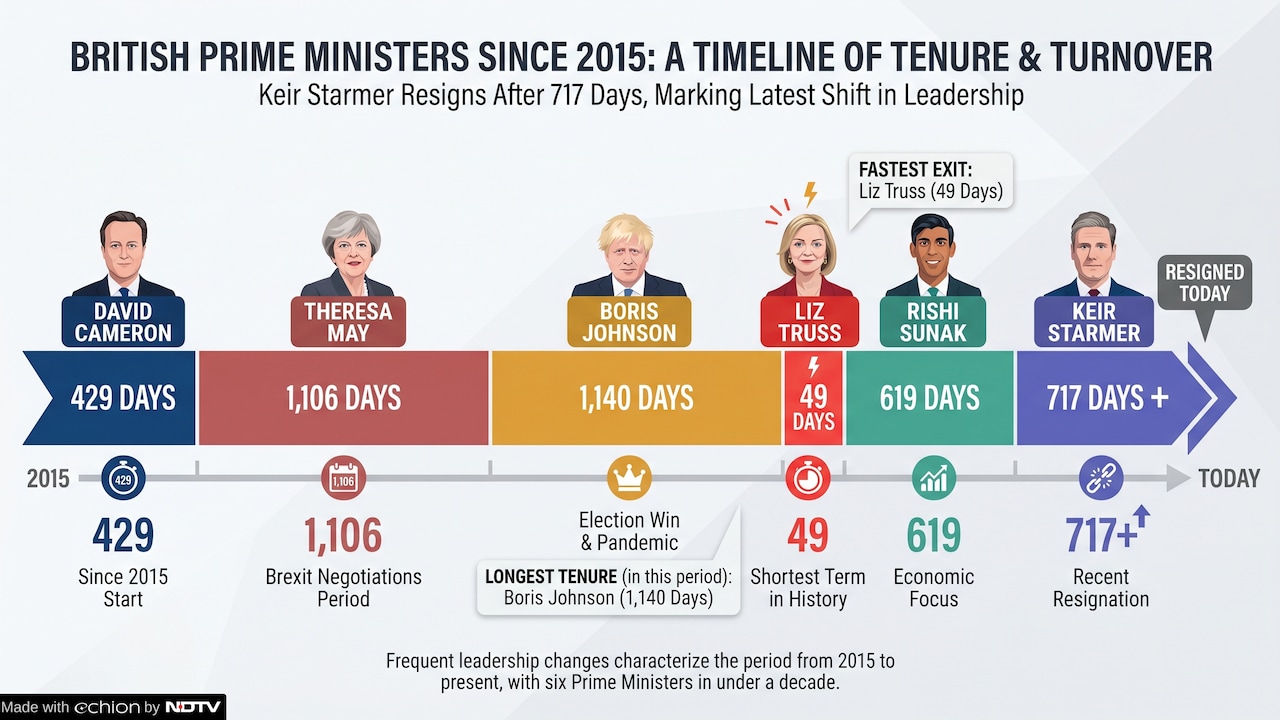
How Long Britain's Recent Prime Ministers Lasted
- David Cameron — 429 days (post-2015 election)
- Theresa May — 1,106 days
- Boris Johnson — 1,140 days
- Liz Truss — 49 days
- Rishi Sunak — 619 days
- Keir Starmer — 717 days
(Data shared by Pop Base on X)
British Prime Ministers since 2015 and how long they spent in power:
— Pop Base (@PopBase) June 22, 2026
David Cameron — 429 days
Theresa May — 1,106 days
Boris Johnson — 1,140 days
Liz Truss — 49 days
Rishi Sunak — 619 days
Keir Starmer — 717 days + remaining days (resigned today) pic.twitter.com/oFiML2R2zB
The cycle of rapid leadership changes began with David Cameron's decision to call the 2016 Brexit referendum. After voters backed leaving the European Union, Cameron resigned, saying he could not lead negotiations for a policy he had opposed.
ALSO READ | Who Will Be UK's Next PM? Meet The Top 5 Contenders To Replace Keir Starmer
Theresa May inherited the Brexit challenge but failed to secure parliamentary approval for her withdrawal agreement despite multiple attempts. Mounting pressure from within the Conservative Party ultimately forced her resignation in 2019.
Boris Johnson succeeded May and delivered Brexit, but his premiership was overshadowed by the “Partygate” scandal, involving gatherings held during Covid-19 restrictions. A wave of ministerial resignations in 2022 eventually brought down his government.
Johnson's successor, Liz Truss, lasted just 49 days, the shortest tenure of any British prime minister. Her government's unfunded tax-cut package triggered market turmoil, sending the pound lower and forcing a dramatic political retreat.
Rishi Sunak restored some financial stability but struggled to reverse voter frustration over living costs, public services and economic growth. Following a crushing Conservative defeat in the 2024 general election, he resigned.
Starmer entered office promising stability after years of Conservative turmoil. However, Labour's popularity weakened amid concerns over the economy, immigration and public services. His position became increasingly fragile after senior resignations and growing unrest among Labour MPs. On Monday, Starmer confirmed he had informed King Charles III of his decision to step down.
ALSO READ | Nigel Farage Demands General Election In UK As Keir Starmer Resigns
Attention has now shifted to Labour's succession battle. Former Greater Manchester mayor Andy Burnham has declared his intention to contest the leadership, while Deputy Prime Minister Angela Rayner, Health Secretary Wes Streeting and Energy Secretary Ed Miliband are also being discussed as potential contenders.
Whoever succeeds Starmer will become Britain's seventh prime minister since the Brexit referendum, inheriting a government under pressure to restore economic momentum and rebuild voter confidence.
Essential Business Intelligence, Sharp Market Insights, Practical Personal Finance Advice, Daily Fuel, Gold and Silver Prices and Latest Stories — On NDTV Profit.