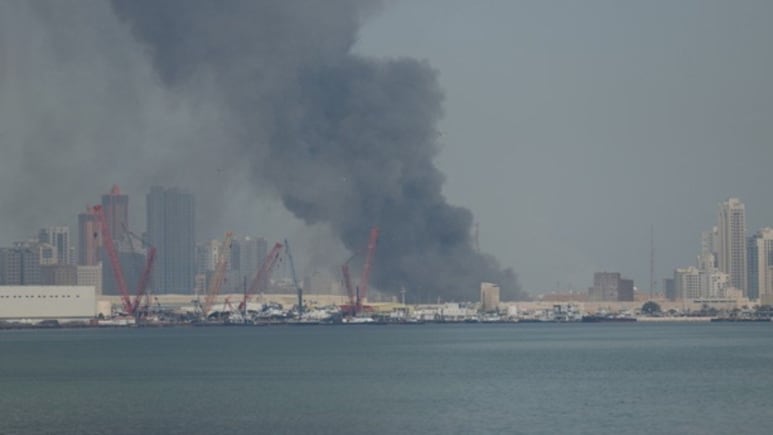
Saudi-led forces launched strikes on Houthi targets on Sunday in response to attacks by the Iran-backed group, escalating tensions in the region and raising fresh concerns over the security of vital shipping routes and energy infrastructure, CNBC reported.
The Houthis, meanwhile, threatened to target Saudi Arabia's Red Sea ports, including the strategically important port of Jeddah, in retaliation for what they alleged was an attack by Saudi forces on the Ras Isa port in Yemen's western Hodeidah province.
ALSO READ : Crude Oil Futures Set For Volatile Week As Supply Risks Loom: Analysts
Also Read | Layoffs Are Rising In Tech, But These Skills Are Helping People Unlock Better Pay
The latest confrontation signals a deepening of hostilities, as both sides turn their attention towards strategic infrastructure, raising the stakes for regional trade, energy supplies and shipping.
Turki al-Maliki, spokesperson for the Saudi-led Coalition to Support Legitimacy in Yemen, said the coalition was carrying out a military response to attacks by the Houthi militia against civilians and civilian infrastructure.
"We are carrying out a military response to the terrorist Houthi militia's targeting of civilians and civilian objects," al-Maliki said in a post on X.
The coalition had earlier urged civilians to evacuate Ras Isa port, issuing a warning accompanied by a map of the area, Reuters reported.
Houthi-run Al Masirah TV said Saudi Arabia had struck the port, a major fuel import terminal serving Houthi-controlled areas. The coalition later announced a military response but did not explicitly confirm an attack on the facility.
The developments prompted the Houthis to issue a direct warning to Saudi Arabia's maritime infrastructure along the Red Sea coast.
Yahya Saree, the group's military spokesperson, said the port of Jeddah and other Saudi ports along the Red Sea would be targeted in retaliation for the alleged attack on Ras Isa.
"The armed forces announce that the port of Jeddah and all enemy Saudi ports along the Red Sea coast will be targeted by our forces in response to the enemy Saudi forces' targeting of the port of Ras Isa," Saree said in a post on X.
The Houthis also called on shipping companies to pull their vessels out of Saudi Red Sea ports and urged workers and civilians in nearby areas to evacuate.
The warning has raised fresh concerns over shipping security in the Red Sea, a vital trade corridor linking the Mediterranean to the Gulf of Aden via the Suez Canal and Bab al-Mandab Strait, through which substantial volumes of global trade and energy supplies pass.
Saudi Arabia Intercepts Houthi Missile
The escalation comes amid a spate of hostilities between the two sides. The Saudi-led coalition said it had intercepted and destroyed a Houthi-launched ballistic missile headed towards Riyadh earlier on Sunday.
It also announced that a missile-launch platform in Yemen's northern Saada Governorate had been destroyed. According to the coalition, the platform had been used in an attack targeting Jazan in southern Saudi Arabia.
The Houthis have also claimed responsibility for attacks on Saudi infrastructure, including a port in Jazan province last week.
Reuters reported that the group had stepped up threats against Saudi airports, ports and energy facilities, while Saudi Arabia had intensified airstrikes against Houthi targets in Yemen.
The Houthis' advance towards the Bab al-Mandab Strait, a key shipping chokepoint linking the Red Sea and Gulf of Aden, has added to concerns that prolonged disruption could drive up shipping costs and disrupt trade and energy flows between Asia and Europe.
ALSO READ : Air India Further Extends Saudi Arabi Flight Ban; Check Dates, Refund And Booking Options
Located in Yemen's Hodeidah province, Ras Isa was a crude oil export terminal before the civil war broke out in 2014. It has since become a key entry point for fuel supplies to Houthi-controlled areas.
Ras Isa has previously been targeted by US and Israeli forces. Washington struck the port in April 2025 to disrupt Houthi fuel supplies and revenue, while Israel attacked it and two other Yemeni ports in July that year in response to repeated Houthi attacks.
The Houthis had issued similar warnings to shipping companies earlier this month following a Saudi-led coalition strike on Yemen's Hodeidah port, a major gateway for commercial imports and humanitarian assistance serving millions of people in territories under the group's control.
Strait Of Hormuz Adds To Energy Concerns
The escalation in Yemen comes amid the wider US-Israeli conflict with Iran, which has already disrupted energy shipments through the Strait of Hormuz.
Iranian state media reported Sunday that an oil tanker caught fire after hitting a mine in the eastern stretch of the strait, which separates Iran and Oman.
The Tasnim news agency, quoting Iran's navy, said the vessel was among three tankers that had entered a prohibited area in the eastern Strait of Hormuz after switching off their identification and navigation systems. The other two vessels changed course and returned towards the Gulf, the agency reported.
Iranian Army chief Major General Amir Hatami said the strait would remain closed until Tehran's demands were met. Iran wants Washington to end its military campaign and lift the blockade of its ports, while the US is pressing Tehran to abandon its nuclear programme.
The United States Central Command (CENTCOM), meanwhile, rejected several claims made by the head of Iran's navy, including allegations that American forces had seized two Iranian oil tankers before Iranian forces subsequently recaptured them.
In a post on X on Saturday, CENTCOM said: "Iran no longer has a navy. The entire situation the Iranian military commander described is another fabricated lie."
The US military command also rejected Iran's claim that its forces had struck the USS Abraham Lincoln aircraft carrier on the first day of the war, February 28.
CENTCOM further denied allegations that the United States was charging vessels millions of dollars to transit through the Strait of Hormuz.
"While US forces and regional partners do control the Strait of Hormuz, there is no toll for passing ships. CENTCOM's efforts have restored freedom of navigation through the international waterway," it said.
Oil Markets Watch Regional Developments
The renewed hostilities have added to concerns about the stability of energy supplies from the Middle East, particularly as attacks on commercial vessels and energy infrastructure threaten to disrupt maritime transportation.
Brent crude prices ended the week higher, snapping a three-week losing streak and recording their first weekly gain in November, as attacks on tankers in the Strait of Hormuz and Saudi energy infrastructure heightened concerns over potential supply disruptions. Brent crude gained around 3% during the week, while US West Texas Intermediate (WTI) declined 0.9%.
With shipments through the Strait of Hormuz severely disrupted by the US-led war on Iran, Saudi Arabia's Red Sea ports have become increasingly important as an alternative route for oil exports. Any disruption to these facilities could further constrain regional energy flows and put additional pressure on global oil markets.
With the Houthis threatening Saudi Red Sea ports and the coalition signalling further military action, the latest escalation risks adding another layer of uncertainty to an already volatile Middle East, with implications extending well beyond the immediate conflict zone.
Essential Business Intelligence, Sharp Market Insights, Practical Personal Finance Advice, Daily Fuel, Gold and Silver Prices, Watch Business News Live and Latest Stories — On NDTV Profit.