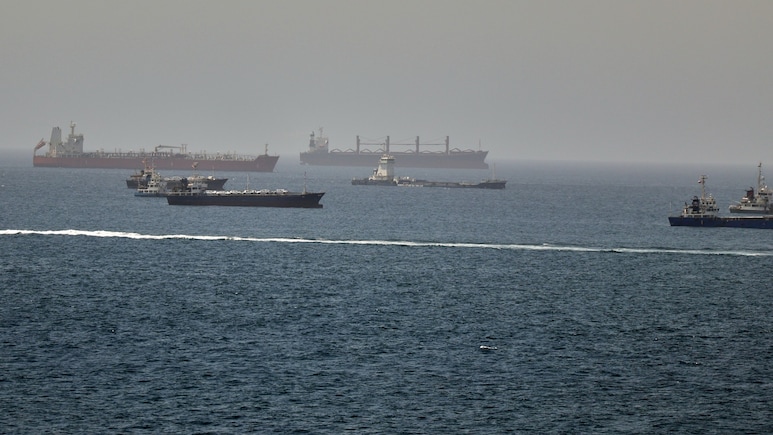
Since the US-Iran war broke out on Feb. 28, sea mines, US-Iran strikes, and changing transit pathways have severely disrupted traffic through the Strait of Hormuz, reducing it to a fraction of its typical capacity.
The number of daily crossings is presently around one-third of what it was before the war, and the situation is made more difficult by shipping lanes that have been rerouted as well as the continuous dangers of sea mines and vessel attacks.
At least two alternative routes are used by vessels to cross the strait, as reported by AFP.
Also Read | Layoffs Are Rising In Tech, But These Skills Are Helping People Unlock Better Pay
One is the Iranian route, which is an authorised passageway in Iranian waters near Larak Island in the northern portion of the strait.
According to data from maritime tracking company Kpler as of July 1, about 32% of ships now use this route to traverse the strait.
ALSO READ: Iran Says Eight Killed In Latest US Strikes On Bandar Abbas, Bushehr
According to Kpler analyst Ana Subasic, the second alternative is the Omani route, which is a relatively limited southern passage "constrained by the Omani coast on one side and mine-risk areas on the other."
Currently, about 23% of ships use this interim route, which was revealed in June and is organised by Oman, the UN, and the International Maritime Organisation (IMO), to pass the strait.
Guidelines for using the route are also provided by NATO's Naval Cooperation Guidance for Shipping (NCAGS) and the Joint Maritime Information Centre (JMIC), which is operated by a Western naval coalition.
According to the Kpler data, approximately 46% of ships have passed the strait with their transponders off since the beginning of the conflict, making it challenging to follow their journey.
According to analysts who spoke to AFP, ships that recently crossed with their transponders off seemed to choose the Omani route.
Subasic told AFP that they probably switched off their transponders to prevent "broadcasting their position ... while passing within Iranian reach."
Depending on the route they choose, vessels must adhere to different protocols when traversing the strait.
Iran's Persian Gulf Strait Authority (PGSA), which oversees the Iranian channel, was paid fees by some vessels that were later permitted to pass through earlier in the conflict.
Ships must apply to the PGSA in order to transit, and if their application is approved, they are granted a permit for a single trip that is good for up to five days.
Compared to peacetime norms, this is a significant shift. Additionally, ships in straits used for international navigation are guaranteed freedom of navigation under the UN Convention on the Law of the Sea.
ALSO READ: Hormuz Deadlock: Kalshi Traders Predict No Normalcy Till 2027 After Fresh US-Iran Faceoff
However, Iran never approved this agreement.
Ships are required to "coordinate with the relevant coastal state, keep their transponders on, and conduct their own risk assessment" for the Omani route, Subasic told AFP.
According to government guidelines, NCAGS coordination is recommended but not required.
In order to prevent traffic jams and collisions, ships frequently transit this tight channel in groups.
Essential Business Intelligence, Sharp Market Insights, Practical Personal Finance Advice, Daily Fuel, Gold and Silver Prices and Latest Stories — On NDTV Profit.