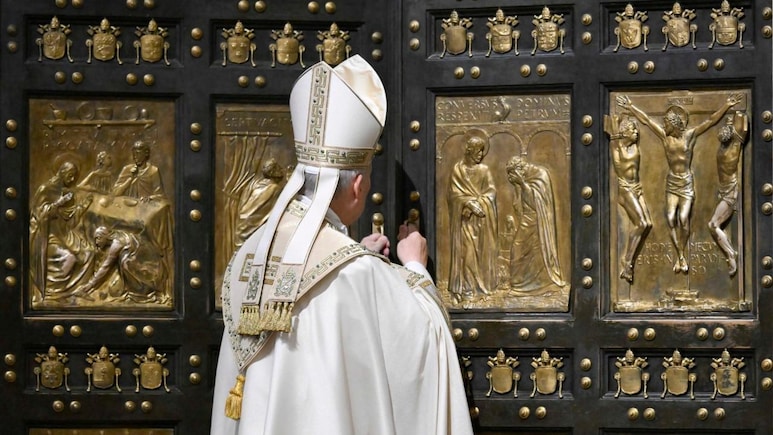
Calling the Vatican's record a "wound in Christian memory", Pope Leo XIV issued a historic apology on Monday for the part the Holy See itself played in legitimizing slavery and for failing to denounce it for centuries, as reported by the Associated Press.
Previous popes have expressed regret for the role that Christians played in the transatlantic slave trade. However, no pope has ever officially admitted, much less expressed regret, for the part previous popes played in explicitly granting European sovereigns the right to oppress and control "infidels".
In his first encyclical, "Magnifica Humanitas" (Magnificent Humanity), which was published on Monday, the first American-born pope in history — whose family history includes both slaves and slave owners — offered the apology.
The broad declaration aims to protect humanity at a time when artificial intelligence is becoming increasingly important. Leo brought up the transatlantic slave trade in connection with what he described as the new forms of colonialism and slavery that the digital revolution is fostering, including the unregulated labor needed to obtain rare minerals needed for AI chips.
By doing this, Leo addressed decades of demands by Black American Catholics, activists, and academics for the Holy See to make amends for its own involvement in the people trafficking during the colonial past.
"It is impossible not to feel deep sorrow when contemplating the immense suffering and humiliation endured by so many in stark contrast to their immeasurable dignity as persons infinitely loved by the Lord," Leo remarked. "I humbly request pardon in the name of the Church for this."
ALSO READ: 'Woe To Those Who Manipulate God For War', Says Pope Leo XIV Amid Trump Feud
The Vatican has maintained that it has always respected human dignity as God's children. However, Portuguese rulers were given permission by the Vatican in the fifteenth century to conquer Africa and the Americas and enslave non-Christians.
Pope Nicholas V, for instance, issued the papal bull Dum Diversas in 1452, granting the Portuguese king and his successors the authority "to invade, conquer, fight and subjugate" and seize all property, including land, belonging to "Saracens, pagans, and other infidels, and enemies of the name of Christ" anywhere.
Additionally, the Portuguese were authorized under the bull "to reduce their persons to perpetual slavery."
Essential Business Intelligence, Sharp Market Insights, Practical Personal Finance Advice, Daily Fuel, Gold and Silver Prices and Latest Stories — On NDTV Profit.