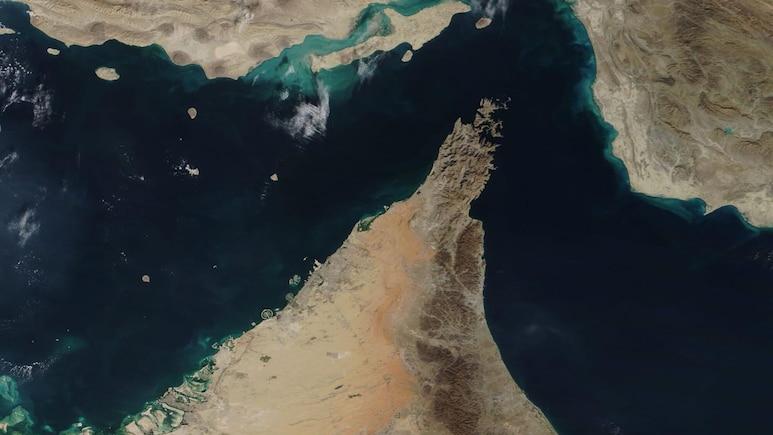
Iran is considering a shift in how transit fees are levied on vessels passing through the strategically vital Strait of Hormuz, with a proposal to mandate payments in its national currency, the rial.
The development was flagged by the head of Iran's Parliament National Security Commission, who said the move forms part of a broader legislative push aimed at strengthening economic sovereignty and reducing reliance on foreign currencies in critical trade corridors.
Under a parliamentary proposal, transit fees through the Strait of Hormuz would be paid in Iran's national currency, the rial, the official said, according to a social media post by the Consulate General of the Islamic Republic of Iran in Mumbai. This underscored the efforts to recalibrate financial mechanisms tied to one of the world's busiest oil shipping routes.
The proposal is embedded within a larger framework titled the 'Strategic Action Plan for Security and Sustainable Development of the Strait of Hormuz', which outlines measures to enhance both security oversight and economic leverage in the region.
Adding further context, the Iranian consulate said: “In the Strategic Action Plan for Security and Sustainable Development of the Strait of Hormuz, the government may, if necessary, sign an agreement with Oman; though this is a secondary provision, not the core of the plan.”
Media reports said that the mention of Oman highlights the potential for regional coordination, though Iranian officials have clarified that any such agreement would be supplementary rather than central to the initiative.
The Strait of Hormuz remains a critical chokepoint for global energy supplies, handling a significant share of the world's oil shipments.
Any changes to transit protocols, especially involving currency denomination, could have implications for shipping costs, trade flows and broader geopolitical dynamics in the Gulf region.
Essential Business Intelligence, Sharp Market Insights, Practical Personal Finance Advice, Daily Fuel, Gold and Silver Prices and Latest Stories — On NDTV Profit.