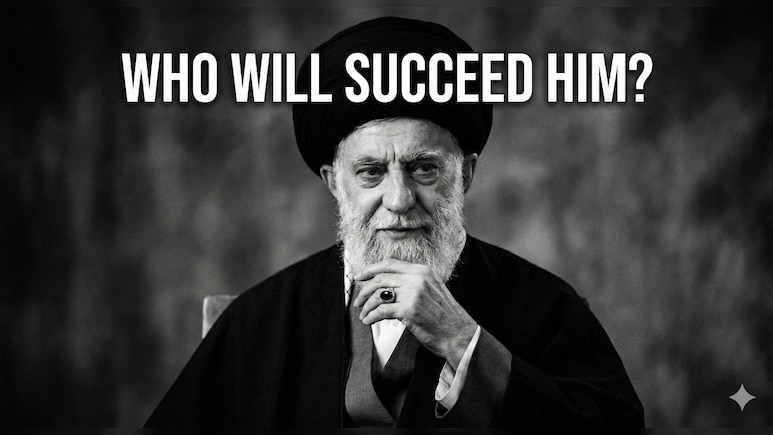
- Iran's Supreme Leader Khamenei was assassinated in US-Israeli strikes on his Tehran compound
- No successor was named by Khamenei before his death, raising succession speculations
- Five potential successors include clerics Arafi, Qomi, Araki, Mohseni-Ejei, and Bushehri
Iranian Supreme Leader Ayatollah Ali Khamenei's killing, seen as the biggest setback to the Islamic regime in its nearly five decades of existence, raises the question over his succession. Speculations are rife that a new leader would be named soon, and will selected from the ranks of the country's clerical-military coterie.
The Islamic Revolutionary Guards Corps confirmed the death of Khamenei in a statement, while vowing to continue the fight against the United States and Israel.
"The criminal and terrorist act of the malicious governments of the United States and the Zionist regime constitutes a clear violation of religious, moral, legal, and international norms. Therefore, the hand of vengeance of the Iranian nation, in imposing severe, decisive, and regret-inducing punishment upon the killers of the Imam of the Ummah, will not release them from its grasp," it said.
Also Read | Layoffs Are Rising In Tech, But These Skills Are Helping People Unlock Better Pay
Khamenei, who took over as the supreme leader back in 1989, did not publicly name his successor during his lifetime. He was assassinated in the US-Israeli strikes on Saturday, which targeted his official compound in Tehran.
Track live updates of US-Iran war here
Here are the key names doing the rounds as Khamenei's potential successor:
Mojtaba Hosseini Khamenei
Mojtaba Khamenei, the 56-year-old second son of the late Supreme Leader, operates as a formidable power broker with deep, behind-the-scenes influence over the IRGC and Basij paramilitary networks. A veteran of the Iran-Iraq War, his strengths lie in his intimate coordination with Iran's security apparatus; however, he faces significant institutional hurdles. The clerical establishment remains largely opposed to hereditary succession, and Mojtaba lacks the high-ranking clerical credentials and formal leadership experience traditionally required to ascend to the supreme position.
Mohammad Mehdi Mirbagheri
A hardline Shiite cleric in his early 60s, Mohammad Mehdi Mirbagheri represents the most ideologically uncompromising faction of Iran's religious leadership. As a member of the Assembly of Experts and head of the Qom Academy of Islamic Sciences, he meets the formal constitutional criteria for the role and appeals to those seeking a strictly anti-Western, traditionalist governance. While his theological standing is robust, his primary limitation is a lack of broad-based support within the political and military establishments, which may see him as too ideologically rigid for pragmatic rule.
Hassan Khomeini
As the grandson of the Islamic Republic's founder, 50-year-old Hassan Khomeini carries unparalleled symbolic legitimacy and represents "revolutionary continuity" without the direct Khamenei lineage. While he has historically been viewed as a moderate or reform-leaning figure, he recently signaled loyalty to the establishment by representing the Supreme Leader at major state ceremonies and siding with the regime during the 2026 protests. Despite his unique pedigree and ties across various factions, his lack of military or executive experience—and the deep-seated suspicion held by IRGC hardliners—remains a major barrier to his advancement.
Ali Ardashir Larijani
Ali Larijani, the 67-year-old Secretary of the Supreme National Security Council, is arguably Iran's most experienced strategist, having served as a long-term Speaker of Parliament and the architect of the 25-year strategic deal with China. With roots in the IRGC and a history as a Chief Nuclear Negotiator, he is the regime's premier "fixer" for defense and economic survival. However, Larijani is not a candidate for the Supreme Leadership itself; because he is not a senior Shiite cleric, he is constitutionally barred from the role, meaning his influence will likely be exerted as a kingmaker or executive leader rather than a religious successor.
Ayatollah Alireza Arafi
If Iran chooses to go ahead with a clerical head instead of a military leader, then Alireza Arafi could emerge as a top choice, according to the Council on Foreign Relations. Arafi is a senior cleric, and also a member of the Assembly of Experts and high-powered Guardian Council.
Mohsen Qomi (Hojjat-ol-Eslam)
As a high-level advisor to the Supreme Leader, Qomi operates within the inner circle of power. His primary value lies in his deep institutional knowledge and his reputation as a "trusted insider," making him a key figure for those prioritizing continuity and political stability.
Ayatollah Mohsen Araki
Araki stands out for his theological weight. As a prominent member of the Assembly of Experts, he possesses the traditional religious credentials necessary for the role. He is frequently cited in succession talks due to his ability to bridge the gap between high-level clerical scholarship and state governance.
Ayatollah Gholam Hossein Mohseni-Ejei
Currently heading the Judiciary, Mohseni-Ejei is a heavyweight with extensive experience in security and legal oversight. His background in various branches of government makes him a "pragmatic" choice for maintaining order and handling the complexities of the state apparatus during a transition.
Ayatollah Hashem Hosseini Bushehri
Bushehri commands significant influence through his role as the Friday prayer leader in Qom. Given Qom's status as the theological heart of the country, his membership in the Assembly of Experts and his religious standing position him as a formidable candidate rooted in traditional clerical authority.
ALSO READ: Iran Confirms Supreme Leader Khamenei's Demise, Vows To Continue Fight Against US, Israel
Essential Business Intelligence, Sharp Market Insights, Practical Personal Finance Advice, Daily Fuel, Gold and Silver Prices and Latest Stories — On NDTV Profit.