- India is Asia's third-most powerful nation, narrowing its power gap with China since 2018
- Prime Minister Modi ranks second in regional leadership effectiveness, behind China's Xi Jinping
- India improved in economic, diplomatic, defense, and cultural influence measures in the 2026 index
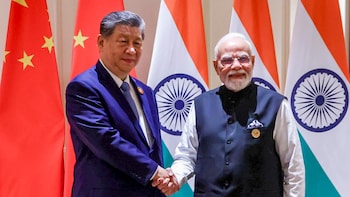
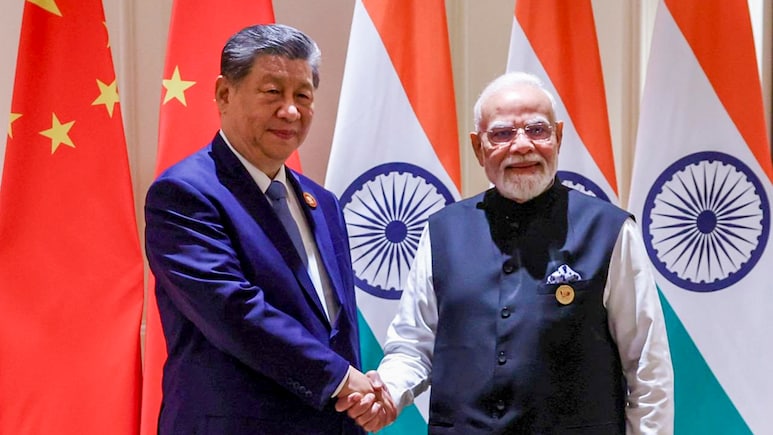
India has strengthened its standing as Asia's third-most powerful nation, bringing its power gap with China to its narrowest level since the Lowy Institute began tracking regional influence in 2018, according to the institute's latest assessment.
The assessment placed Prime Minister Narendra Modi second among Asia's regional leaders in terms of effectiveness, with China's Xi Jinping occupying the top position.
ALSO READ : India-Nepal Partnership In Focus As Balendra Shah Meets PM Modi. What's On Agenda?
Also Read | Layoffs Are Rising In Tech, But These Skills Are Helping People Unlock Better Pay
India's stronger economic prospects, expanding diplomatic engagement, deeper defence ties and growing cultural footprint contributed to its improved ranking, the 2026 index said. China, however, retained a considerable lead, with an overall power score nearly 80 per cent higher than India's.
The report pointed to India's growing effectiveness in converting its underlying strengths into regional influence, with the gap between its potential and actual power continuing to shrink.
The measure, referred to as 'power yield', captures how effectively a country uses its economic, military and other resources to translate potential strength into tangible influence.
India registered improvements in five of the eight measures assessed by the institute, while recording marginal declines in the remaining three.
Diplomatic influence continued to be its strongest and most consistent area of performance, even as the measure weakened slightly.
The report said India's defence networks and cultural influence had contributed to its growing regional footprint.
Increased defence engagement, including the sale of BrahMos missiles to Southeast Asian countries, helped India climb to ninth position in the defence networks category.
Its cultural influence score also increased to 43.8 points, supported by improvements in cultural projection, information flows and people-to-people exchanges.
Sharing the findings on social media, Dr Hunter Marston, director of the Lowy Institute's Southeast Asia Program and project lead for the Asia Power Index, said India had strengthened its position as a major regional power.
"India gains influence. India rose to 40.5, consolidating its place as a major power. The gap with China is the narrowest since 2018, and Modi is now rated the second-most effective regional leader behind Xi, despite a dip in economic capability," Marston said.
The assessment also identified several factors weighing on India's overall performance. These included a weakening rupee, changes in the International Monetary Fund's methodology for measuring economies and a decline of nearly $20 billion in outbound investment.
The institute further observed that perceptions of Modi's leadership and India's strategic ambitions had weakened somewhat, reflecting the country's lower diplomatic profile during the conflict in the Gulf.
Nevertheless, the report maintained that India's long-term opportunities remained comparatively stronger than those of several other Asian economies, underlining its potential to expand its regional influence.
The 2026 Asia Power Index assesses 27 countries and territories across 131 indicators, grouped into eight measures: economic capability, military capability, resilience, future resources, economic relationships, defence networks, diplomatic influence and cultural influence.
China Closes Gap With US In Military Power
The report also pointed to China's growing challenge to American dominance in Asia, with Washington's engagement in the Middle East potentially diverting attention and resources away from the region.
The United States retained its position as the world's leading power in the index, scoring 78.9 points, compared with China's 73.6.
The resulting gap of 5.3 points, however, highlights how rapidly Beijing is closing in on Washington's overall regional influence.
The US recorded notable declines in economic and military capability, defence networks and diplomatic influence, while China maintained relatively stable performance across several of these measures.
China's military modernisation and expanding maritime capabilities have strengthened its ability to assert territorial claims in the South China Sea, particularly involving the Philippines, as well as around Taiwan.
The report also highlighted Beijing's growing financial resources. China's official foreign exchange reserves are now around three times those of the United States, reflecting its expanding economic capacity.
The findings point to a shifting balance of power in Asia, with China increasingly challenging American influence, while India continues to strengthen its position as the region's third-largest power.
Essential Business Intelligence, Sharp Market Insights, Practical Personal Finance Advice, Daily Fuel, Gold and Silver Prices, Watch Business News Live and Latest Stories — On NDTV Profit.