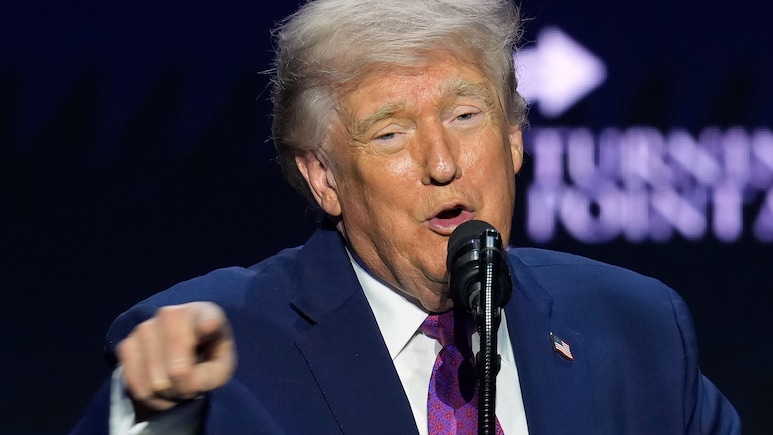
US President Donald Trump's now-withdrawn proposal to impose a charge of 20% on all cargo passing through the Strait of Hormuz could have generated a massive revenue of up to nearly $200 billion, the New York Post reported, citing estimates quoted by supply chain experts.
The proposal was announced by Trump on Monday amid tensions between the US and Iran. However, he retreated on Tuesday, saying the US would ink "trade deals" instead of imposing toll in the vital waterway.
The Strait of Hormuz is a crucial gateway for global trade, particularly for energy shipments and with annual cargo valued at an estimated $880 billion to $970 billion.
Also Read | Layoffs Are Rising In Tech, But These Skills Are Helping People Unlock Better Pay
ALSO READ: Trump Says Will Replace 20% Hormuz Cargo Fee With 'Trade Deals'
Based on those trade volumes, a 20% levy could potentially raise $176 billion to $194 billion each year, making it one of the largest revenue-generating trade method ever proposed.
Trump also said that the US would resume its naval blockade targeting Iranian vessels while allowing ships from other countries to continue using the passage.
While this announcement attracted global attention, experts had questioned whether such a toll could actually be enforced under existing international maritime rules.
“I don't think that there is a real mechanism for us to charge that toll at this moment, and how we would charge that toll is still an open question of both economic policy and international law,” the New York Post quoted Brandon Daniels, chief executive of supply chain AI company Exiger, as saying.
ALSO READ: Who Controls The Strait Of Hormuz? Iran Tables New Bill As Trump Claims US Is Its 'Guardian'
Essential Business Intelligence, Sharp Market Insights, Practical Personal Finance Advice, Daily Fuel, Gold and Silver Prices and Latest Stories — On NDTV Profit.