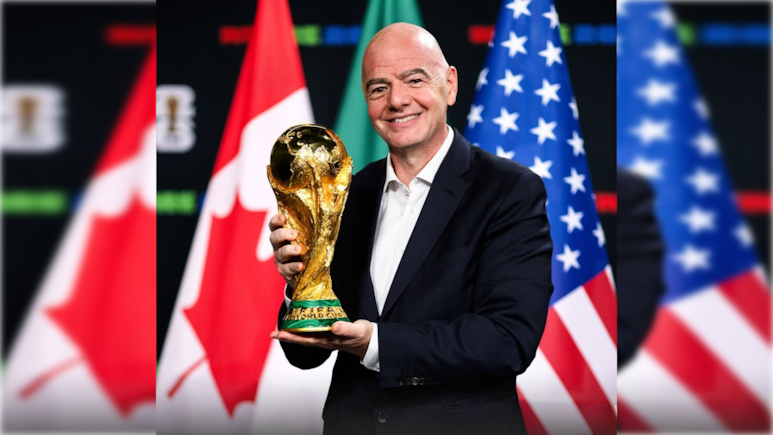
The upcoming FIFA World Cup 2026 is set to be the biggest tournament in the competition's history on multiple fronts. Not only will it feature an expanded 48-team format and a record 104 matches, but it is also on course to become the most commercially successful World Cup ever staged.
According to research firm Ampere Analysis, combined media rights and sponsorship revenues for the tournament are expected to exceed $6 billion. Ampere estimates media rights revenue will reach at least $3.8 billion, while sponsorship income is projected at $2.4 billion, the highest commercial haul in World Cup history.
The figures comfortably surpass previous benchmarks. FIFA generated a record $7.5 billion across the 2019-2022 cycle, driven largely by the World Cup in Qatar. This time, the governing body is targeting roughly $13 billion in revenue for the current four-year cycle ending with the 2026 World Cup.
Also Read | Layoffs Are Rising In Tech, But These Skills Are Helping People Unlock Better Pay
A major reason behind the surge is the tournament's expansion from 32 teams to 48 teams. The new format increases the number of matches from 64 to 104, creating significantly more inventory for broadcasters, advertisers and sponsors.
ALSO READ | FIFA World Cup: Lamine Yamal, Endrick To Desire Doue, Nico Paz — Young Stars Ready To Dazzle
The choice of North America as host has also played a pivotal role. The United States remains the world's largest sports media market, and FIFA has benefited from growing interest in football among American audiences. Ampere estimates that the value of US media rights alone has risen by 94% compared with the 2022 World Cup.
Broadcasting remains the single biggest revenue driver. Traditional television networks continue to dominate rights purchases, but streaming platforms have intensified competition. DAZN, for example, has secured streaming rights in key football markets such as Japan, Italy and Spain, helping push media-rights valuations higher.
On the sponsorship side, FIFA has attracted a mix of established partners and new entrants. Long-time World Cup sponsors including Adidas, Coca-Cola and Visa remain central to the commercial programme, while companies such as Bank of America and DoorDash have joined the FIFA ecosystem ahead of the tournament. Food, beverage, travel and hospitality brands continue to account for a significant share of sponsorship spending.
Notably, the tournament format, which has been adapted to suit weather conditions in North America, provides additional commercial opportunities through scheduled three-minute hydration breaks, creating an advertising window for broadcasters during matches.
The financial story may not end with the $6 billion generated through media rights and sponsorships. FIFA's revised budget projects almost $9 billion in revenue during 2026 alone, with ticket sales, hospitality packages and licencing revenues expected to add substantially to the total.
ALSO READ | FIFA World Cup 2026: Meet The Four Indian-Origin Footballers Set To Play In The Tournament
Essential Business Intelligence, Sharp Market Insights, Practical Personal Finance Advice, Daily Fuel, Gold and Silver Prices and Latest Stories — On NDTV Profit.