For years cricket has relied heavily on bilateral international series, with tours forming the backbone of the calendar.
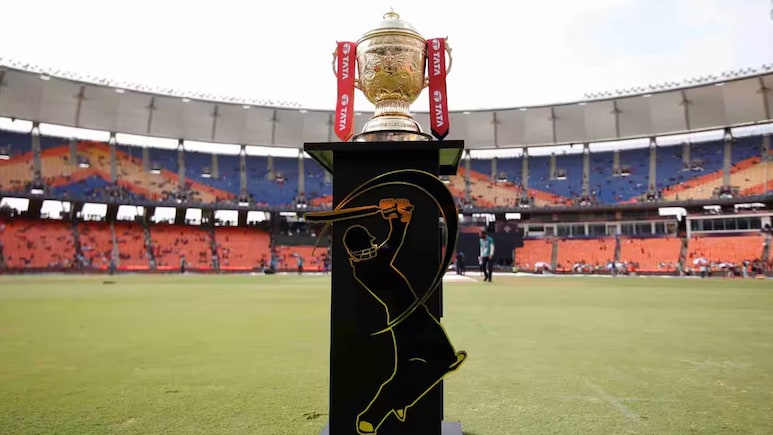
That structure, however, is now under pressure with the rise of franchise cricket, led by the Indian Premier League (IPL), driving a shift towards a model where domestic competitions take precedence, with international cricket largely limited to ICC events.
In an interview with the Financial Times on April 2, IPL chairperson Arun Singh Dhumal outlined this transition clearly, describing a system with more league cricket, fewer bilaterals and ICC global tournaments acting as the primary international markers “a bit like football.”
Also Read | Layoffs Are Rising In Tech, But These Skills Are Helping People Unlock Better Pay
The 94-Match IPL Blueprint
At the centre of this shift is the IPL's proposed expansion from 74 to 94 matches. While there is clear demand from both broadcasters and investors, the current calendar presents multiple constraints.
First, the Future Tours Programme (FTP) is locked until April 2027, leaving no immediate room for expansion. Second, extending the current mid-March to May window into June is not viable due to the monsoon.
ALSO READ | IPL 2026: Rahane Says People Have 'Agenda', Are 'Jealous' When Asked About Slow Strike Rate - Watch
The third challenge is broadcast economics. Increasing matches within the existing window would require more double-headers, which dilute viewership leading to lower ad-revenues. “If we try to go from 74 to 94 games in the current window, we will end up having more double-headers… That does not work well for broadcasters,” Dhumal said.
As a result, expansion is contingent on a larger window. The BCCI is exploring a longer IPL window of up to three months in the next FTP cycle, or potentially a second window in September–October, positioned between the English and Australian seasons.
Dhumal's comments reflect a broader structural shift. He pointed to declining interest in some bilateral series and the parallel rise of domestic leagues across major cricketing nations. “If you look at the transition over the last few years, there is definitely less interest in some bilateral games. That is why countries are coming up with their own leagues,” he said.
That trend, in turn, strengthens the IPL's case for a larger window.
“The IPL is not only adding value to India and Indian players; it is adding value to world cricket at large. So all these players would want more.”
The end result, as Dhumal framed it, is a clear directional change, “That is the new world order for cricket—fewer bilaterals, more league cricket, and in between you have ICC events, a bit like football.”
The Champions League Push
Running alongside this is a potentially more disruptive idea. IPL founder Lalit Modi has revived the concept of a Champions League-style T20 competition, positioning it as the next step in cricket's evolution.
Modi suggested that the IPL's long-term design already accounts for further expansion, including a full home-and-away format that could take the tournament to 100-plus matches, potentially even 136 games with additional teams.
More significantly, he pointed to franchise valuations as the clearest indicator of the direction of travel. According to Modi, IPL teams could be valued at $3.5-4 billion if a global, interconnected league structure is implemented.
A revived Champions League would sit at the top of that structure, turning domestic leagues into qualifying platforms and creating a global club competition similar to football's current ecosystem. Such a model would not only reshape the calendar but also unlock new broadcast and commercial opportunities across markets.
The Road Ahead
The shift, however, is not without challenges. Calendar space, broadcaster interests, and player workload remain key constraints, particularly in a system where players are already balancing multiple formats and leagues.
But the direction is becoming clearer. The IPL is no longer being positioned as a window within the calendar, it is increasingly being pushed as the anchor around which the rest of the sport will operate.
If expansion plans and global competitions materialise in the next FTP cycle, cricket's long-standing bilateral structure may give way to a league-first model, marking a fundamental reset in how the game is organised and consumed.
ALSO READ | FIFA World Cup Final Ticket Prices Surge 584% From 2022 To 2026 — What's Driving The Spike?
Essential Business Intelligence, Sharp Market Insights, Practical Personal Finance Advice, Daily Fuel, Gold and Silver Prices and Latest Stories — On NDTV Profit.