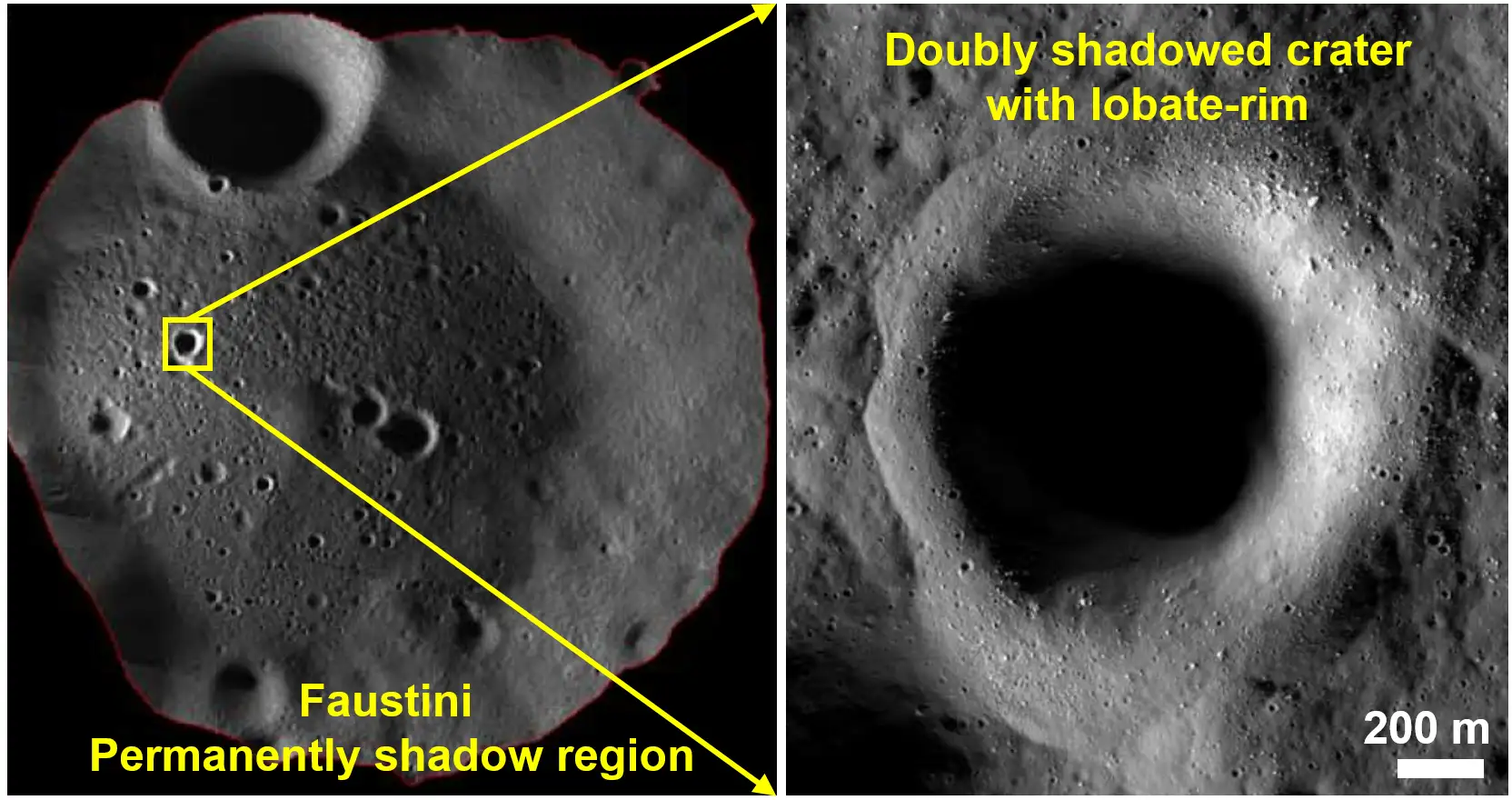
The Indian Space Research Organisation (ISRO) has detected compelling signs of potential subsurface water-ice deposits buried beneath four permanently shadowed craters near the lunar south pole. Utilising advanced radar data transmitted by the Chandrayaan-2 lunar orbiter, researchers identified highly promising signatures inside a 1.1-kilometre (0.7-mile) region within the Faustini crater.
Among the studied craters, the Faustini crater shows strong signs that there may be ice below the surface, based on radar data and distinctive lobate-rim morphological characteristics.
ALSO READ | Super El Nino Warning: Scorching Heat, Weaker Monsoon Ahead — What It Means For India
Also Read | Layoffs Are Rising In Tech, But These Skills Are Helping People Unlock Better Pay
The crater has a “lobate rim,” which means its edges look flow-like or curved. This kind of shape can happen when an impact hits ice under the ground, causing the material to flow and create that special crater shape.
This area on the Moon never receives sunlight or exposure to harsh solar radiation, so it stays extremely cold, about 25 Kelvin (around -248°C). Scientists say these freezing conditions are ideal for preserving water ice beneath the surface for very long periods of time.
As per the official reports, the Chandrayaan-2 orbiter carries a special radar called Dual Frequency Synthetic Aperture Radar (DFSAR) that uses microwaves to take images of the Moon.
It works in two frequency bands, L- and S-band, and is the first of its kind to study the Moon in detail. The study looks at “doubly shadowed craters,” which are craters located inside permanently shadowed regions (PSRs) of the Moon.
In the Moon's South Pole region, scientists have created a way to detect possible underground ice using radar signals. If the radar shows certain patterns, specifically Circular Polarization Ratio (CPR) higher than 1 and Degree of Polarization (DOP) lower than 0.13, it may indicate ice below the surface.
ALSO READ | 'America Returning To Moon': NASA Unveils Plan For Permanent Moon Base
DOP simply tells how much the radar signal keeps its original shape after bouncing off the ground. Lower values can suggest the signal is scattering inside ice or similar material, official reports stated.
This method helps scientists tell the difference between real ice signs and signals caused just by rough, rocky ground.
Essential Business Intelligence, Sharp Market Insights, Practical Personal Finance Advice, Daily Fuel, Gold and Silver Prices and Latest Stories — On NDTV Profit.


















.jpeg?im=FeatureCrop,algorithm=dnn,width=350,height=197)