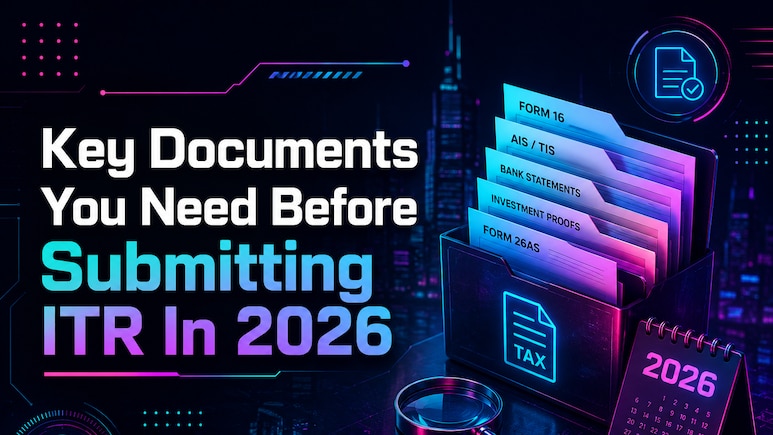
As tax season approaches, taxpayers should carefully review their financial records and gather all necessary documents. It is recommended to arrange your key documents such as income statements, investment details, bank records and tax deduction certificates for accurate ITR reporting.
These documents must be kept ready to avoid last-minute issues. Reviewing information early can help identify errors and ensure accurate filing. Submitting returns on time not only ensures smooth processing but also helps in receiving refunds faster.
The last date to file your ITR for the financial year 2025-26 is July 31, 2026, for individuals and most taxpayers whose accounts are not required to be audited. If you miss this due date, you can still file a belated return until December 31, 2026, but it will attract a late filing fee, depending on your income.
Also Read | Layoffs Are Rising In Tech, But These Skills Are Helping People Unlock Better Pay
ALSO READ: ITR Filing 2026: Step-By-Step Guide To E-Verify Your Income Tax Return
Key Documents Needed For ITR
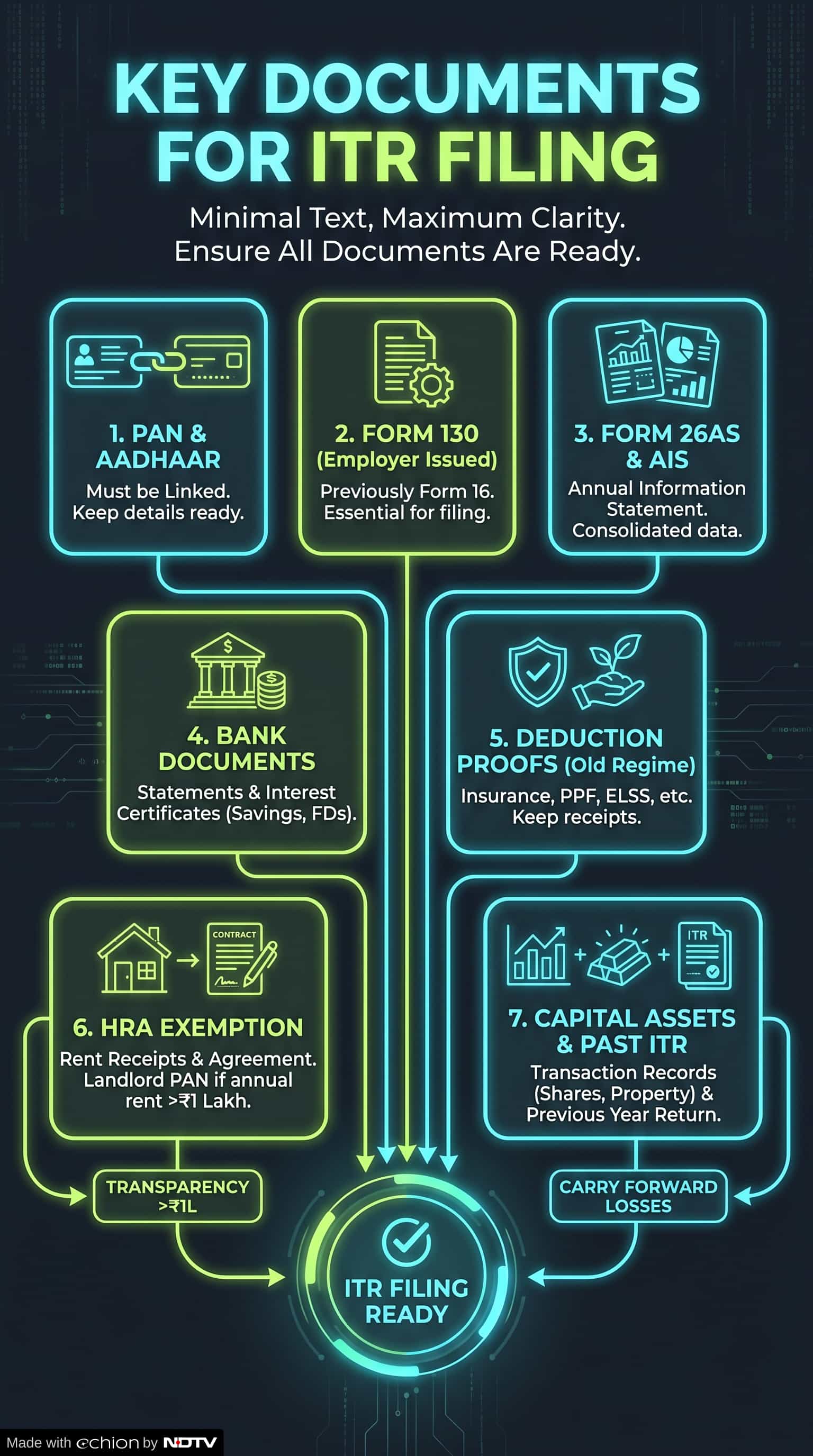
1. Taxpayers should keep their PAN and Aadhaar details ready and ensure that both are linked. It is also important to verify personal information such as mobile number, email address and current residential address. These details may be required for OTP-based verification and other communications from the Income Tax Department during the filing process.
2. Form 16, now renamed to Form 130, is issued by an employer and is an important document for filing income tax returns. It contains details of salary income, tax deducted at source (TDS), deductions claimed and exemptions availed during the financial year.
3. Form 26AS and the Annual Information Statement (AIS) are important documents for filing income tax returns. Form 26AS contains details of taxes deducted and collected on your behalf, while AIS provides information on financial transactions such as interest income and share investments. Taxpayers should compare both statements with their records before filing returns to ensure that all details are correctly filled.
4. Taxpayers should keep bank statements and interest certificates for savings accounts, fixed deposits and other deposits ready. These documents help in accurately reporting interest income earned during the financial year.
5. Taxpayers claiming deductions under the old tax regime should keep investment and payment proofs ready. These may include life insurance premium receipts, PPF and Sukanya Samriddhi Yojana deposits, ELSS investments, among other things.
6. If taxpayers are claiming house rent allowance (HRA) exemption, they should keep rent receipts and a valid rent agreement ready. If the annual rent exceeds Rs 1 lakh, details of the landlord, including PAN are needed for transparent ITR disclosure.
7. Taxpayers with investments in shares, mutual funds, property, gold or other capital assets should keep transaction and payment records prepared. It is also advisable to keep a copy of the previous year's income tax return, as it may be required for carrying forward eligible losses and verifying past disclosures.
ALSO READ: Income Tax Return On Rs 12.5 Lakh Salary: What You Need To Know Before Filing ITR
Essential Business Intelligence, Sharp Market Insights, Practical Personal Finance Advice, Daily Fuel, Gold and Silver Prices and Latest Stories — On NDTV Profit.