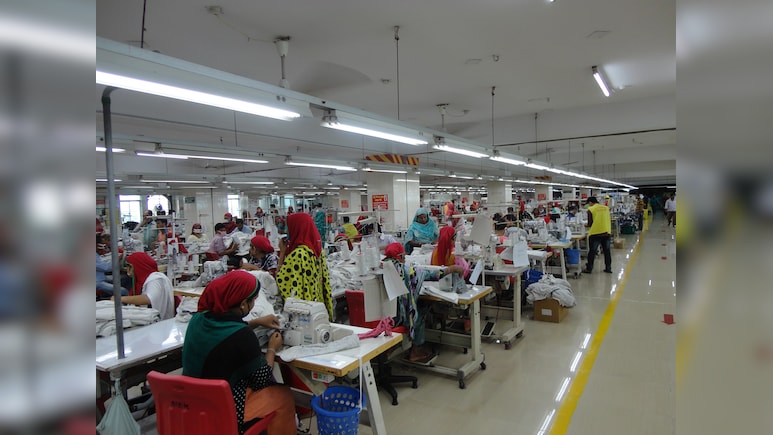
Following production disruptions in Bangladesh's garment industry, global fashion retailers, including Zara, H&M and Marks & Spencer, are shifting orders to India and other Asian manufacturing hubs as labour unrest and rising costs undermine the country's appeal as a major low-cost sourcing destination, according to a Reuters report.
The development has unsettled Bangladesh's garment industry, with around $254 million in orders being diverted from the country between November 1 and 18. Neighbouring India has emerged as the biggest beneficiary, three factory owners told Reuters.
The disruptions pose a significant challenge for Bangladesh, where the garment sector is a major source of export earnings and employment, while raising concerns over its ability to retain global buyers.
Also Read | Layoffs Are Rising In Tech, But These Skills Are Helping People Unlock Better Pay
ALSO READ | India-US Trade Deal Nearing Completion, EU FTA Likely To Signed This Year: Piyush Goyal
Factory owners said international retailers had redirected close to 10% of their monthly sourcing orders to other countries, with India securing the largest share of the business.
Vietnam, Cambodia and Indonesia have also emerged as alternative destinations as brands look to reduce dependence on Bangladesh and minimise supply-chain risks.
The order shifts have been driven by a combination of labour unrest, rising wages, energy shortages and political uncertainty, which have weakened Bangladesh's long-standing advantage as a low-cost garment manufacturing destination.
The Bangladesh Garment Manufacturers and Exporters Association (BGMEA) estimates that the protests have caused over $400 million in production losses, threatening a sector that contributes more than 80% of Bangladesh's export earnings and nearly 40% of its manufacturing jobs.
Wage Hike Adds To Cost Pressures
Unrest escalated after Bangladesh approved a 36% minimum wage hike for garment workers on Wednesday, the smallest increase in four decades and far below workers' demand for more than double their existing wages, sparking fresh clashes with police.
Abdur Rahman Tarafder, secretary of the Ministry of Labour and Employment, described the revised wages as satisfactory and expressed hope that workers would return to factories from Saturday.
However, industry representatives said the wage revision would further narrow Bangladesh's cost advantage over competing manufacturing destinations, particularly India.
M. Mohiuddin Chowdhury, a BGMEA director, said manufacturers were already facing pressure from rising wages, utility expenses and raw-material costs.
"The wage increase has added to costs at a time when buyers are demanding lower prices and competition from rival sourcing countries is intensifying," he told Reuters.
Factory owners said Zara, H&M, Marks & Spencer and Celio were among the brands shifting orders to other countries. Inditex, Zara's parent company, declined to comment, while the other retailers did not respond to Reuters' queries.
India Emerges As Key Beneficiary
India's established textile industry and shorter production and delivery timelines are making it an increasingly attractive sourcing destination for global fashion brands.
According to Chowdhury, India can provide buyers with a delivery advantage of around one week compared with Bangladesh. Vietnam and Cambodia can reduce lead times by as much as 15 days.
While manufacturers in competing sourcing destinations can generally complete production and delivery within 60 to 90 days, the corresponding timeline in Bangladesh is approximately 120 days, he said.
The development was also reflected in Indian stock markets, where textile and garment manufacturing companies witnessed buying interest following the Reuters report.
Shares of Gokaldas Exports surged as much as 11%, while Trident gained around 5%. Other textile companies, including Welspun Living, KPR Mill and Vardhman Textiles, advanced approximately 2% each.
The market response indicated investor expectations that Indian manufacturers could benefit if international retailers continue shifting a larger share of their sourcing requirements away from Bangladesh.
Concerns Over Long-Term Business Losses
Bangladesh's garment industry faces a deeper challenge as manufacturers fear that buyers shifting orders amid the current unrest may establish lasting sourcing arrangements with rival countries, making it difficult to win back business even after conditions stabilise.
Mahmud Hasan Khan, president of the BGMEA, said shifting some orders to other manufacturing destinations temporarily could help the industry retain international clients while limiting financial losses.
However, manufacturers are increasingly worried that buyers may reconsider their sourcing arrangements if production disruptions continue.
Fuel and power shortages have further hampered factory operations, pushing some manufacturers to rely on costly backup energy sources. The disruptions have also caused significant production delays, with factories in and around Dhaka losing an estimated 20 to 25 working days.
Some factories are now considering additional overtime shifts and costly air freight to fulfil existing delivery commitments.
Khan Monirul Alam, managing director of Alps Apparels Group, which primarily supplies European brands, said the unrest had already affected the company's new business.
"Since November 1, most of my buyers have stopped placing orders because of the unrest," Alam told Reuters, adding that clients had informed the company that orders had been shifted, postponed or cancelled after alternative arrangements were made.
Political uncertainty surrounding former prime minister Sheikh Hasina's possible return to Dhaka from India has further added to concerns about stability in the country.
A Test For Bangladesh's Garment Industry
The shifting sourcing landscape highlights the intensifying competition among Asian garment-producing countries, as global brands prioritise cost efficiency, dependable production and faster deliveries.
The shift could give Indian manufacturers an opportunity to expand their international presence and secure a larger share of the global apparel market.
Bangladesh now faces the challenge of resuming normal production and restoring buyers' confidence before temporary order diversions turn into lasting sourcing shifts.
Chowdhury cautioned that brands may not return once they establish reliable alternatives, particularly as timely deliveries increasingly outweigh small cost differences in sourcing decisions.
Essential Business Intelligence, Sharp Market Insights, Practical Personal Finance Advice, Daily Fuel, Gold and Silver Prices, Watch Business News Live and Latest Stories — On NDTV Profit.