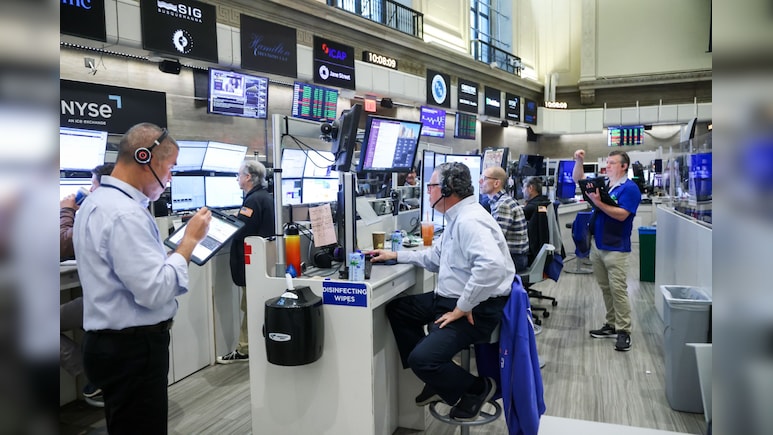
Investors ditched technology stocks in favor of the so-called "old economy" on Thursday as Broadcom Inc.'s earnings report pumped the brakes on the artificial-intelligence rally.
The Nasdaq 100 Index closed 0.5% lower in New York, paring an earlier drop of as much as 1.6% but extending declines for a second-straight session. The S&P 500 Index was 0.4% higher, with the benchmark on track for its 10th weekly advance in a row. Meanwhile, the Dow Jones Industrial Average - which is mostly composed of well-known, traditional stocks like JPMorgan Chase & Co. and Coca-Cola Co. - closed at a fresh all-time high.
"A weaker-than-expected earnings report from Broadcom is denting the red-hot semiconductor trade, as Wall Street questions whether substantial capital expenditures in AI will justify the ferocious rallies in tech stocks," said José Torres, senior economist at Interactive Brokers.
Also Read | Layoffs Are Rising In Tech, But These Skills Are Helping People Unlock Better Pay
ALSO READ: Stock Market Today: All You Need To Know Going Into Trade On June 5
Broadcom shares slid 13% after the company delivered a disappointing forecast for AI chip revenue. While Broadcom had been making progress in pivoting to AI customers, it has come up against outsized investor expectations.
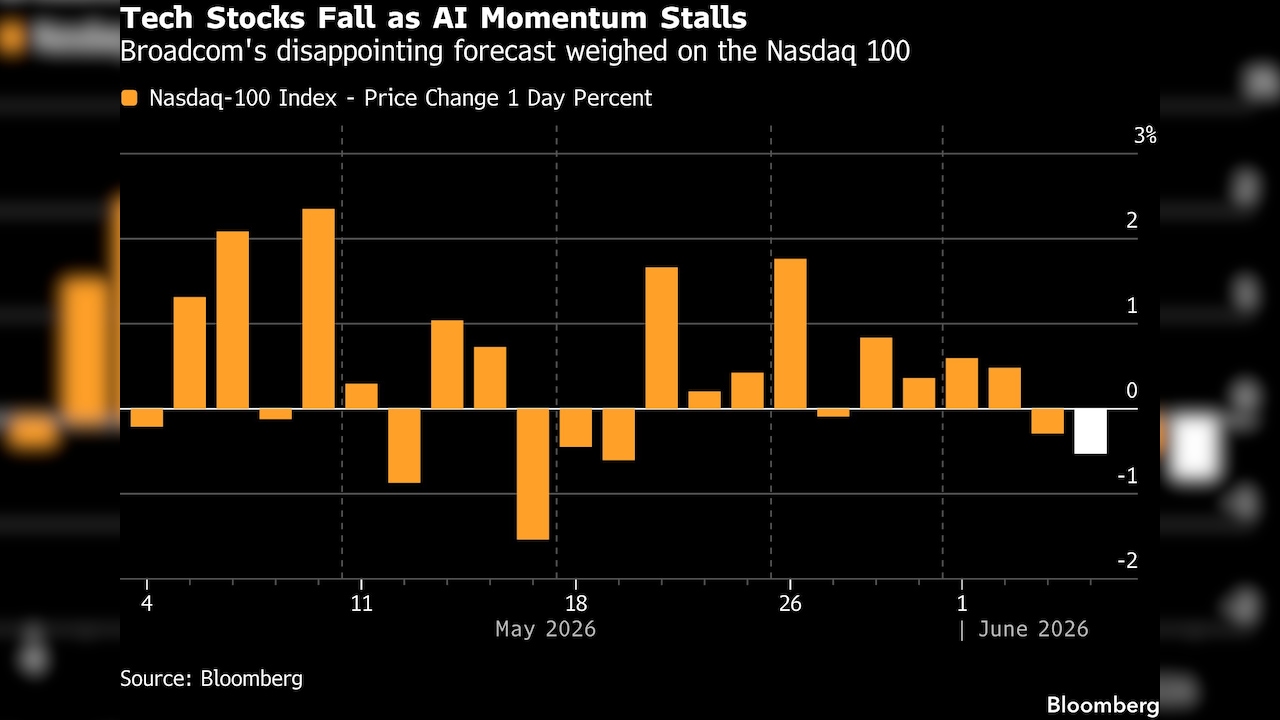
As a consequence of Broadcom's poorly-received forecast, investors have been backing away from the AI trade, which has seen a resurgence in recent weeks and provided a lift to US stocks.
Further fueling concerns were comments from Taiwan Semiconductor Manufacturing Co. on global chip supply falling short of AI-fueled demand.
"The problem with tech is primarily one of extremely elevated expectations," said Adam Crisafulli of Vital Knowledge. None of the earnings reports in the last few days were "fundamentally 'bad', but the bar was impossibly high following weeks of parabolic gains and euphoric psychology," he added.
Iran and Labor
The Republican-led House voted to halt the war with Iran on Wednesday, breaking with President Donald Trump. The 215-208 vote indicated that members of the president's own party are worried about the war spreading, with five months until the midterm elections.
The vote came after the most serious flare-up between the warring sides since a ceasefire came into effect, with Kuwait and Bahrain both caught in the crossfire. Rising tensions have been a key theme this week, with Israel's operations in Lebanon further complicating matters.
"While the resolution is unlikely to immediately affect military operations, as it still requires Senate approval, the vote underscores rising opposition to a prolonged war," Saxo's strategy team said.
Earlier, Iran said there had been no recent progress in talks with the US over an interim peace deal. Iranian Foreign Minister Abbas Araghchi said late Wednesday that "no tangible progress has been achieved in the negotiation process" with the US, according to the semi-official Tasnim news agency.
Labor has been a particular focus for traders this week. New applications for US unemployment benefits rose last week to the highest level since February. Meanwhile, data from Challenger, Gray & Christmas Inc. showed US technology companies announced the most job cuts in almost two years last month.
Now, traders await the monthly employment report, which will be released on Friday.
"The US/Iran conflict and AI continue to dominate the market narrative, but tomorrow's jobs report is still very important for markets because the strong labor market is a critical offset for the consumer amidst high inflation," said Tom Essaye of the Sevens Report. "A 'too tight' labor market would risk increasing the chances of Fed rate hikes sooner than expected."
Sectors in Focus
- Cryptocurrency-linked stocks are sliding as Bitcoin extended losses for a fifth consecutive session after renewed clashes in the Middle East weighed on market sentiment.
(This story has not been edited by NDTV staff and is auto-generated from a syndicated feed.)
Essential Business Intelligence, Sharp Market Insights, Practical Personal Finance Advice, Daily Fuel, Gold and Silver Prices and Latest Stories — On NDTV Profit.