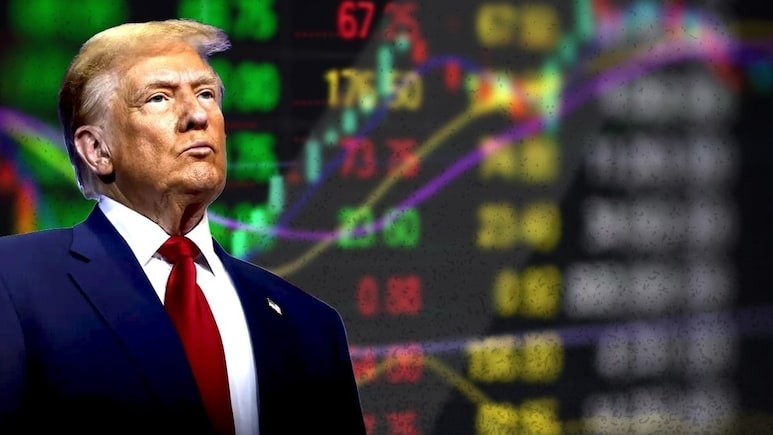
One year after US President Donald Trump announced his 'Liberation Day' tariffs on April 2, 2025, Wall Street's journey has been far from smooth, moving from panic selling to a strong comeback, and now back to uncertainty in 2026 with the Middle East war entering its 34th day.
According to multiple reports, the initial reaction was sharp. Markets, including the S&P 500, fell as investors worried that aggressive tariffs could trigger a trade war and slow economic growth.
Also Read | Layoffs Are Rising In Tech, But These Skills Are Helping People Unlock Better Pay
But those fears didn't last long. By the end of 2025, US markets had bounced back strongly, driven by solid corporate earnings and a surge in interest around artificial intelligence. The S&P 500 rose 16.4% during the calendar year, while the Nasdaq Composite jumped 20.5%. The Dow Jones Industrial Average also gained 13.4%, marking its best year since 2021.
Still, markets remained volatile. Investors began betting on what they called the “TACO” trade, assuming Trump would eventually soften his tariff stance. Multiple reports said that the frequent policy changes kept uncertainty high and made planning difficult for businesses.
Importantly, the tariffs did not fully deliver the manufacturing boost they promised. While inflation from tariffs stayed lower than expected, many small businesses continued to struggle with higher costs.
In 2026, markets have turned uneven again. Rising tensions in the Middle East have led to sharp swings, with March seeing the biggest monthly losses since 2022, as per media reports. The S&P 500 and Dow both fell over 5%, while the Nasdaq dropped nearly 4.8%.
Also Read: Gold, Silver Crack On Negative Global Cues: Will Yellow Metal Prices Plunge Below Rs 1.4 Lakh?
Essential Business Intelligence, Sharp Market Insights, Practical Personal Finance Advice, Daily Fuel, Gold and Silver Prices and Latest Stories — On NDTV Profit.