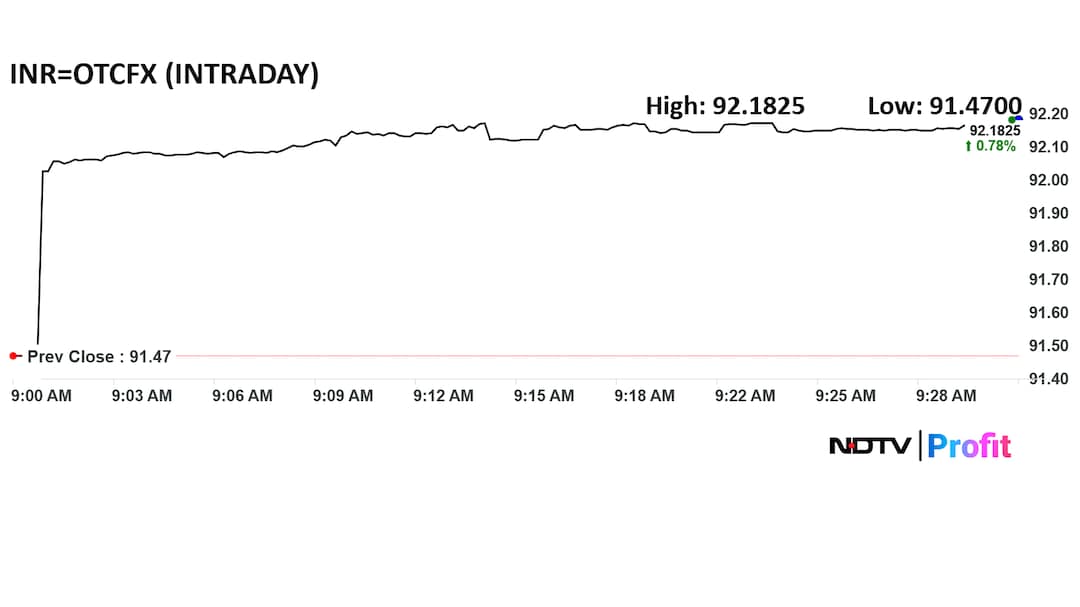
- The rupee fell 71 paise to a record low of 92.18 against the US dollar on Wednesday
- Rupee was the worst performer among Asian currencies amid Middle East conflict concerns
- Higher oil prices and foreign fund outflows added pressure on the Indian rupee
The rupee sunk to a new low on Wednesday as the conflict in the Middle East showed no signs of ending, pulling money out of emerging markets like India and into the safety of gold and US Treasury bonds. The INR fell 71 paise to hit a record low of 92.18 to the US dollar soon after trading opened. The percentage decline was the sharpest since Jan. 21.
The local currency was the worst performer among Asian peers. The dollar index, which tracks the greenback against a basket of major currencies, surged as much as 0.3% to 99.33.
International oil prices have remained elevated since the beginning of the Iran war last week. Higher crude prices are a big negative for India, which imports nearly 90% of its demand. The government has assured of uninterrupted oil supply to calm fears over shortages and has mulled importing Russian crude should Middle Eastern flows get disrupted.
Also Read | Layoffs Are Rising In Tech, But These Skills Are Helping People Unlock Better Pay
Further pressure on the rupee comes from relentless foreign fund outflows. On Monday, foreign portfolio investors sold domestic equities worth Rs 3,300 crore, taking their year-to-date selloff to Rs 19,000 crore or $2.1 billion.
The current depreciation is largely a function of dollar strength, elevated US Treasury yields, and risk aversion driven by geopolitical uncertainty, according to Harshal Dasani, business head at INVAsset PMS. The INR is participating in the trend where emerging market currencies mechanically adjust as the dollar hardens and capital rotates into US assets.
"The key risk to monitor is second-round inflation via crude and other imports. If oil sustains higher levels alongside a firm dollar, imported inflation could delay monetary easing expectations. However, a calibrated depreciation also improves export competitiveness and supports services earnings. At this stage, the move appears liquidity-driven rather than fundamentally destabilising," Dasani said.
Essential Business Intelligence, Sharp Market Insights, Practical Personal Finance Advice, Daily Fuel, Gold and Silver Prices and Latest Stories — On NDTV Profit.