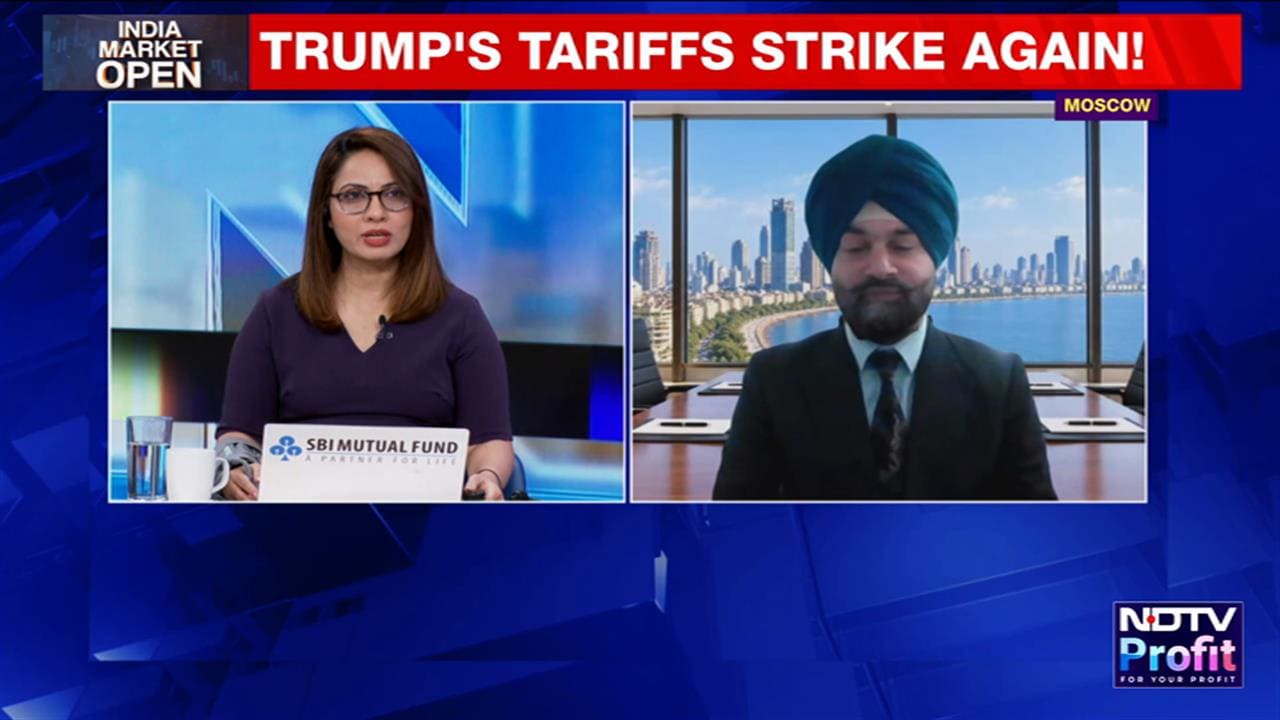
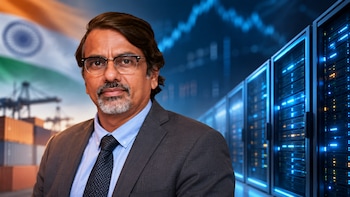
India's investment in artificial intelligence infrastructure could add to its foreign exchange requirements over the next five to seven years, as building data centres and computing capacity would involve substantial imports, Nirav Sheth, CEO of Institutional Equities at Emkay Global Financial Services, said.
The investment required to build AI infrastructure, including the import component, could pose a challenge for India's foreign exchange requirements over the longer term, Sheth said in a televised interaction with NDTV Profit. He also discussed earnings growth, capital flows, manufacturing and the need for India to become more competitive in exports.
Earnings Growth
India's earnings growth, excluding volatile components such as energy, is running at around 20%, Sheth said. Earnings growth was around 11% in the first quarter before rising to 20% in the second quarter, he said.
Also Read | Layoffs Are Rising In Tech, But These Skills Are Helping People Unlock Better Pay
He pointed to economic output, the value generated across the economy and GST collections as indicators supporting the broader economic picture. India also needs to address its current account deficit and capital flows, Sheth said, adding that capital flows play a greater role in determining the rupee's direction than trade flows.
"It's the capital flows that determine the direction of the rupee, and that can actually reflexively impact your economy," he said.
AI Investment
Setting up AI infrastructure would require significant investment, including imports, Sheth said.
"It takes about $35 billion today to set up one gigawatt of capacity. I'm talking about AI capacity," he said. Building five gigawatts of AI capacity could require $150 billion, with about 70% of the investment involving imports, Sheth said.
"If you don't set up the data centres, then anyway you'll have to pay for compute capacity which is sitting outside India. Where do you get that kind of forex?" he said. Sheth said the foreign exchange implications of AI infrastructure investment were a concern for the next five to seven years, rather than the next two to three years.
He also said India should participate in the AI supply chain instead of positioning itself against the technology. "I don't want to be seen as an anti-AI play. You need to be a part of the supply chain," he said.
ALSO READ | Indian Stocks Are Catching Up With Earnings, Not Getting Ahead: Prashasta Seth | Profit Exclusive
Manufacturing Push
India needs to improve its export competitiveness and build manufacturing capabilities across sectors, including defence, precision engineering, auto ancillaries and pharmaceuticals, Sheth said.
He pointed to the auto ancillary sector's development of a global ecosystem over the past two decades. In defence, access to technology could help address import dependence, he said.
"It's all about getting competitive more than anything else," Sheth said.
Essential Business Intelligence, Sharp Market Insights, Practical Personal Finance Advice, Daily Fuel, Gold and Silver Prices, Watch Business News Live and Latest Stories — On NDTV Profit.