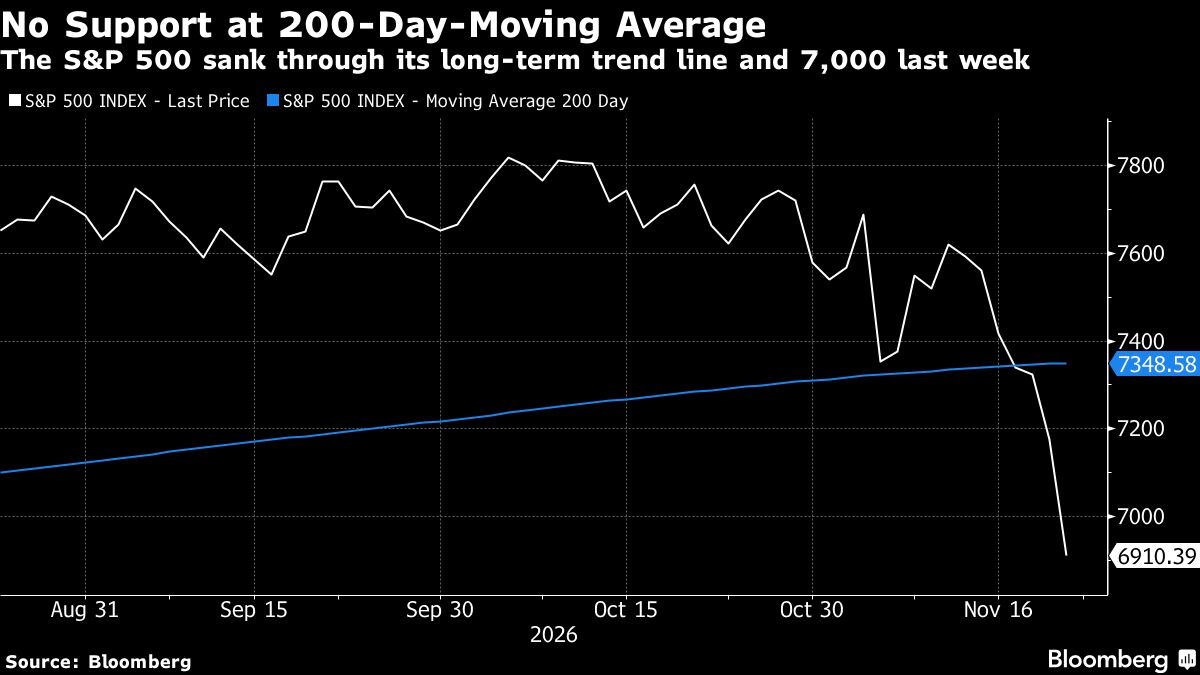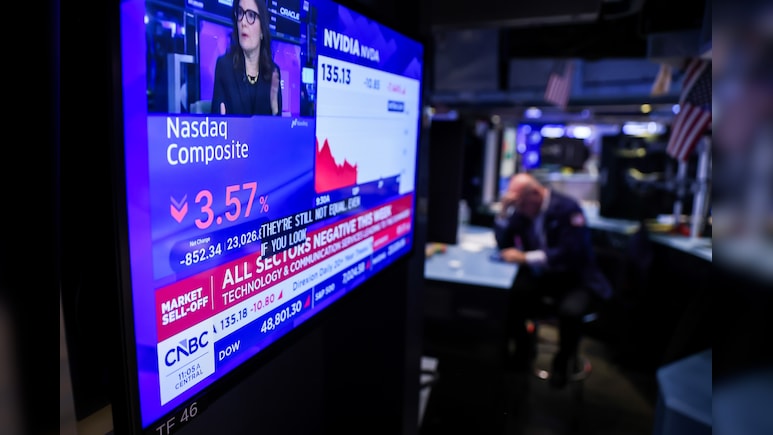
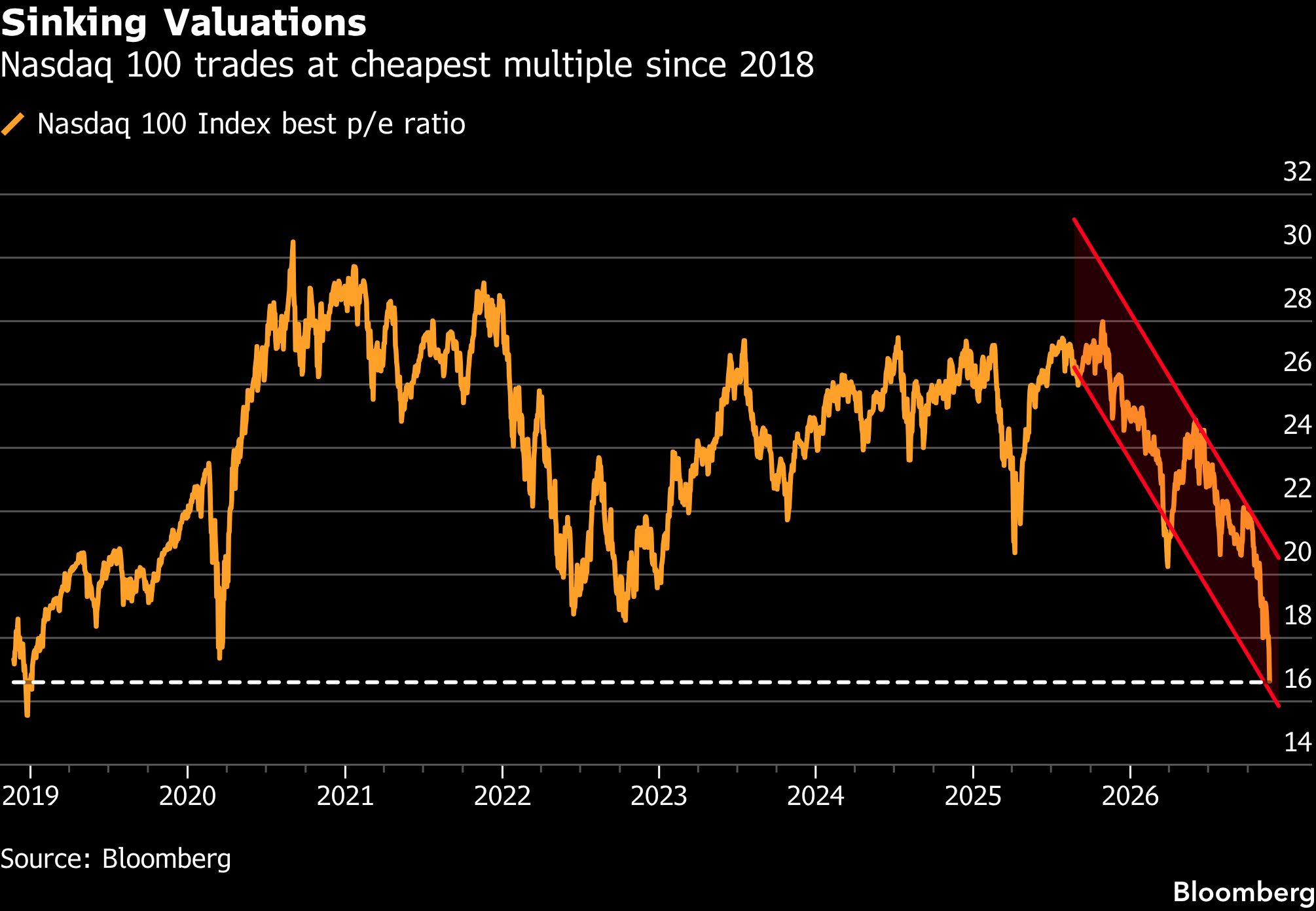
Since the fundamental outlook did not change dramatically during last week's massive selloff in stocks and many valuation measures are now screaming bargain, contrarian impulses to buy the dip are running strong.
Yet for a lot of professional money managers, there are too many lingering questions heading into a holiday-shortened week of trading in the US to lend confidence to the idea that the bottom has been set after the Nasdaq 100 Index extended its drop from an Oct. 6 record to 19.8% and the S&P 500's drawdown reached 12%.
Among those questions: Will the headlines continue to move beyond Jensen Huang's personal life and into the financial decision made at Nvidia Inc. under his leadership? Will either sophisticated hedge funds or retail traders be willing to buy the dip Monday morning? Will the Federal Reserve follow through on raising interest rates as foreshadowed in speeches by several of its policymakers last week?
Also Read | Layoffs Are Rising In Tech, But These Skills Are Helping People Unlock Better Pay
ALSO READ | India's 14% Stock Market Return Expectation Is Too High, Says Systematix's Bhaskar Hazra | Profit Exclusive
"The market is working through a stack of problems at once - inflationary pressures, a December rate hike, and renewed doubt about what AI returns actually look like in 2028 and 2029," said Dave Mazza, chief executive officer at Roundhill Investments. "None of that resolves next week, and with no positive catalyst on the calendar, buyers have little reason to show up with conviction."
| At Goldman Sachs Group Inc., the equity trading desk is telling clients that panic like last week's is usually a good opportunity to buy - but there are important differences with this setup. The first is that the Fed is in a hiking cycle. And secondly, investor positioning is complicated: While hedge funds are "overwhelmingly downbeat" and have cut leverage to a five-year low, other groups remain relatively well-invested and believe hedge funds will be forced to buy back in. So the Goldman traders suggest profiting from what may have been the worst of the volatility by selling put options rather than bottom-fishing in equities. The selloff has also spread across systematic investors, with commodity trading advisers, or CTAs, selling an estimated $57 billion in equities over the past month, according to Goldman's estimates. Their net positioning in US stocks has turned short by $19 billion. While systematic flows remain a source of selling pressure globally, most of the remaining risk is now concentrated outside the US. In the US, much of the selling has already taken place, and CTAs could become buyers if stocks rebound, Goldman's models show. "We can make a pretty compelling argument that vol has overshot without necessarily having to call the bottom in equities," the traders wrote in a note to clients. That type of sentiment was echoed by many on the buy side. "It feels like we are getting to the point that the selling may be exhausted and a bounce should be in the offing - but there are no real identifiable catalysts," said Joe Gilbert, portfolio manager at Integrity Asset Management. "A flat week next week may be a victory for the bulls." 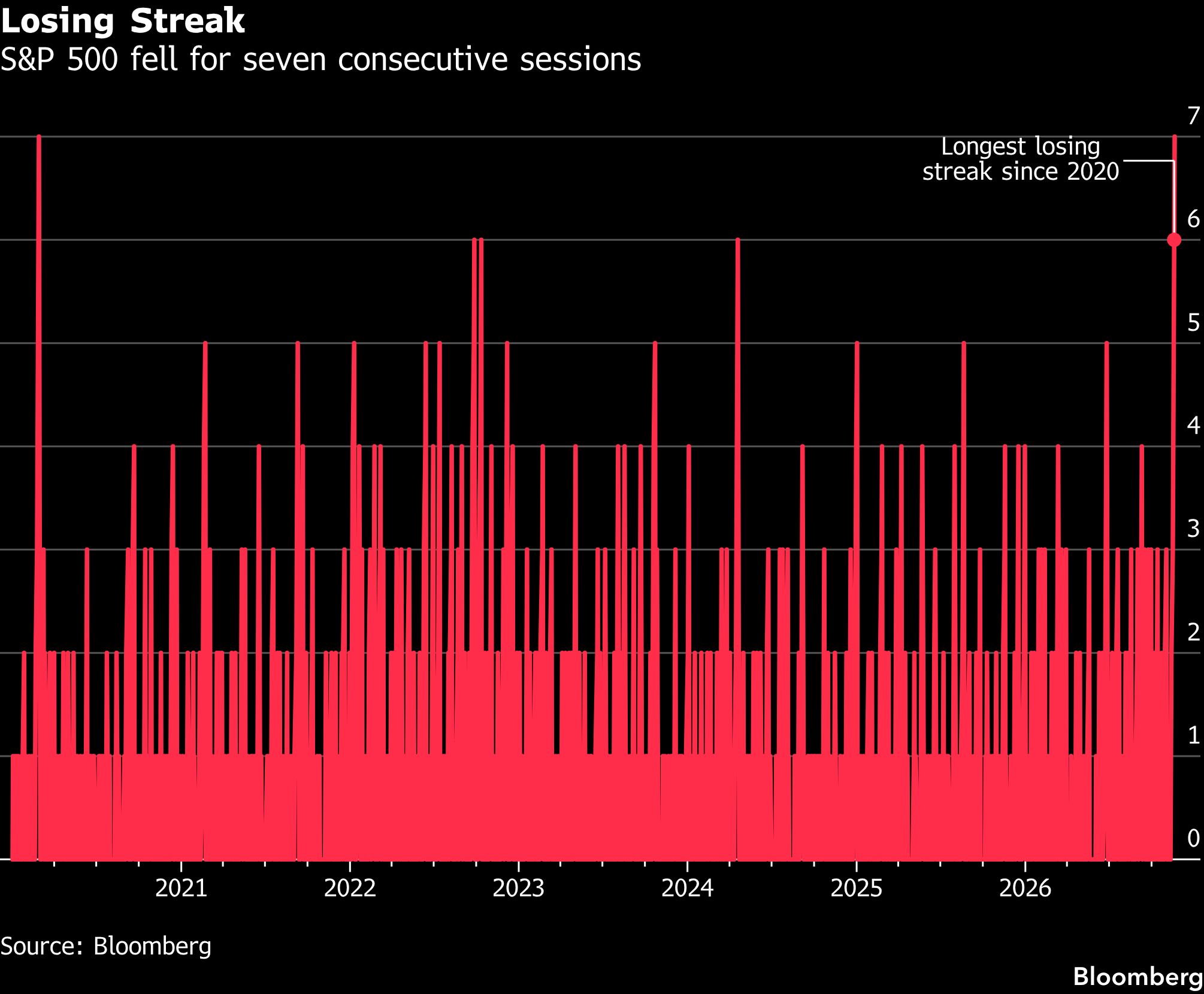
(This story has not been edited by NDTV staff and is auto-generated from a syndicated feed.) Essential Business Intelligence, Sharp Market Insights, Practical Personal Finance Advice, Daily Fuel, Gold and Silver Prices, Watch Business News Live and Latest Stories — On NDTV Profit. News for You
Hello Reader
Sign In / Register
Set as Trusted Source
on Google Search
Listen to the latest songs, only on JioSaavn.com
|