NDTV Profit's special research section collates quality and in-depth equity and economy research reports from across India's top brokerages, asset managers and research agencies. These reports offer NDTV Profit's subscribers an opportunity to expand their understanding of companies, sectors and the economy.
DRChoksey Report
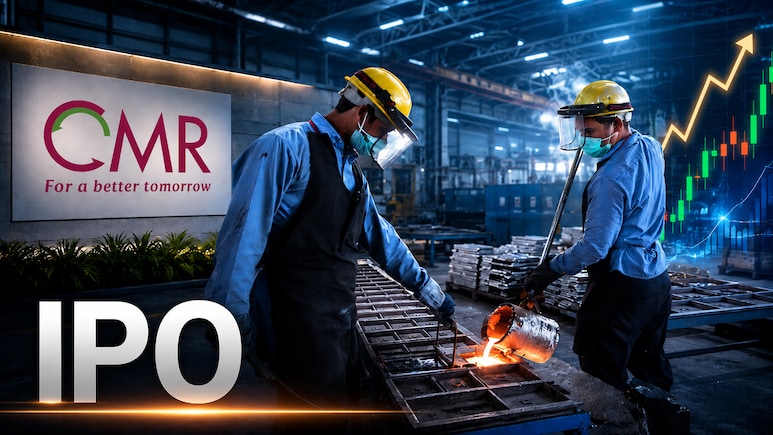
CMR Green Technologies launched its initial public offering (IPO) on June 3, 2026 and the offer closes for subscription on June 5.
The manufactures of recycled aluminium alloys has fixed the price band in the range of Rs 182 to Rs 192 per equity share.
Also Read | Layoffs Are Rising In Tech, But These Skills Are Helping People Unlock Better Pay
CMR Green Technologies IPO is a book-built issue worth Rs 630.88 crore. The issue is entirely an offer-for-sale (OFS) of 3.29 crore shares.
Retail investors can apply for at least a single lot size of 78 shares, requiring an investment of Rs 14,976 (at the upper price end).
The allotment of shares for successful bidders is expected on June 8, while the tentative listing date on NSE and BSE is June 10.
Equirus Capital Pvt. Ltd. is the book running lead manager and Kfin Technologies is the registrar of this issue.
About the company
CMR Green Technologies, is India's largest non-ferrous metal recycler by installed capacity and revenue from operations. The company is a leading player in the Indian secondary aluminium market, commanding ~42–45% market share by volume in the automotive cast alloy segment. It also segregates and sells other non-ferrous metals including zinc alloys, copper, brass, stainless steel, and magnesium scrap.
The company manufactures recycled aluminium alloys in ingot and liquid form, aluminium billets, zinc alloy ingots, and segregated furnace-ready scrap. Its installed capacity stands at 6,15,150 MTPA (as of March 31, 2026) across 13 strategically located recycling facilities spanning 8 states in India.
Its capacity is approximately 4x that of the nearest domestic competitor, making it one of the largest aluminium recyclers globally.
Strengths
- Undisputed market leader in Indian secondary aluminium with 4x capacity versus nearest competitor and ~42–45% market share in automotive cast alloys.
- Liquid aluminium delivery model creates geographic moats and customer stickiness (97%+ repeat revenue).
- Exceptional capital efficiency: net fixed asset turnover of 7.5–11x, yearly CAPEX turns 10x, ROCE 20%+.
- 3 Japanese JV partnerships (Nikkei, Toyota Tsusho, NLM) with no royalty obligations – unique in the domestic landscape.
- Diversified global scrap sourcing (198 suppliers, 73 countries) and increasing domestic procurement. Weaknesses
- Inherently thin Ebitda margins (3.5–5.2%) typical of high-turnover commodity processing businesses. Limited pricing power beyond pass-through.
- Rising leverage (D/E moved from 0.15x to 0.76x over FY23– 9MFY26) driven by aggressive capacity expansion and working capital.
- Commodity and currency risk exposure (time-value risk on pass-through pricing with lag to OEMs).
Structural Growth Drivers
- EV Aluminium Intensity: Electric vehicles have ~3x higher aluminium content versus ICE vehicles. With EV penetration expected to rise from under 1% today to 10–15% by 2028 (and ~45–55% in two-wheelers), this structurally increases aluminium demand. The PM E-DRIVE scheme (Rs 10,900 crore) further accelerates EV adoption.
- Circular Economy and Decarbonisation: Aluminium recycling uses ~95% less energy, ~92% less carbon, and ~95% less water than primary production. With global CBAM (Carbon Border Adjustment Mechanism) regulations tightening and ESG mandates increasing, demand for low-carbon recycled aluminium is structurally accelerating.
- Expanding Serviceable Market: The total aluminium recycled market (FY25) of 2.16 Mn MT is split into Cast Alloy (46.7%), Rolled Segment (27.3%), and Extrusion Segment (18.1%). CMR's entry into wrought alloys (billets, extrusions, sheets) significantly expands its addressable market beyond the traditional cast alloy segment.
- Government Support: PLI Schemes (Rs 1.97 lakh crore), PM Gati Shakti (Rs 100 lakh crore infrastructure), Smart Cities Mission, and NITI Aayog's Circular Economy Roadmap all provide structural tailwinds. MRAI has petitioned for GST reduction on metal scrap from 18% to single digits, which if implemented, would be a material positive.
Key Risk –
- Thin Ebitda margins and Commodity Exposure: Structurally low margins (3.5–5.2%) with limited pricing power and time-lagged pass-through to OEMs.
- Automotive Demand Concentration: Top 10 customers contribute 50% of revenue, heavily skewed toward auto OEMs.
- US Scrap Sourcing and Geopolitical Risk: ~48% of imported scrap sourced from a single country (US).
Click on the attachment to read the full report:
DISCLAIMER
This report is authored by an external party. NDTV Profit does not vouch for the accuracy of its contents nor is responsible for them in any way. The contents of this section do not constitute investment advice. For that you must always consult an expert based on your individual needs. The views expressed in the report are that of the author entity and do not represent the views of NDTV Profit.
Users have no license to copy, modify, or distribute the content without permission of the Original Owner.
Essential Business Intelligence, Sharp Market Insights, Practical Personal Finance Advice, Daily Fuel, Gold and Silver Prices and Latest Stories — On NDTV Profit.