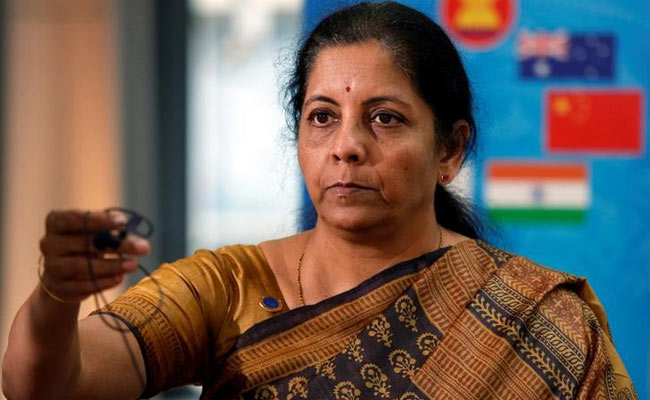
Finance Minister blamed the Ukraine war for the disruptions to supply chains, and said the unprecedented increase in global oil prices over a "couple of weeks" has resulted in the steepest hike on record in petrol and diesel prices.
She also defended the hike in fuel prices coming after the state elections and a four-month-long hiatus in price revision, saying the unprecedented increase in global oil prices was a "couple of weeks" phenomenon that has led to state-run fuel retailers increasing prices.

-
 Indian Markets Turning Corner After Two Tough Years, Says Sandeep Tandon
-
 NDTV Profit Ignite 2026: Experts See Opportunity In Equities, Stay Bullish For Long-Term
-
 Buy Right, Sit Tight Does Not Work for Individual Stocks, Says Dinshaw Irani
-
 'Worst Is Behind': Quant MF Sees Market Bottom, Flags 'Extreme Euphoria' In Midcaps
-
 India's Mutual Fund Industry Could Become A $1 Trillion Opportunity, Say Fund Managers
-
 'Foreign Investors Are Baraatis': Raamdeo Agrawal's Take On LTCG Tax
-
 Stay Invested Through Market Cycles: Raamdeo Agrawal at NDTV Profit Ignite
-
 Ramesh Damani Remains Bullish On India For Next 20-30 Years, Sees Bargains Amid Market Weakness
-
 CAS Came After A Long Consultation Process: SEBI Chairman Tuhin Kanta Pandey AT NDTV PROFIT IGNITE
-
 Aim To Cut FPI Onboarding Time From Mth To Five Days: SEBI Chairman Tuhin Kanta Pandey AT NDTV PROFI
Replying to a debate on the 2022-23 Budget in Rajya Sabha, she said opposition members had stated that the war in Ukraine had been raging for a long time, and fuel prices are being raised now.
Also Read | Layoffs Are Rising In Tech, But These Skills Are Helping People Unlock Better Pay
"Absolutely untrue," she said. "The disruption and a resultant increase in the price of global oil and disruption to supply are all happening since a couple of weeks ago, and we are responding to it."
The Finance Minister said the unprecedented hike in oil price was a challenge.
Fuel rates were held steady for over four months despite the spike in crude oil prices. The rate revision had ended on March 22.
In all, petrol and diesel prices have gone up by ₹ 5.60 per litre each after eight rate revisions in the last nine days as of Wednesday, the steepest hike since the daily price revision was implemented in June 2017.
Crude oil prices have shot up since Russia invaded Ukraine on February 24, with benchmark Brent crude touching multi-decade highs of near $140 a barrel. While crude oil prices have been whiplashed since then, they have remained above the $100 mark.
The last time the central government had intervened was on November 4, 2021, on the eve of Diwali, when the excise duties were cut on fuel across the country, after petrol and diesel prices had touched an all-time high of ₹ 110.04 and ₹ 98.42 per litre, respectively, in Delhi on November 3, after seven straight hikes.
While fuel rates have been increased eight times in the last nine days, petrol and diesel prices in the national capital are still below the all-time high reached in November last year.
Ms Sitharaman said the government is taking various steps in response to the rise in global oil prices.
The PTI reported that she blamed the issuance of bonds by the United Progressive Alliance (UPA) government more than a decade back to oil companies to make up for losses they incurred on selling auto and cooking fuel below cost.
"Taxpayers of today are paying for subsidy dished out to consumers more than a decade ago in the name of oil bonds. And they will continue to pay for the next five years as the redemption of bonds continues till 2026," she said, putting the redemption value at Rs 2 lakh crore.
To the opposition party's assertion that oil bonds were first issued by the Bharatiya Janata Party (BJP) government between 1999 and 2004, she said Atal Bihari Vajpayee's government had issued bonds worth Rs 9,000 crore as compared to Rs 2 lakh crore by the UPA.
International oil prices during the Vajpayee government were below $30 per barrel. At the same time, they shot up to record levels of $147 under the UPA, requiring higher subsidy support in the form of oil bonds.
She said the oil bonds issued by the Vajpayee government were "one-time action rather than a continuous policy (as in the UPA)." "There is a huge difference in the magnitude between Rs 9,000 crore which was one time that had to be repaid on account of Vajpayee government's oil bonds and more than Rs 2 lakh crore which was raised during UPA which is getting paid even now," she said.
"Funding oil at a higher cost has an honest way of doing it and how you book it on somebody else and some other government keeps paying for it. We have not done that," Ms Sitharaman pointed out.
While the war in Ukraine had posed fresh challenges in the form of higher international oil prices and supply chain disruptions, she stated that inflation was kept under control.
Essential Business Intelligence, Sharp Market Insights, Practical Personal Finance Advice, Daily Fuel, Gold and Silver Prices and Latest Stories — On NDTV Profit.