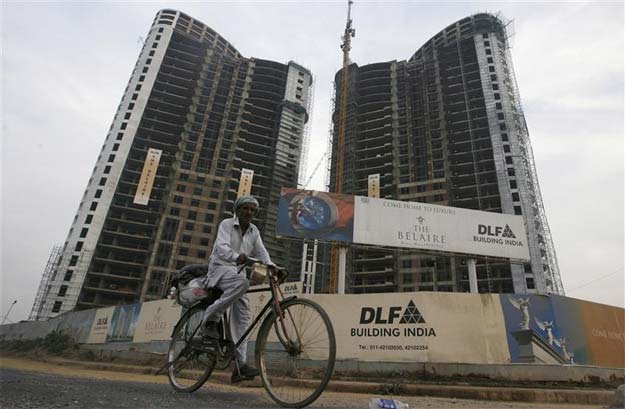
Most big cities, including Delhi and Kolkata, have witnessed a sharp rise in property prices despite fewer sales in the first quarter of the current financial year ending March 2013. Brokerage Nomura attributed the price increase to limited supply.
"House prices remained on an uptrend despite weak transaction volumes, high interest rates and slowing economic growth as supply has been limited with fewer projects being added, especially in key markets such as Mumbai and Delhi due to government approval delays," Nomura said.
According to the Reserve Bank of India's quarterly House Price Index, home prices at the all-India level rose 24 per cent year-on-year for the three months ended June.
Delhi, which witnessed a 42 per cent annual surge in property prices in the April to June quarter, saw a nearly 11 per cent fall in sales. Kolkata, where home prices rose 30 per cent, saw a 9 per cent dip in sales. Chennai witnessed a 26 per cent jump in property prices, but sales were flat (the Chennai index is based on both residential and commercial properties).
The exception was Mumbai, which saw a 21 per cent rise in property prices, but simultaneously saw a 71 per cent jump in sales.
According to Nomura, the steady rise in house prices is one of the many reasons why consumption has remained well supported and inflation expectations have remained elevated.
Steady gains in physical assets have also encouraged households to divert savings away from financial assets, Nomura added.
This may partially explain the rise in redemptions from equity funds. Net redemptions from equity mutual funds jumped for a fourth straight month in September.
The RBI’s quarterly House Price Index is based on data for nine cities. On a quarter-on-quarter basis, home prices increased 6.7 per cent at the all-India level. Transaction volumes grew by 6.4 per cent.
(With inputs from agencies)
Essential Business Intelligence, Sharp Market Insights, Practical Personal Finance Advice, Daily Fuel, Gold and Silver Prices and Latest Stories — On NDTV Profit.