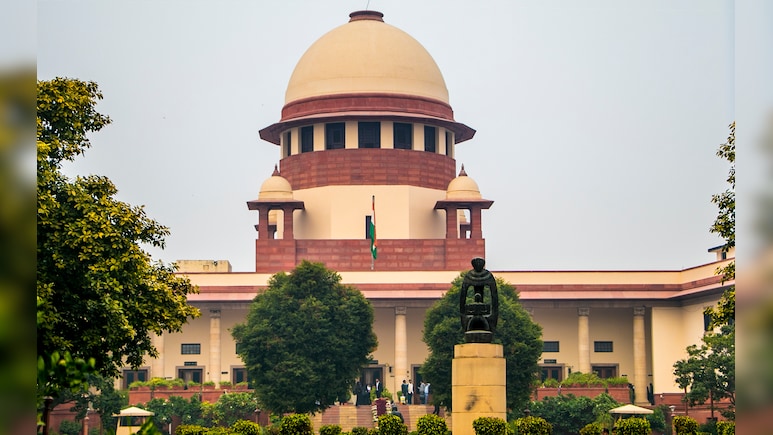
The Supreme Court on Monday took strong exception to the manner in which a sessions judge in Bihar exercised his judicial powers, questioning his understanding of the law and cautioning him against acting like a “bahubali” (strongman). The remarks came after the judge convicted and fined a police officer for failing to register an FIR despite a court direction, according to reports.
While hearing the judicial officer's plea, a bench headed by Chief Justice of India Surya Kant questioned the legality of the sessions judge summoning a senior police official and convicting him on the same day for allegedly disregarding a court directive.
The apex court sought to ascertain whether the sessions judge had the statutory authority to initiate such proceedings and summarily convict a senior government official without following the prescribed legal process.
Also Read | Layoffs Are Rising In Tech, But These Skills Are Helping People Unlock Better Pay
ALSO READ | Drug Margin Caps May Not Reduce Final Patient Bills, Hospitals Tell Supreme Court
“Your understanding of the law is truly, deeply disappointing. The aggressive manner in which you have acted - summoning a Superintendent of Police and convicting him on the very same day - is concerning,” Justice Joymalya Bagchi observed, according to NDTV.
The bench also asked counsel appearing for the judge to advise his client against assuming the role of a “bahubali”, emphasising that judicial powers must be exercised within the limits prescribed by law.
The case stems from a sessions court directive asking the police to register an FIR. After the officer allegedly failed to comply, the judge initiated summary proceedings, held him guilty of an offence committed in the court's presence and imposed a fine.
The Supreme Court questioned whether non-compliance with a judicial order outside the courtroom could be treated as an offence committed in the presence of the court and punished through immediate proceedings.
Justice Bagchi referred to Section 384 of the Bharatiya Nagarik Suraksha Sanhita (BNSS) and Section 345 of the Code of Criminal Procedure (CrPC), which deal with the procedure for certain offences committed in or in relation to court proceedings.
ALSO READ | Dawood Ibrahim's Mumbai Building To Be Demolished, Mosque Or Prayer Hall Row Adds Twist
These provisions allow courts to take immediate action in specified circumstances, including instances such as assaulting someone inside a courtroom, using abusive language during proceedings or refusing to leave despite a judicial direction.
However, the bench indicated that an alleged failure by a police officer to comply with an order to register an FIR could not automatically be treated as an offence committed in the face of the court. Such matters require the court to follow the specific legal procedure applicable to the alleged violation.
The Supreme Court's observations came as it examined the legality of the sessions judge's actions and the limits of judicial authority in dealing with alleged non-compliance by government officials.
Essential Business Intelligence, Sharp Market Insights, Practical Personal Finance Advice, Daily Fuel, Gold and Silver Prices, Watch Business News Live and Latest Stories — On NDTV Profit.