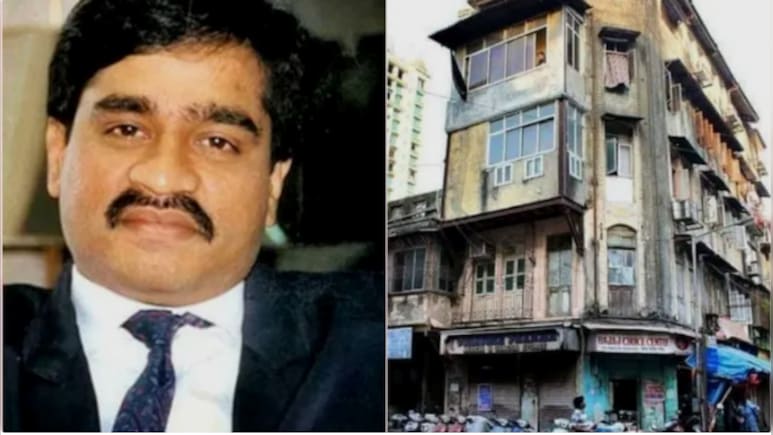
The Brihanmumbai Municipal Corporation (BMC) is set to demolish the final remaining portions of the Haji Ismail Haji Habib Musafirkhana in Mumbai's Bhendi Bazaar, a dilapidated building once associated with fugitive underworld don Dawood Ibrahim and his criminal syndicate.
The demolition, scheduled to take place over two days, is intended to make way for a road-widening project. It follows a November 16 notice issued by the civic body asking occupants of a ground-floor prayer hall to vacate the unsafe structure.
However, according to reports, the proposed demolition has triggered opposition from local residents and political leaders, who claim that the ground-floor premises are part of a 140-year-old mosque registered with the Waqf Board. They have also questioned the BMC's decision to proceed with the demolition, citing alleged stay orders from the Supreme Court and the Waqf Tribunal.
Also Read | Layoffs Are Rising In Tech, But These Skills Are Helping People Unlock Better Pay
ALSO READ | Bulldozers At Dawood Ibrahim's Former Mumbai Office: What Remains Of The Underworld Don's HQ
AIMIM leader Waris Pathan has accused the authorities of acting illegally by issuing a demolition notice despite the alleged court protections. He said the community was seeking a 15-day window to present its legal arguments and warned that action would be pursued against officials if the demolition was carried out arbitrarily.
Pathan also criticised the proposed use of bulldozers without what he described as due legal process.
Congress MLA Amin Patel has similarly accused the BMC and a local trust of attempting to demolish the structure without following the mandatory notice period of seven to 15 days.
Speaking to NDTV, Patel said the stay orders from the Supreme Court and the Waqf Tribunal remained valid through 2024-25. He added that residents were not opposed to the trust's broader redevelopment plans but maintained that the disputed premises should not be demolished while the matter remained under consideration by the Waqf Tribunal and both parties had yet to be heard.
Meanwhile, concerns over a possible law-and-order situation have prompted the BMC to hold meetings to discuss security arrangements during the demolition.
What Remains Of Dawood Ibrahim's Former Mumbai Residence?
The Haji Ismail Haji Habib Musafirkhana once housed 32 ground-floor commercial shops and 19 upper-floor residential units. However, only a small portion of the original structure remains today.
In August 2020, the Bombay High Court dealt with proceedings concerning the building after the BMC classified it as 'C-1', indicating that it was severely dilapidated and unsafe. Following the court proceedings, civic authorities began evacuating occupants and demolishing the upper portions of the structure.
Over the years, the first- and second-floor residential quarters, including the rooms associated with Dawood Ibrahim, were cleared. The remaining portions comprise a disputed prayer area on the ground floor and around 10 rooms on the first floor.
How Was The Building Linked To Dawood Ibrahim?
Before fleeing India in 1986, Dawood Ibrahim and his family lived in the Musafirkhana. The second floor served as their residence and later became associated with the operations of his criminal syndicate, D-Company.
The premises were reportedly used as a base for the syndicate's activities and as a storage facility for smuggled goods and contraband. The building's second floor was also linked to the planning of the 1993 Mumbai serial bomb blasts.
After Dawood left India, his mother, Amina Bi, continued living in the building alongside other occupants. His brother, Iqbal Kaskar, also allegedly operated from the premises in subsequent years.
ALSO READ | 'If I Was Running...': Lalit Modi Claims Dawood Ibrahim Threats Forced Him To Quit Cricket
What Happened To The Kaskar Family's Properties?
Following the 1993 Mumbai serial bomb blasts, authorities initiated proceedings to confiscate properties associated with Dawood Ibrahim and his relatives under the Smugglers and Foreign Exchange Manipulators Act (SAFEMA).
Dawood's mother, Amina Bi, and his sister, Haseena Parkar, challenged the confiscation proceedings before the Delhi High Court and subsequently the Supreme Court.
However, on April 20, 2018, the Supreme Court rejected their appeal, clearing the way for the authorities to take over the properties in question.
The legal proceedings formed part of a broader effort by the government to seize assets linked to Dawood and his associates. The building's demolition now brings renewed attention to its history, even as the dispute over the ground-floor religious premises threatens to complicate the BMC's plans.
Essential Business Intelligence, Sharp Market Insights, Practical Personal Finance Advice, Daily Fuel, Gold and Silver Prices and Latest Stories — On NDTV Profit.