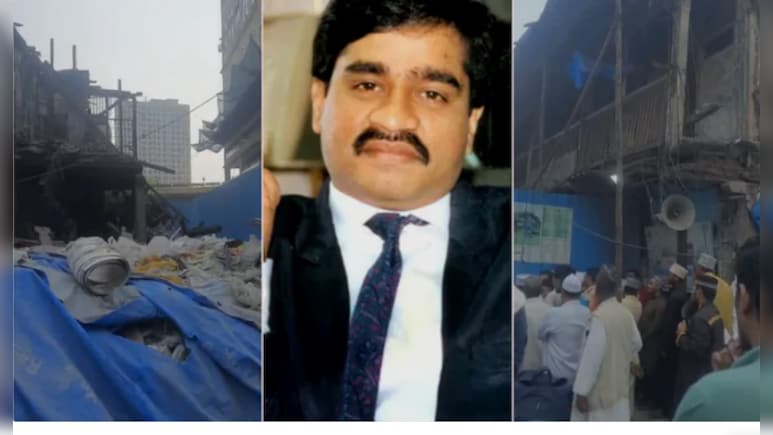
Built around 1939 on South Mumbai's Pakmodia Street, the Haji Ismail Haji Habib Musafirkhana was established as a temporary shelter for pilgrims travelling to Mecca for Hajj. Located in Bhendi Bazaar, the building was intended to accommodate visitors rather than serve as a permanent residence.
Over the decades, however, the lodge acquired a very different identity. It became closely associated with fugitive underworld don Dawood Ibrahim, who lived there with his family before the premises were used as a base for the operations of his criminal syndicate, D-Company.
According to NDTV, the BMC has now moved to demolish the remaining portions of the ageing structure as part of a road-widening project. The latest phase covers its final 10 first-floor rooms and a disputed ground-floor prayer hall, bringing renewed attention to a building whose history is intertwined with Mumbai's underworld and decades of legal disputes over its occupation and ownership.
Also Read | Layoffs Are Rising In Tech, But These Skills Are Helping People Unlock Better Pay
ALSO READ | Govt Finally Sells Dawood Ibrahim's Seized Properties After Four Decades
The building's transformation began when Dawood Ibrahim, the son of a police head constable, moved into the premises as a tenant but continued occupying the property. What was originally a charitable guesthouse for pilgrims eventually became associated with the operations of D-Company.
Dawood Ibrahim Kaskar initially lived on the second floor of the musafirkhana with his parents, head constable Ibrahim Kaskar and Amina Bi, and his siblings.
As his influence in Mumbai's underworld grew through the late 1970s and 1980s, his occupation of the premises expanded. The second floor became his residence and a base for his criminal operations. The property was legally owned by the Haji Ismail Haji Habib Musafirkhana Trust, and there were no formal ownership records in Dawood or the Kaskar family's name.
The syndicate operated from the premises through illegal occupation, while the building continued to house shopkeepers and residents. Its 32 ground-floor commercial shops and 19 upper-storey units remained occupied by other tenants. The premises were also reportedly used to store smuggled contraband.
Even after Dawood fled India in 1986, his associates continued to exercise control over parts of the property. The second-floor premises that had served as his base were later linked to the planning of the 1993 Mumbai serial bomb blasts.
ALSO READ | Wanted Dawood Aide Akhtar Merchant Arrested At Delhi Airport After 3-Year Manhunt
Following the 1993 bombings, authorities initiated legal proceedings to recover properties associated with the Kaskar family. While Dawood's mother, Amina Bi, and other relatives continued to occupy parts of the building, his brother Iqbal Kaskar was also allegedly operating from the premises in subsequent years. A TADA court eventually attached the second-floor portion that Dawood had controlled.
Separately, between 1998 and 2018, the Centre pursued proceedings to forfeit properties associated with the family under the Smugglers and Foreign Exchange Manipulators Act (SAFEMA). Amina Bi and Dawood's sister, Haseena Parkar, challenged the confiscation orders, taking their legal battle from the Delhi High Court to the Supreme Court.
The proceedings concluded in April 2018 when the Supreme Court rejected their appeal and directed authorities to take over the properties in question.
According to Bombay High Court records, the building's legal owner, the Haji Ismail Haji Habib Musafirkhana Trust, had meanwhile received approval from the charity commissioner in November 2015 to sell the ageing property. The Saifee Burhani Upliftment Trust (SBUT), which is leading the large-scale Bhendi Bazaar cluster redevelopment project, purchased it for Rs 1.10 crore.
The transaction marked a significant change in the property's ownership, but the building's condition remained a concern. The BMC subsequently classified the structure as 'C-1', indicating that it was severely dilapidated and unsafe. In August 2020, the civic body secured permission from the Bombay High Court to demolish the structure.
Over the following years, the upper portions of the building were cleared, including the first- and second-floor residential areas that had once been associated with Dawood Ibrahim and his operations.
ALSO READ | Dawood Ibrahim's Close Aide Salim Dola Brought To India After Deportation From Istanbul
The ground floor, however, remained intact until November 16, when the BMC issued a notice announcing the final phase of demolition. The action covers the remaining 10 first-floor rooms as well as the ground-floor portion of the structure.
The civic body has maintained that the demolition is necessary to remove an unsafe building and facilitate a road-widening project. However, the move has drawn objections from residents, particularly over the proposed demolition of the ground-floor prayer hall.
Residents have argued that the BMC's notice, which asked worshippers to shift to an alternative location, does not adequately reflect the nature and use of the disputed premises. The issue has added another layer to the long-running dispute surrounding the building, even as the structure that once housed Dawood Ibrahim's operations approaches its final demolition.
Essential Business Intelligence, Sharp Market Insights, Practical Personal Finance Advice, Daily Fuel, Gold and Silver Prices and Latest Stories — On NDTV Profit.