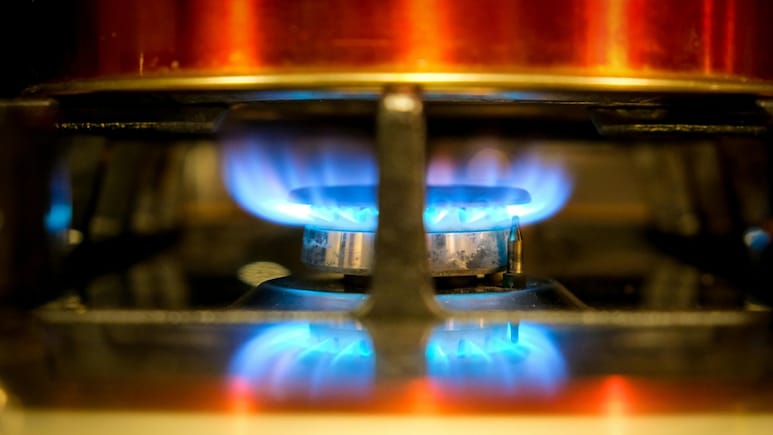
From police stations to fast-food outlets, Indraprastha Gas Ltd is expanding its push for piped natural gas connections in Delhi-NCR as it looks to rapidly expand its user base to ease pressure on cooking gas LPG, its chief executive Kamal Kishore Chatiwal said.
Following disruptions to energy supplies from the West Asia conflict, the government is pushing wider adoption of piped natural gas (PNG) as a convenient alternative to LPG, given its more diversified sourcing and lower dependence on the Gulf region.
"We were (before the West Asia crisis) providing 600-700 PNG connections per day, which have scaled up to 2,100-2,200 a day now. The ultimate target is to take them to 5,000 connections," IGL Managing Director Chatiwal said.
Also Read | Layoffs Are Rising In Tech, But These Skills Are Helping People Unlock Better Pay
Besides laying pipelines to household kitchens to provide them with a convenient cooking gas alternative, IGL is targeting fast-food chains that had faced the brunt of LPG supply disruptions after the government prioritised the limited available cooking gas for households.
The country's largest city gas retailer has already connected over 100 outlets of two leading fast food chains with PNG, and a similar number is in the process of being connected. In all, 400 such outlets are on IGL radar.
IGL is also in the process of providing PNG connections to every police station in Delhi. Police stations' cafeterias/canteens, currently running on LPG and PNG connections, eliminate the hassle of arranging refills after cylinders run out of gas.
Connaught Place (CP), the colonnaded Georgian-style architecture designed as a commercial and business hub in New Delhi, was not connected with PNG because of a lack of permissions, but now work has started since the government relaxed norms to speed up PNG penetration.
The pipeline has reached the outer circle of CP, the official said.
Chatiwal said India has enough availability of natural gas, which is piped into household kitchens, industries and commercial establishments, such as hotels and restaurants.
India produces some 92 million standard cubic metres per day of natural gas. The total volume consumed with city gas - PNG and CNG put together - is less than a third of it.
A bulk of LPG, on the other hand, is imported, with a big share coming from Gulf countries like Saudi Arabia and Qatar.
"We are targeting 4.85 lakh new PNG connections in the next 90 days across the geographical areas (GAs) we operate in," he said.
IGL has well laid out its city gas distribution infrastructure in Delhi, Noida, Greater Noida, Ghaziabad, Rewari, Gurugram, Karnal, Kaithal, Fatehpur, Ajmer, Pali, Rajsamand, Hamirpur, Shamli, Muzaffarnagar, Banda and parts of Kanpur and Meerut, which consists of more than 28,000 kms of pipeline network.
IGL is meeting the fuel requirements of over 2.1 million vehicles running on CNG through a network of over 950 CNG stations. IGL has connected over three million households in these cities with PNG.
In Delhi, IGL's strategy is to identify areas where 100 per cent PNG penetration is achievable and make them LPG-free. Areas like New Moti Bagh, East Kidwai Nagar and West Kidwai Nagar in Delhi are already LPG-free.
Faced with not enough LPG to service both domestic kitchens and commercial users, the government last month mandated households to switch to PNG in areas where piped natural gas connectivity already exists.
Under the mandate, consumers with access to both PNG and LPG must surrender their LPG connection within 90 days, failing which cylinder supplies will be discontinued. Exemptions apply only in cases where PNG connectivity is technically infeasible, subject to a no-objection certificate.
India consumes about 31.3 million tonnes of LPG annually, of which domestic production meets roughly 40 per cent, with the rest imported. Nearly 90 per cent of these imports pass through the Strait of Hormuz, one of the world's most critical energy shipping routes, which was blocked due to the West Asia conflict.
(This story has not been edited by NDTV staff and is auto-generated from a syndicated feed.)
Essential Business Intelligence, Sharp Market Insights, Practical Personal Finance Advice, Daily Fuel, Gold and Silver Prices and Latest Stories — On NDTV Profit.