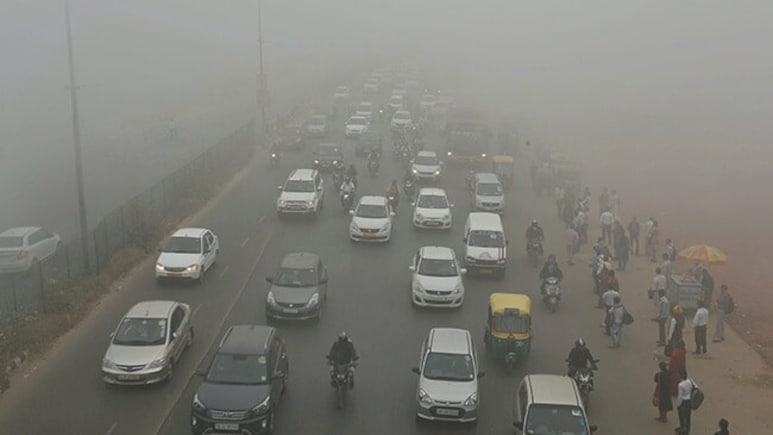
- Delhi enforces vehicle entry rules from Sunday based on GRAP and emission standards
- Non-BS-VI petrol and diesel vehicles from outside Delhi banned till Jan 31, 2027
- Over 10 lakh vehicles in NCR lack BS-VI compliance, affecting many commuters
Delhi's winter pollution measures, coming into effect from Sunday, are set to affect thousands of commuters travelling to the national capital from neighbouring cities such as Noida, Gurugram and Ghaziabad.
The restrictions will depend on the Graded Response Action Plan (GRAP) stage in force, the type of vehicle, its fuel and emission standard classification and the particular directions issued by the authorities.

-
 Indian Markets Turning Corner After Two Tough Years, Says Sandeep Tandon
-
 NDTV Profit Ignite 2026: Experts See Opportunity In Equities, Stay Bullish For Long-Term
-
 Buy Right, Sit Tight Does Not Work for Individual Stocks, Says Dinshaw Irani
-
 'Worst Is Behind': Quant MF Sees Market Bottom, Flags 'Extreme Euphoria' In Midcaps
-
 India's Mutual Fund Industry Could Become A $1 Trillion Opportunity, Say Fund Managers
-
 'Foreign Investors Are Baraatis': Raamdeo Agrawal's Take On LTCG Tax
-
 Stay Invested Through Market Cycles: Raamdeo Agrawal at NDTV Profit Ignite
-
 Ramesh Damani Remains Bullish On India For Next 20-30 Years, Sees Bargains Amid Market Weakness
-
 CAS Came After A Long Consultation Process: SEBI Chairman Tuhin Kanta Pandey AT NDTV PROFIT IGNITE
-
 Aim To Cut FPI Onboarding Time From Mth To Five Days: SEBI Chairman Tuhin Kanta Pandey AT NDTV PROFI
Under the new restrictions, petrol and diesel vehicles registered outside Delhi, that do not comply with BS-VI emission standards, will not be allowed to enter the capital until January 31, 2027. Ambulances, fire tenders and specified essential service vehicles are exempted from these restrictions while BS-VI compliant vehicles, CNG vehicles and electric vehicles, subject to applicable documentation and other restrictions, will also be permitted.
Also Read | Layoffs Are Rising In Tech, But These Skills Are Helping People Unlock Better Pay
ALSO READ: Delhi Pollution Curbs: New GRAP Rules From Nov 1 — Check Full List Of Banned And Allowed Vehicles
These restrictions are part of Delhi's winter air pollution control strategy and are aimed at reducing vehicular emissions. The rules are particularly significant for people who live in neighbouring National Capital Region (NCR) cities but travel to Delhi for work, education and other purposes.
According to estimates from the Transport Department, cited in an NDTV report, more than ten lakh vehicles across Gurugram, Faridabad, Noida, Greater Noida and Ghaziabad do not meet BS-VI emission standards.
Motorists whose vehicles do not meet the BS-VI standards will have to make alternative arrangements if they need to enter the capital. They can consider public transport, including the Delhi Metro, or use a BS-VI compliant vehicle, CNG vehicle or an electric vehicle.
The Noida Traffic Police has also advised motorists travelling beyond Delhi to consider alternative routes. One suggested route involves taking the Noida Expressway or Yamuna Expressway towards Zero Point, proceeding through Pari Chowk, Kasna and Sirsa and accessing the Eastern Peripheral Expressway to continue the journey.
According to the revised rules reported by the Indian Express, trucks and other goods vehicles travelling through Delhi to destinations outside the capital must use the Eastern Peripheral Expressway, Wester Peripheral Expressway or other designated alternative routes.
In another measure aimed at reducing vehicular emissions, the Commission for Air Quality Management (CAQM) has directed government and private offices in Delhi and five neighbouring NCR districts to ensure that no more than 50% of their workforce attends office physically between November 5 and November 20. The directive covers Delhi, Gurugram, Faridabad, Sonipat, Ghaziabad and Gautam Buddha Nagar.
How Will The Restrictions Be Imposed?
Authorities are expected to use technology-assisted monitoring and physical checks to identify vehicles violating the entry restrictions.
According to reports by The Indian Express, Automatic Number Plate Recognition (ANPR) cameras and Radio Frequency Identification (RFID) systems will be used as part of the enforcement mechanism.
Traffic personnel may also conduct physical checks to verify vehicle registration details, emission standards and pollution certificates.
Motorists travelling to Delhi have been advised to keep their registration certificates and valid Pollution Under Control (PUC) certificates readily available. Updated vehicle documents stored on DigiLocker can also be used where applicable.
For daily commuters from Noida, Gurugram and Ghaziabad, the impact will therefore extend beyond vehicle-entry restrictions. Depending on their vehicle's emission classification and the pollution-control measures in force, they may also have to change their travel arrangements and workplace attendance.
ALSO READ: Delhi AQI Close To 200 As Mumbai, Hyderabad Slip Into 'Unhealthy' Zone; Kolkata's Air Worsens
Essential Business Intelligence, Sharp Market Insights, Practical Personal Finance Advice, Daily Fuel, Gold and Silver Prices and Latest Stories — On NDTV Profit.