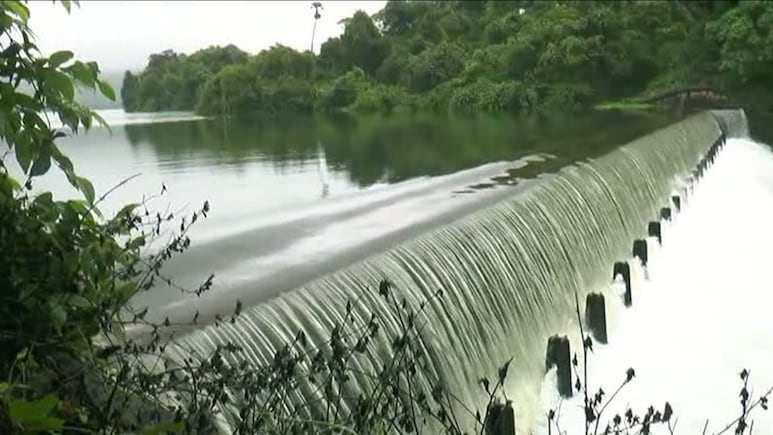
Tulsi Lake, one of the seven lakes that provide water to the Brihanmumbai Municipal Corporation (BMC) area, began overflowing late on Tuesday night following sustained rainfall in the city and its catchment areas. The lake started overflowing at 11:43 pm on July 7, 2026, shortly after Vihar Lake began overflowing at 9:00 pm the same evening.
Tulsi and Vihar are the only two lakes among Mumbai's seven drinking-water reservoirs that are located within BMC limits. The overflow of both lakes comes as heavy rain continues to push up reservoir levels across the city's water supply system. However, despite the two lakes reaching overflow level, the total water stock in all seven lakes supplying Mumbai stands at 41.43% of the overall capacity, officials said.
According to the BMC's Water Engineering Department, Tulsi Lake has started overflowing due to rainfall in its catchment area over the past few days. The development has come significantly earlier than in the previous two years. In 2025, Tulsi Lake had begun overflowing on August 16, while in 2024, it overflowed on August 4.
Also Read | Layoffs Are Rising In Tech, But These Skills Are Helping People Unlock Better Pay
Tulsi Lake is the smallest reservoir in Mumbai's drinking-water supply network. Despite its modest size, it remains an important part of the city's lake system, supplying an average of around 18 million litres, or 1.8 crore litres, of water daily. The lake has a usable water storage capacity of 8,046 million litres, equivalent to 804.6 crore litres.
ALSO READ: School Holiday: Are Schools Closed in Mumbai, Pune, Palghar?
The artificial lake was completed in 1879 and was built at an estimated cost of around Rs 40 lakh at the time. Located about 35 km from the BMC headquarters, Tulsi Lake has a catchment area of nearly 6.76 sq km. When the lake is full, its water surface area spreads across approximately 1.35 sq km.
A key feature of the reservoir system is that excess water from Tulsi Lake drains into Vihar Lake, which had already started overflowing earlier on Tuesday evening. Vihar is also one of the seven reservoirs supplying drinking water to Mumbai and is situated inside the Sanjay Gandhi National Park area.
The overflow of Tulsi and Vihar lakes comes amid a spell of heavy rain across Mumbai and neighbouring districts. The India Meteorological Department has forecast heavy to very heavy rainfall over Mumbai, Thane, Palghar and Raigad, with extremely heavy rain likely at isolated places in Palghar. Strong winds of around 60–70 kmph are also expected over parts of the Konkan region.
Mumbai receives its drinking water from seven reservoirs — Bhatsa, Upper Vaitarna, Middle Vaitarna, Tansa, Modak Sagar, Vihar and Tulsi. Of these, Tulsi contributes the least in terms of storage capacity, but its early overflow is being seen as a welcome development as the monsoon continues to improve water levels across the city's lake system.
ALSO READ: Mumbai Rains Live Updates: IMD Issues Orange Alert As Heavy Rains Lash Mumbai, Thane, Palghar
Essential Business Intelligence, Sharp Market Insights, Practical Personal Finance Advice, Daily Fuel, Gold and Silver Prices and Latest Stories — On NDTV Profit.