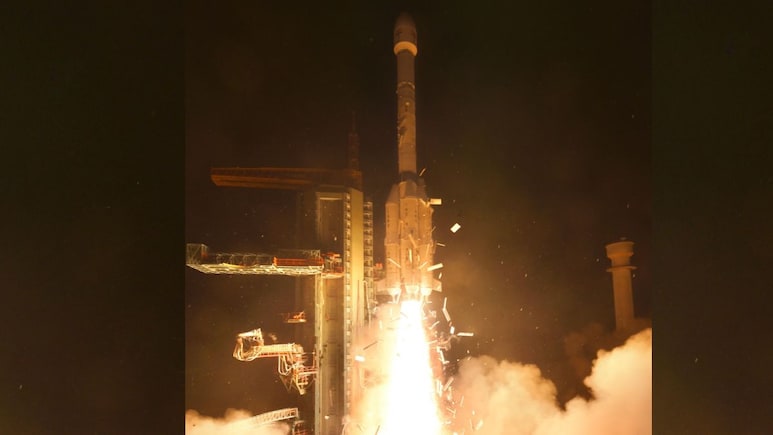
The Indian Space Research Organisation (ISRO) successfully launched EOS-05 aboard the GSLV-F17 rocket from the Satish Dhawan Space Centre in Sriharikota on September 4, 2026. The satellite was placed into its intended Sub-Geosynchronous Transfer Orbit (Sub-GTO), marking an important milestone in India's Earth observation programme.
EOS-05 is India's first imaging satellite designed to operate from a geosynchronous orbit. Its high-altitude position is expected to enable frequent imaging of large geographical areas, supporting applications ranging from weather monitoring and disaster management to agriculture and environmental assessment.
According to the ISRO mission brochure, GSLV-F17 is the 19th flight of the Geosynchronous Satellite Launch Vehicle (GSLV). The three-stage rocket stands 51.7 metres tall, has a lift-off mass of 420.5 tonnes and carried an approximately 2,367-kg payload.
Here are five things to know about EOS-05:
1. India's First Geosynchronous Imaging Satellite
EOS-05 is an advanced Earth observation spacecraft and, according to ISRO, India's first imaging satellite designed to operate from a geosynchronous orbit. Its position at a much higher altitude than conventional low-Earth-orbit observation satellites will allow it to monitor large geographical regions.
2. GSLV-F17 Carried EOS-05
EOS-05 was launched aboard GSLV-F17, the 19th flight of India's Geosynchronous Satellite Launch Vehicle. The three-stage rocket is 51.7 metres tall and has a lift-off mass of 420.5 tonnes. It carried a payload of approximately 2,367 kg.
3. Capability To Monitor Large Areas
EOS-05 is designed to provide Earth imaging from a geosynchronous orbit, allowing it to cover broad geographical regions and provide repeated observations. This capability can be useful for tracking changes on the ground and monitoring large areas over time.
4. Weather Monitoring
The satellite's imaging capabilities are expected to support the monitoring of weather-related events and rapidly developing situations. Its observations can also be useful for agriculture, environmental monitoring and the assessment of natural resources.
5. Support Disaster Management
EOS-05 is expected to have applications in disaster management, agriculture and environmental assessment. Its ability to repeatedly observe large areas could help authorities assess floods, cyclones and other natural disasters, supporting planning, emergency response and recovery efforts.
Essential Business Intelligence, Sharp Market Insights, Practical Personal Finance Advice, Daily Fuel, Gold and Silver Prices and Latest Stories — On NDTV Profit.