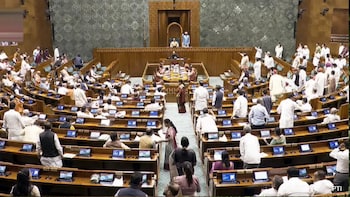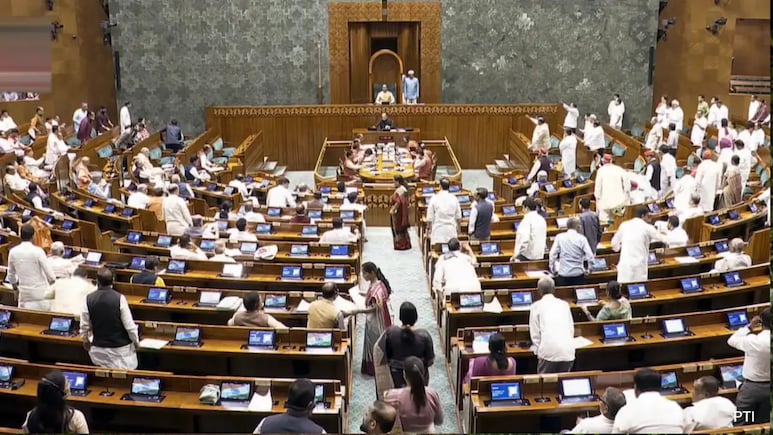
The government is set to bring back its delimitation legislation when Parliament meets for a special sitting from November 30. The proposal would enlarge the Lok Sabha and clear the way for women's reservation. It has also become one of the sharpest political fault lines of the year.
What Is Delimitation?
Delimitation means redrawing the boundaries of constituencies so that each represents roughly the same number of people. It is also used to decide how many seats each state gets.
Also Read | Layoffs Are Rising In Tech, But These Skills Are Helping People Unlock Better Pay
Under the 42nd Amendment of 1976, the number of Lok Sabha seats for each state was frozen on the 1971 Census. The freeze was meant to reward states that controlled population growth.
What Does The Bill Propose?
The package seeks to raise the Lok Sabha's maximum strength from 550 to 850. On the earlier version, 815 seats would come from states and 35 from Union Territories. It would also allow reservation for women, who are to get 33% of seats, to be applied on the basis of the new constituencies.
What Has Changed Since April?
The Constitution (131st Amendment) Bill was defeated in the Lok Sabha on April 17 for want of a two-thirds majority, and the other two bills were withdrawn. Opposition parties backed women's reservation but objected to delimitation.
READ | Delimitation: Sharad Pawar Dials Congress, Explains His 'Compulsion' To Back The Bill
According to reports, the Cabinet has now approved amendments under which every state gets a uniform 50% increase in Lok Sabha seats, while the existing share of states stays unchanged until 2051. The government hopes this will ease concerns in the south.
Why Do Southern States Worry?
Southern states have lower population growth than northern ones. A redistribution based on current population would raise the northern states' share of the House and reduce the south's. A uniform increase keeps each state's share the same, but critics say it only postpones the issue.
Why Does It Matter?
The bill affects the balance of power between states, the size of the Lok Sabha and the timing of women's reservation, which the government wants in place before the 2029 parliamentary polls.
READ | Delimitation Bill Explained: What Is It, Who Supports It, Who Opposes It? 5 Key Things To Know
A larger House would also mean larger Council of Ministers. Analysis by PRS Legislative Research says that a 50% rise in seats would lift the permissible size of the Council of Ministers from 81 to 122.
The Numbers Game
As a constitutional amendment, the bill needs a two-thirds majority of members present and voting. With 540 members present, that means at least 360 votes. The government is counting on support from parties outside the NDA, including the NCP (SP), while the Congress has said it will oppose the bill.
Essential Business Intelligence, Sharp Market Insights, Practical Personal Finance Advice, Daily Fuel, Gold and Silver Prices, Watch Business News Live and Latest Stories — On NDTV Profit.