Vehicles parked for long periods outside Delhi's police stations are now part of the city's battle against pollution. Chief Minister Rekha Gupta has called for an audit of these vehicles, pointing to the dust that gathers beneath and around them.
These are vehicles taken into custody in criminal cases and held as case property. Speaking at a high-level pollution review meeting on Wednesday, Gupta said their prolonged presence makes regular cleaning of the surrounding areas difficult, allowing dust to accumulate.
ALSO READ | GRAP-3 Restrictions Revoked In Delhi-NCR After AQI Improves: What Residents Can Expect Now
Also Read | Layoffs Are Rising In Tech, But These Skills Are Helping People Unlock Better Pay
Where a case has concluded or an order to dispose of a vehicle already exists, she said it should be removed. According to reports, the chief minister has asked the Delhi Police Commissioner to check the situation at every police station and issue written instructions.
Vehicles that are still needed for ongoing cases are harder to deal with. For them, Gupta wants the police and other departments to come up with a policy to move the vehicles to designated sites, rather than keeping them outside police stations.
Border Checks
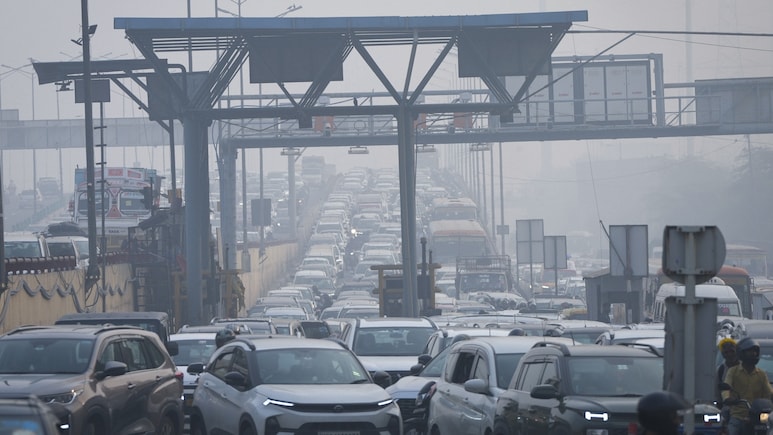
Officials also shared data on the crackdown at Delhi's borders. From November 1 to 17, teams stopped and checked 1,81,548 vehicles from outside Delhi that fell short of BS-VI emission norms. This count leaves out CNG and electric vehicles.
More than 30,000 of them, 30,742 in all, were turned back. Another 2,817 were challaned and 189 vehicles were seized, while penalties exceeding Rs 5.42 crore were imposed. Vehicles without a valid Pollution Under Control (PUC) certificate drew 25,610 more challans during the same period.
ALSO READ | Hazardous To Unhealthy: Check Air Quality Levels In Delhi-NCR, Mumbai And Other Cities
Under the rules in force since November 1, non-Delhi vehicles below BS-VI norms cannot enter the city until January 31, 2027. CNG and electric vehicles, and some exempt categories, are still allowed entry. The transport department estimates that more than 10 lakh vehicles in five major NCR cities do not meet BS-VI norms, although the ban does not apply to all of them.
AQI Down, Restrictions Remain
The review took place a day after Stage III of the Graded Response Action Plan (GRAP) was withdrawn by the Commission for Air Quality Management. Delhi's average AQI was 213 on Wednesday, well below the 400-plus readings after Diwali. Stage I and II measures, along with separate restrictions imposed earlier, remain in force.
The Chief Minister directed the Municipal Corporation of Delhi and the Public Works Department to step up cleaning of roads, footpaths and central verges. Agencies that dig up roads must restore them after completing their work, and she warned that delays would not be tolerated.
Officials inspected 8,874 construction and demolition sites in the first 17 days of November. Of these, 554 were found violating rules. In response, closure directions were issued to 112 sites, 462 show-cause notices were served, and environmental compensation exceeding Rs 2.65 crore was imposed.
ALSO READ | Delhi Air Quality Slips Into 'Severe' Category As ITO Records AQI Of 415: CPCB Data
Essential Business Intelligence, Sharp Market Insights, Practical Personal Finance Advice, Daily Fuel, Gold and Silver Prices and Latest Stories — On NDTV Profit.