When it comes to understanding the economy, the pull of the past is hard to ignore. Cause and consequence are difficult enough to parse in real time. How about predicting a sequence of events? Near impossible. Comparing today's economy to that of a previous era provides context and can help us navigate current conditions.
So where are we now?
One popular take is that we are reliving the 1970s - that this is stagflation redux. The labor market is tepid, inflation is higher than the Fed would like, and the price of oil is spiking because of a war in the Middle East. But today's economy also looks a lot like the one the US had in the mid-2000s. Neither is a great era to return to, but they portend different dangers, and require different responses.
Any mention of the aughts evokes the housing bubble and its aftermath, but that was far from its only economic feature. The business cycle that began with the 2001 dot-com recession and ended with the Great Financial Crisis of 2007-08 was one of the shortest and weakest on record. It featured a consumer binge and an asset bubble, both fueled by easy credit, and the worst job growth ever seen in an expansion. The similarities only get worse from there.
Also Read | Layoffs Are Rising In Tech, But These Skills Are Helping People Unlock Better Pay
Paltry job and wage growth:
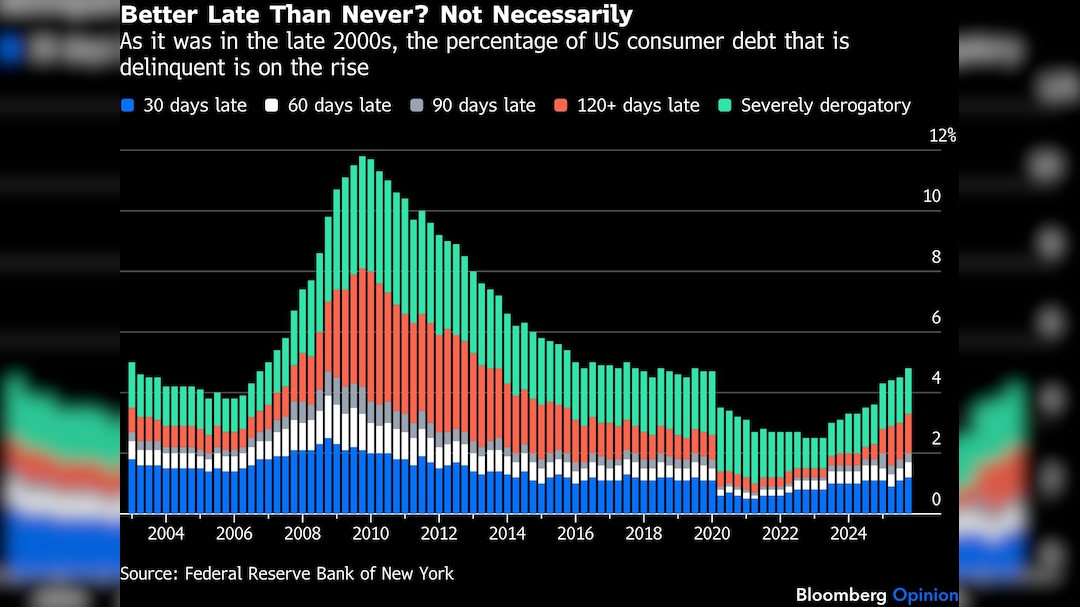
Then ... The 2001 recession itself was not so bad for the labor market - 1.6 million jobs were shed over the nine-month downturn - but was followed by an additional two years of job loss. The economy didn't recover pre-recession employment levels until 2005. Wage growth was historically weak as a result; even as the economy was expanding, labor's share of income plunged. Depending on which measure you look at, this was the first business cycle on record in which labor income was lower at the end of the expansion than it was at the beginning. Despite all this, unemployment rate was relatively low, jumping only 2 points from the start of the recession and peaking at 6.3%.
... And now? When it comes to jobs, 2025 has an ignominious distinction: It saw the fewest jobs added to the economy of any year outside of a recession - just 116,000. The drop in the labor share of income is parallel. Despite it all, the unemployment rate, though it has risen a point, is still low.
Rising consumer debt and delinquency:
Then ... Weak income growth can only fuel consumer spending with the help of easy credit, which there was a lot of in the mid-2000s. Aside from housing and mortgage debt, which we know now was a bubble, total credit card debt climbed as well, reaching $840 billion by the time 2007 recession started, a level unsurpassed even in nominal terms until the summer of 2019. The share of total household debt in delinquency started rising as early as 2005.
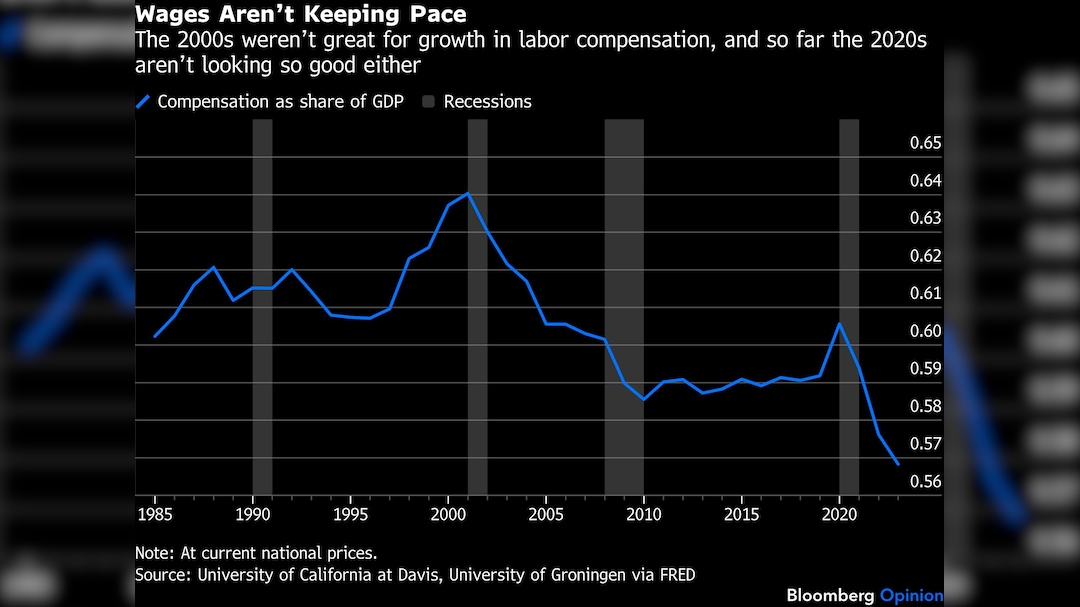
... And now? If there was an expansion of debt in the 2000s, in the 2020s there was an explosion of it. Credit card debt levels increased from $810 billion in the summer of 2020 to $1.2 trillion five years later. Delinquency has followed. At the end of 2025, 4.8% of total household debt was delinquent, on par with what it was at the start of the 2007 recession. Although severe delinquency (90+ days) has been nearly eliminated in mortgage and home equity loans, the share of auto, credit card and student loan debt in severe delinquency at the end of 2025 rivals the rates seen at the height of the 2007 recession.
A bursting financial bubble that exposed systemic risk:
Then ... By the time the music stopped in the fall of 2008, it was clear that the nation's major financial institutions had been dangerously in the dark about the complexities of the derivatives market. The market correction erased trillions in wealth that households had in retirement accounts.
... And now? It's no secret that the stock market right now is broadly weak but riding on the coattails of AI exuberance and the so-called "magnificent seven" technology companies. If AI turns out to be overvalued, a correction will reduce asset values for millions of households. Another concern is private markets - like derivatives markets, noted for their opacity - which are increasingly intermingled with public markets and have the potential to cause a crash.
Given today's labor market and inflation rate, the stagflation comparison makes perfect sense. But the policy environment is very different. By the Federal Reserve's own accounting, a key contributor to the 1970s inflation was its own mismanagement and the perception that it was unwilling to take on the pain of fighting it.
ALSO READ: US Inflation Seen Spiking In First Snapshot Since Iran War
That is far from the case today. The US is just more than a point above the inflation target (also new this time: having a target) and the Fed is under unprecedented political pressure to lower interest rates - and yet it is standing firm. Even if you think the Fed was insufficiently concerned about inflation after the pandemic, it's hard to argue it is repeating the same mistake now.
Unfortunately, when it comes to consumption and debt, the echoes of the 2000s are far too audible. Household consumption is more than two-thirds of the economy, and again it is fueled by debt that is giving way to delinquency at alarming rates and by assets that are at risk of being devalued. The weak labor market needs more businesses to form and expand, but that's hard for them to do if they are correcting for miscalculations in risk, investment and liquidity.
Finally - and most ominously - the federal government enters this moment with a balance sheet that looks like the end of a recession rather than the start of one. The annual deficit reached $1.7 trillion last year. As a reminder, the Committee for a Responsible Federal Budget estimates that 37% of the increase in the debt this century has come from tax cuts, and that was before the One Big Beautiful Bill further cut revenue by $450 billion a year.
The comparison to the stagflation of the 1970s makes the Fed the star of the show. But if the more relevant comparison is to the 2000s, then we may have to rely more on Congress to navigate our way out. And that's a scary thought - not only because the prior Congress bungled the 2007 recession, but also because the current Congress has overseen the two longest shutdowns in US history. Barely keeping the lights on is hardly a show of stewardship, let alone competence.
ALSO READ: The World Doesn't Need Prediction Markets | The Reason Why
(This story has not been edited by NDTV staff and is auto-generated from a syndicated feed.)
Essential Business Intelligence, Sharp Market Insights, Practical Personal Finance Advice, Daily Fuel, Gold and Silver Prices and Latest Stories — On NDTV Profit.