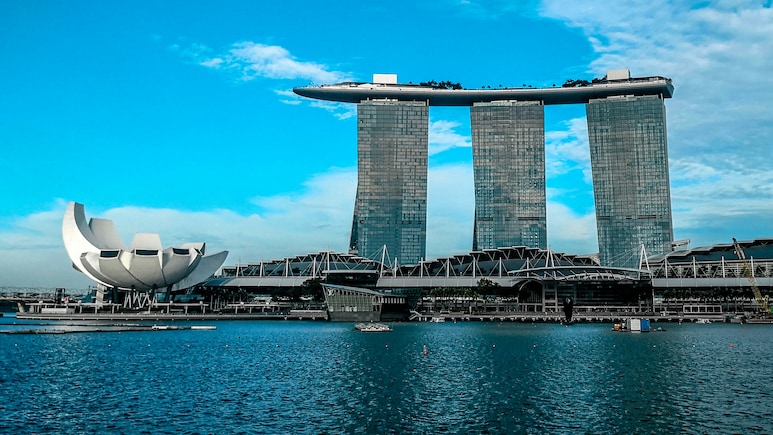
I've travelled across Southeast Asia for the last couple of years, and its infrastructure, cleanliness, and economic growth stood out immediately. The region is no longer a low-cost destination; it now attracts high-quality tourists, professionals, capital, and industries.
Countries in the region are now recognising digital nomads and attracting high-net-worth individuals for long stays. At the same time, they are scaling up in semiconductors and EV supply chains, and making serious moves into AI data centres. You can broadly bucket all of this as 'digital' play.
My simple way of looking at it is this: they rode the Asian growth wave in the 90s but didn't become Taiwan or South Korea. They built manufacturing, but couldn't match China and also couldn't replicate the services growth like India. So now they are attracting digital nomads and moving up the electronics value chain. That's the lens. Let's unpack what it means.
Also Read | Layoffs Are Rising In Tech, But These Skills Are Helping People Unlock Better Pay
Attracting Digital Nomads
There are over 40 million digital nomads globally. They spend roughly 30-35% of their income wherever they go. Southeast Asia is one of the most attractive regions for many digital nomads.
To know why these places are attractive, you must take a day off from your holiday and explore cafes to see people working on laptops. Undoubtedly, there is also a cost arbitrage. Long-stays in cities such as Chiang Mai or Bali can be 60-75% cheaper than Western cities. Recognising this, governments in this region are targeting this group that stays longer, spends more, and sits within the productive working-age. There's a hope that over time, these temporary residents will become entrepreneurs, investors, and taxpayers.
Investments in Digital Infrastructure
Layered on top is the digital infrastructure, especially the data centres for AI computing. Southeast Asia's data centre capacity is projected to grow from approximately 1.7 gigawatts (GW) in 2024 to over 7.5 GW within the next decade. Companies such as Google, Microsoft and Amazon have committed multi-billion-dollar investments in the region.
Overall, Southeast Asian countries have benefited from the "China Plus One" strategy with foreign investment inflows for the last few years.
Every Country Is Specialised In Different Aspects
Strong structural factors support long term growth of this region. ASEAN economies are projected to grow at around 4-5% annually in the near term. With over 680 million people and a median age of 30, the region offers strong labour and consumer markets. And every country offers something different.
Vietnam has become a manufacturing hub, with most investment in electronics and broader high‑tech manufacturing. Thailand is developing targeted industrial zones for EVs, aerospace, and advanced manufacturing, while Malaysia focuses on semiconductors. Indonesia focuses on resource-driven growth, prioritising mineral processing and developing a battery and EV ecosystem. Singapore acts as a financial centre, while the Philippines excels in BPO services.
From a tourism point of view, ASEAN countries are exploring a Schengen-like visa that would let tourists move across countries with a single visa. They also coordinate on air connectivity, free trade, even cross-border payment systems, and similar activities.
Risks to the Growth
However, the risks are equally structural and country-specific.
Vietnam depends heavily on exports, especially to the US, which exposes it to tariffs and scrutiny over Chinese transhipment. Thailand is weighed down by slow growth, high household debt, low fertility, and frequent political changes.
Indonesia is pushing into EV supply chains through nickel, but changing battery technologies, regulatory uncertainty, and currency pressures create risks. Malaysia struggles with low productivity, early deindustrialisation, a narrow tax base, and policy distortions.
The Philippines has a strong services sector and an English-speaking workforce, but governance issues and weak infrastructure limit its growth. Singapore remains a financial hub, but its role is gradually being challenged.
At the social level, digital nomads are creating pressure points. In places like Bali, foreigners are driving up rents, leading to gentrification, infrastructure strain, and growing cultural friction.
Final Take
Overall, Southeast Asia is a clear structural beneficiary of global economic fragmentation and the work-from-home trend. However, long-term success depends on the ability to convert inflows of money and talent into deeper institutional capacity, infrastructure, and movement up the value chain. Without that, the region risks getting stuck somewhere in the middle.
Disclaimer: The views expressed in this article are solely those of the author and do not necessarily reflect the opinion of NDTV Profit or its affiliates. Readers are advised to conduct their own research or consult a qualified professional before making any investment or business decisions. NDTV Profit does not guarantee the accuracy, completeness, or reliability of the information presented in this article.
ALSO READ: AC Economics Gets Complicated This Summer | The Reason Why
Essential Business Intelligence, Sharp Market Insights, Practical Personal Finance Advice, Daily Fuel, Gold and Silver Prices and Latest Stories — On NDTV Profit.